He almost gave up walking comfortably.
A man in his 50s walked into our center looking defeated. His knees had been giving him trouble for months. Friends pushed him toward surgery. One doctor mentioned stem cell injections. Another suggested a knee replacement consultation.
And that tesitation changeed everything

What Foot Calluses Do to Your Walking Balance
When he walked across the room, we did not look at his knees first.
We looked at his feet.
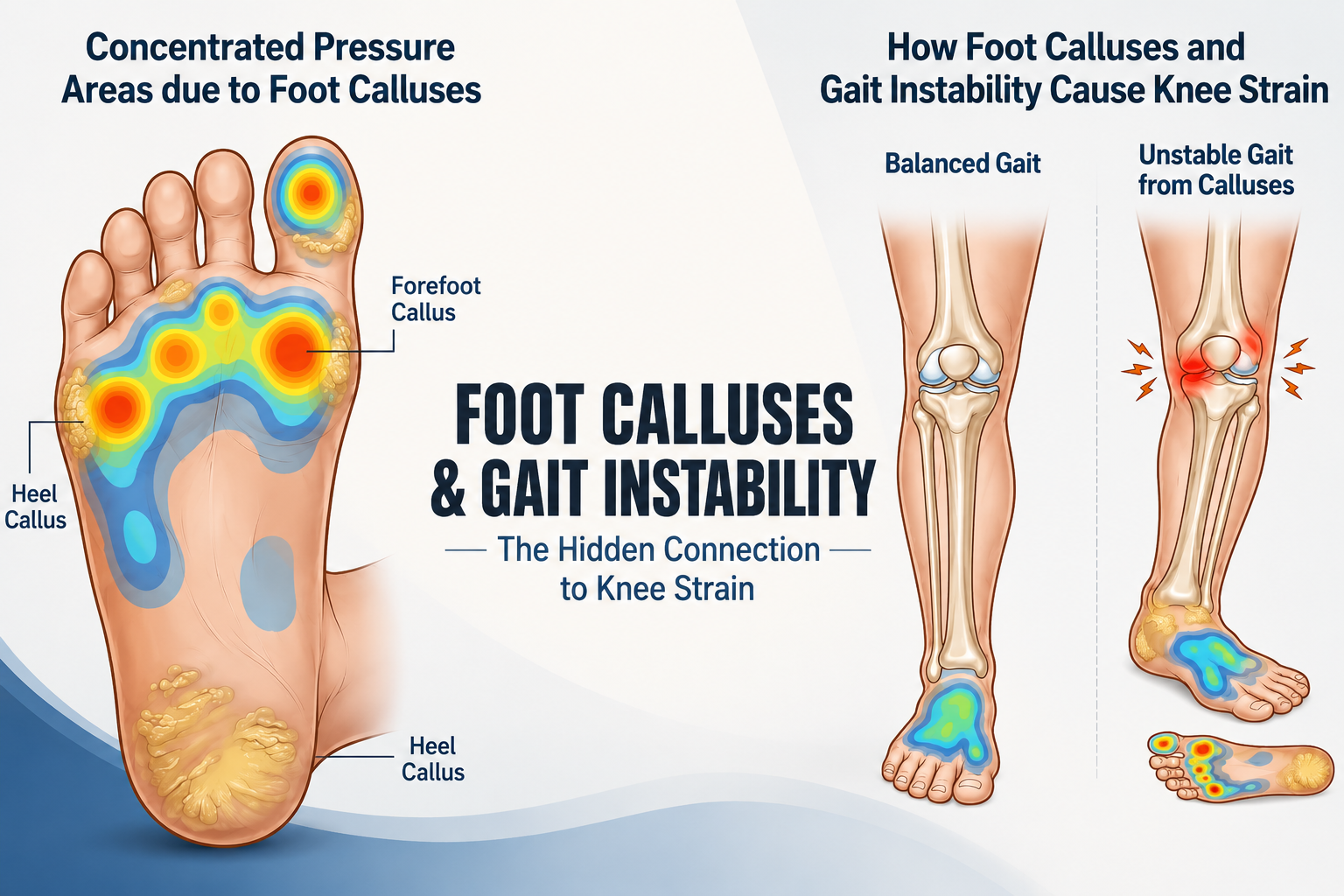
The bottom of both feet told a story that years of medical appointments had missed. Thick, uneven foot calluses covered specific areas. The left foot looked completely different from the right. Certain zones had absorbed enormous pressure — day after day, year after year.
He had spent decades in sales. Long hours. Hard floors. Dress shoes that offered almost nothing in support.
His feet had adapted. Unfortunately, adaptation and health are not always the same thing.
How Uneven Foot Calluses Destroy Walking Balance
Most people treat foot calluses as a cosmetic issue.
At our center, we see them differently.
Calluses form where pressure repeats. When one area of the foot consistently absorbs more load than it should, the skin thickens as protection. The callus is not the enemy. It is the messenger.
Think of a car with uneven tire pressure. The stressed tire wears faster. Eventually, the entire vehicle suffers.
The same principle applies to the human body. Uneven foot pressure travels upward. The ankles adjust. The knees compensate. The hips shift. The spine responds.
By the time a person feels knee discomfort, the pattern has usually been building for years.
Rebuilding Walking Balance from the Ground Up

We did not promise quick results.
We focused on awareness first. Footwear choices. Daily walking habits. How his feet contacted the ground with each step. Reducing tension in overworked muscles. Rebuilding movement confidence gradually.
Week by week, something shifted.
His steps became smoother. His legs felt less tired at the end of the day. Stairs that had felt uncertain began to feel manageable again.
And then something unexpected happened.
The thick foot calluses that had built up over many years began to soften. Not because we treated the skin. Because the pressure patterns underneath were finally changing.
The Hidden Link Between Foot Calluses and Daily Life
Most people spend years focusing on their knees, hips, and back.
Very few people look down.
Yet the feet carry every single step. They absorb impact. They communicate with the nervous system. They shape how the entire body moves.
When the foundation is uneven, everything above it works harder than it should.
We see similar patterns regularly at Haim Body Balance Center. People arrive focused on one painful area. When we examine the whole movement chain — starting from the feet — a different picture often emerges.
- For more professional insights on foot health, you can visit the American Podiatric Medical Association.”
How Uneven Foot Calluses Destroy Your Walking Balance
Most people treat foot calluses as a cosmetic issue. They grab a pumice stone, file them down, and go about their day. But if you have persistent, uneven foot calluses, your feet are telling a story about your mechanics.
When your feet develop thick patches of hardened skin, it isn’t just about the skin—it’s about the pressure. These foot calluses often develop because your body is compensating for poor arch support or structural imbalances in your gait.
The Hidden Connection: Calluses and Gait
When you have an uneven gait, your foot doesn’t strike the ground uniformly. This creates “pressure hotspots.” Over time, the body builds thick foot calluses as a defense mechanism to protect those specific areas. By ignoring the cause, you aren’t just letting the foot calluses grow; you are allowing your body to continue walking in a way that puts unnecessary strain on your ankles, knees, and hips.
What You Should Do
- Analyze your footwear: Wear shoes with proper arch support to distribute pressure evenly.
- Consult a specialist: If foot calluses are recurring, see a podiatrist to check for biomechanical issues.
- Stretch and Strengthen: Focus on foot intrinsic muscles to improve your overall walking stability.
A Final Word
This client did not need surgery.
He needed someone to look at the right place.
If you have been dealing with uneven shoe wear, tired legs, unstable walking, or unexplained knee discomfort, your feet may be worth a closer look.
At Haim Body Balance Center, we specialize in reading the body’s signals — starting from the ground up.
Sometimes the answer has been beneath your feet all along.

