
Tag: unconscious nerve

  • 7 Hidden Reasons Why Your BPPV Keeps Coming Back

    7 Hidden Reasons Why Your BPPV Keeps Coming Back

    For many struggling with BPPV (Benign Paroxysmal Positional Vertigo), the world often feels like an unstable place. You might have tried the Epley maneuver or vestibular suppressants, only to find the spinning sensation returning weeks or months later. This recurrence is not just bad luck; it is often a sign of a deeper systemic imbalance.

    ​As a director with 12 years of clinical experience in Body Alignment and Unconscious Nerve Management, I have found that chronic vertigo is rarely just an isolated “inner ear problem.” It is a manifestation of a “hardware” misalignment and a “software” error in your nervous system.

    1. The Hardware: Why Your Neck Controls **BPPV** Balance

    ​7 Reasons Why Your BPPV Keeps Coming Back & How to Fix It
    Precision realignment of the upper cervical spine (C1-C2) to stabilize the vestibular system.

    ​Your vestibular system doesn’t work in a vacuum. It relies on Cervical Alignment, specifically the C1 and C2 vertebrae.

    When your posture is misaligned—due to “Tech Neck” or accumulated stress—it creates tension in the deep neck muscles. This tension restricts micro-circulation to the inner ear and sends conflicting signals to the brain. If the physical “hardware” of your neck is tilted, the balance sensors in your ear will eventually fail.

    ​[The Anatomy of Equilibrium]

    ​The human vestibular system is housed within the temporal bone of the skull. This delicate architecture relies on precise pressure levels and fluid dynamics. When your cervical spine is misaligned, it creates abnormal tension in the surrounding soft tissues, potentially interfering with the neurological signals sent to the brain. By focusing on Body Alignment, we address the root mechanical cause of BPPV, rather than just treating the temporary symptoms of dizziness.

    2. The Software: Stabilizing **BPPV** through the Nerve System

    ​The Autonomic (Unconscious) Nervous System is the software that keeps you upright without conscious effort.

    Anatomy of the inner ear and vestibular nerve distribution for BPPV recovery
    Anatomy of the inner ear and vestibular nerve distribution for BPPV recovery

    Chronic physical misalignment keeps your nervous system in a state of “High Alert” (Sympathetic dominance). In this state, your brain loses its ability to filter out minor balance errors. This is why many patients feel “heavy-headed” or “spaced out” even after the ear crystals are back in place.

    3. Essential **BPPV** Prevention: Daily Habits for Vertigo

    • Hydration: The fluid in your inner ear is sensitive to hydration levels. Ensure consistent water intake.
    • Anti-Inflammatory Sleep Posture: Avoid sleeping on your stomach, which twists the upper neck. Use a supportive pillow that maintains the natural curve of your neck.
    • Digital Detox: Overusing smartphones fatigues the visual system, forcing the vestibular system to work twice as hard.

    ​Home Rehabilitation: 3 Steps to Reclaim Your Balance

    1. The Ocular-Cervical Reset: Keep your head still. Move only your eyes to the far right for 30 seconds, then to the far left for 30 seconds. This resets the nerves connected to your balance centers.
    2. VOR Training: Focus on your thumbnail while slowly shaking your head “No.” This retrains your brain to maintain stability during motion.
    3. Proprioceptive Grounding: Stand barefoot and focus on the weight distribution on your feet. Grounding tells your brain the foundation is safe, allowing neck muscles to relax.

    ​True recovery isn’t just about fixing the ear; it’s about realigning the body and calming the unconscious nerves. When your structural balance is restored, your nervous system can finally return to equilibrium.

    ​[Frequently Asked Questions About BPPV]

    Q: https://en.wikipedia.org/wiki/Benign_paroxysmal_positional_vertigoCan stress trigger BPPV?

    A: Stress keeps your Unconscious Nerve System on high alert, lowering your threshold for dizziness.

    Q: Why does Tech Neck make it worse?

    A: Cervical misalignment from smartphones restricts blood flow to your vestibular system, making BPPV recurrence more likely.

    Q: How long does recovery take?

    A: Most patients see significant improvement in 4 to 6 weeks through consistent Body Alignment and neural stabilization.

    ​[Closing Thoughts]

    ​True recovery is a System Restoration. By realigning your hardware and calming your software, you can finally step off the merry-go-round of BPPV. At Haim Body Balance Center, we are here to help you find your center again.
    [Healing Music for Nerve Stabilization] https://youtu.be/Qb5hAzuCOB4?si=yNbJdOM6tNkUmkBKClick here to listen

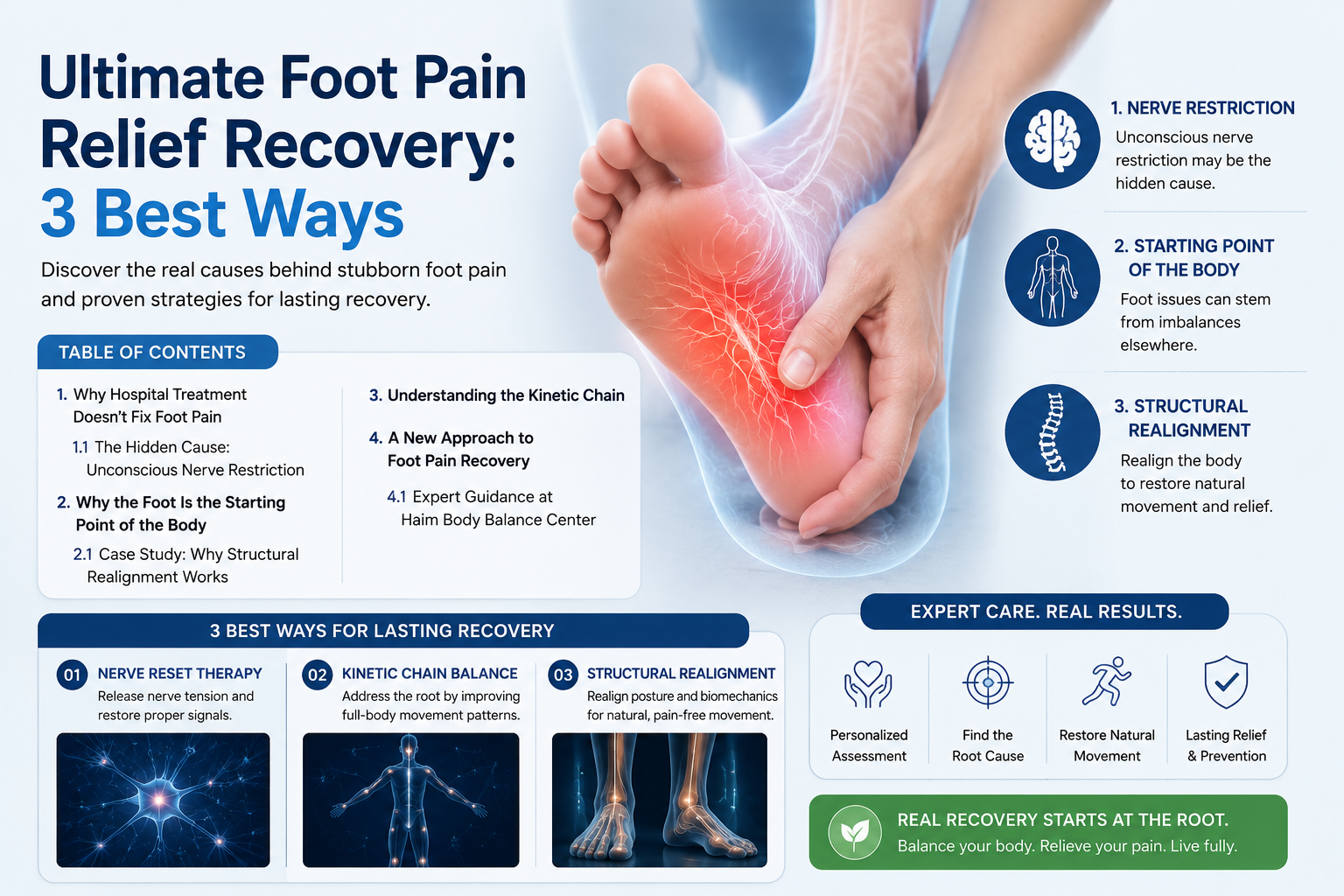
  • Amazing Ultimate Foot Pain Relief Recovery: 3 Best Ways

    Amazing Ultimate Foot Pain Relief Recovery: 3 Best Ways

    • Ultimate Foot Pain Relief Recovery: 3 Reasons It Returns

    Foot pain is a common struggle for many. Often, even after treatment, the pain returns because the symptoms were addressed rather than the root cause. Real recovery requires a deeper look at your body’s foundation and how it communicates through the nervous system.

    Why Hospital Treatment Doesn’t Fix Foot Pain

    Foot Pain Treatment and Unconscious Nerve Management
    Professional alignment care at Haim Body Balance Center focuses on restoring unconscious nerve flow.”

    Most hospital treatments focus on reducing pain symptoms.
    Medication, injections, or physical therapy may help temporarily,
    but they do not solve the root cause of foot pain.

    That is why many patients experience repeated foot pain
    even after months or years of treatment.

    The Hidden Cause: Unconscious Nerve Restriction

    Foot pain is often connected to imbalance in the body.
    Left and right body alignment becomes uneven,
    and unconscious nerve flow becomes restricted.

    ​Most treatments offer only temporary relief because they ignore the unconscious nervous system. Our bodies maintain balance through a network of nerves that function without our conscious effort. When structural imbalance occurs, these nerves become restricted or “trapped.”

    When this happens, circulation is blocked,
    and pressure builds up in specific areas of the foot,
    causing pain.

    Why the Foot Is the Starting Point of the Body

    Foot pain relief and unconscious nerve management at Haim Body Balance Center
    A healthy foot arch is the foundation of full-body alignment. Correcting the skeletal structure starts from here.

    Case Study: Why Structural Realignment Works

    ​Many clients visit Haim Body Balance Center after trying various treatments for years. One common case involved a runner who suffered from chronic heel pain for over two years. Traditional physical therapy only provided temporary relief.

    ​Upon analysis, we discovered that the issue wasn’t the heel itself, but a collapsed medial arch causing a twist in the ankle alignment. This physical shift was compressing the unconscious nerves, preventing natural recovery. By focusing on structural realignment and nerve flow management, the client was able to return to running without pain within a few weeks. This is the power of addressing the root cause.

    Understanding the Kinetic Chain

    ​In corrective management, we talk about the ‘Kinetic Chain.’ Your body is a series of interconnected segments. The feet are the first link. If the first link is weak, the force of every step travels incorrectly through your joints. Proper body alignment ensures that the mechanical stress of movement is distributed evenly, protecting your spine and nervous system for the long term.

    Professional Guidance for Health Care

    ​Finding effective foot pain relief often involves understanding the common causes related to your lifestyle. While standard physical therapy can help, it is crucial to receive personalized analysis for long-term recovery. Please note that this information is for educational purposes and should not be taken as direct medical advice. If you are seeking a sustainable solution, professional corrective management is the key to your overall health care and structural well-being.

    A New Approach to Foot Pain Recovery

    ​Instead of focusing only on temporary pain relief, it is crucial to check the overall body balance. At Haim Body Balance Center, we identify hidden imbalances starting from the feet. Our goal is to improve circulation, restore natural movement, and support a more comfortable daily life through expert alignment care.

    How to Support Your Body Alignment at Home:

    1. Check Your Shoes: Worn-out soles can worsen body imbalance. Replace shoes that show uneven wear on one side.
    2. Barefoot Walking: Whenever possible, walk barefoot on natural surfaces to stimulate the sensory nerves in your soles.
    3. Arch Stretching: Gently stretch your toes and arches every morning to improve circulation and wake up your nervous system.

    ​While these tips help, persistent pain requires professional analysis to identify the hidden structural cause.

    Expert Guidance at Haim Body Balance Center

    ​At Haim Body Balance Center, we look beyond the pain to find hidden imbalances starting from your feet. With over 12 years of clinical expertise in Yangsan, I focus on the connection between your skeletal structure and the nervous system. True wellness is about restoring harmony to your entire body.

    ​For more information, please check the Autonomic Nervous System and visit the Haim Body Balance Center for expert care.

  • Sudden Leg Weakness: 7 Secrets to Fix Your Nervous System

    • Why Sudden Leg Weakness Happens: 5 Steps to Reset Your Nerves

    ​Have you ever felt your leg suddenly give out while walking, or found yourself leaning to one side without realizing it? If you have been pushing through with more squats and leg presses only to find the problem persisting, the true cause might be hidden deep within your nervous system—not just your muscles.

    The Frustration of an Unresponsive Body: A Case Study

    ​A male client in his late 60s recently visited our center struggling with two debilitating concerns that seemed unrelated:

    • Gait Instability: A noticeable lean while walking and a sudden “giving out” of the right leg.
    • Severe Insomnia: Months of sleepless nights leading to extreme chronic fatigue.

    ​Most distressingly, his right leg would occasionally react like “a fish flopping on the ground”—unstable, uncontrolled, and weak. Despite medical exams showing no specific muscle disease, he was losing both his mobility and his peace of mind.

    Why Muscle Strength Isn’t Always the Answer: The “Nervous System Brake”

    ​Many assume that leg weakness is simply a sign of muscle loss (Sarcopenia) and try to “force” their way through it with exercise. However, this often fails because the problem is neurological.

    ​Our body operates on a survival mechanism called the “Unconscious Nerve Brake.” When your brain detects that your foundation—your feet—is unstable, it concludes that moving forward is dangerous. To prevent a fall or a bone fracture, the nervous system intentionally shuts off power to the muscles.

    • Loss of Grounding: If your feet aren’t making proper sensory contact with the floor, the brain triggers an alarm.
    • Chain Reaction: This instability travels from the feet to the pelvis and spine, keeping the nervous system in a constant “fight or flight” mode.
    • The Sleep Connection: This persistent internal tension makes it impossible for the brain to transition into a deep sleep state, leading to chronic insomnia.

    If you are suffering from Sudden Leg Weakness, checking your body balance is the first step.

    Restoring the System: The Path to Stable Movement

    Sudden Leg Weakness*
    Add an image with your Focus Keyword as alt text
    Sudden Leg Weakness
    Detailed clinical analysis of how foot sensory alignment impacts the nervous system flow for clients experiencing Sudden Leg Weakness.

    ​At the Haim Body Balance Center, we don’t just “strengthen” muscles; we restore the connection. Recovery for this client focused on

    1. Reawakening Foot Sensory Input: Training the feet to tell the brain, “The ground is safe and stable.”
    2. Correcting Structural Alignment: Rebalancing the left-right lower body to release the nervous system’s emergency brake.
    3. Normalizing Neural Flow: Releasing blocked tension to allow the body to move without “braking” itself.
    4. If you are suffering from Sudden Leg Weakness, checking your body balance is the first step.

    Nutritional Support for Nerve Relaxation: Magnesium Malate

    ​To complement physical realignment, we recommended Magnesium Malate as part of a daily routine. Unlike other forms of magnesium, the “Malate” version is excellent for:

    • Releasing Muscle Tension: Helping the body physically let go of accumulated stress.
    • Boosting Energy Production: Reducing the fatigue caused by inefficient movement.
    • Improving Sleep Quality: Calming the nervous system to allow for a natural transition into rest.

    Is Your Body Sending These Warning Signals?

    ​If you identify with any of the following, your body balance might be the root cause:

    • ​You experience sudden leg weakness despite regular exercise.
    • ​You feel like your body is constantly leaning or “drifting” to one side.
    • ​You suffer from physical tension that prevents you from falling asleep.
    • ​The soles of your shoes wear down significantly faster on one side.

    Reclaim Your Balance and Your Rest

    If you are suffering from Sudden Leg Weakness, checking your body balance is the first step.

    ​Sudden instability and insomnia are not just “part of getting older.” They are SOS signals from your body. By looking at the body as a connected system—starting from the feet and addressing the unconscious nervous system—you can regain your stability and your sleep.

    Don’t wait for a fall to take action. At Haim Body Balance Yangsan Center, we specialize in identifying these hidden imbalances to help you return to a comfortable, active life.

    Haim Body Balance Center: Sudden Leg Weakness Solution*

    ​Learn more about Haim Body Balance Center

  • 3 Essential Pillars of Posture Correction You Need to Know

    Posture correction starts with understanding that proper posture is not determined by bones alone

    1. Protein: The “Silent” Fix for Muscle Recovery

    ​Most people think of protein only for bodybuilders. But for posture, protein is the raw building material your body uses to repair the muscles that hold you upright.

    • ​Your muscles feel tight immediately after treatment.
    • ​You experience chronic fatigue in your lower back or neck.
    • ​It feels “exhausting” to sit up straight.
    • Many people assume that posture is purely a skeletal issue. However, without the right biological support, your skeletal system cannot maintain its alignment. Amino acids from protein are the foundational building blocks for muscle fibers. For those engaged in corrective therapy, increasing protein intake isn’t just about fitness; it’s about providing your body with the tools it needs to “hold” the new, corrected position.
    Posture Correction Therapy at Haim Body Balance Center
    Expert posture correction and muscle balance therapy in South Korea.

    2. Muscle Balance: The Foundation of Alignment https://soletobody.com/probiotics-and-joint-pain-the-gut-joint-connection/

    • The Result: One shoulder sits higher, the pelvis tilts, and your walk becomes uneven.
    • The Solution: Correction isn’t just about “strengthening.” It’s about restoring balance so your muscles stop fighting each other.
    • Muscle imbalance often creates a “tug-of-war” within the body. When one group of muscles is chronically overworked, it becomes shortened and tight, while the opposing muscles become overstretched and weak. True posture correction focuses on releasing the tight tissues and activating the dormant ones. This balanced tension is what allows the spine to sit naturally without constant conscious effort.
    • Achieve better balance through professional posture correction.

    3. The “Auto-Pilot”: Your Nervous System

    ​This is the most overlooked part of posture. Your body has an Automatic Nervous System Regulation that controls your balance without you thinking about it.

    ​When you walk, stand, or sit, your nervous system is constantly:

    • Scanning: Detecting your position via sensory nerves.
    • Reacting: Sending signals to muscles to keep you upright.
    • Stabilizing: Preventing you from falling.
    • Protein: Provides the raw materials to repair muscle tissue.
    • Muscle: Acts as the structural foundation to support your frame.
    • Nervous System: Acts as the commander for automatic coordination.
    • ​This neural retraining is the secret to lasting posture correction.

    ​If this system is inefficient, your brain “forgets” how to hold a good posture. This is why you “slouch” the moment you stop thinking about your back.

    For effective posture correction, balance is the key factor. We specialize in posture correction to help your body feel better. Posture correction is a journey of consistency.

    Think of your nervous system as the software that runs your body’s hardware. If the software has “bugs” (inefficient movement patterns), the hardware will eventually break down. Neuromuscular re-education is the process of teaching your brain to recognize what a balanced posture actually feels like. By improving this sensory feedback loop, you can achieve automatic stability that lasts even when you aren’t paying attention to how you sit.

    4. The Synergy: Why They Must Work Together

    ​To achieve a pain-free body, you need all three pillars working in harmony. If one is missing, the others will eventually fail.

    Example: Even if you strengthen your muscles, they will quickly become tight again if your nervous system keeps using inefficient movement habits.

    For effective posture correction, balance is the key factor. We specialize in posture correction to help your body feel better. Posture correction is a journey of consistency.

    • Posture correction is the first step to a healthy life. We are experts in posture correction. Try posture correction today

    Practical Habits for a Balanced Body

    Posture Correction

    ​Long-term posture improvement comes from consistent daily habits:

    1. Prioritize Protein: Include a clean protein source in every meal to support muscle recovery.
    2. Avoid Static Positions: Set a timer to move or stretch every 30 minutes.
    3. Stay Hydrated: Water is essential for both muscle elasticity and nerve signaling.
    4. Posture correction is the first step to a healthy life. We are experts in posture correction. Try posture correction today
    5. Listen to Your Body: Recurring stiffness is a signal that your system needs a check-up.

    Conclusion

    ​Posture correction is not a single event; it is a continuous process of nourishing your muscles and retraining your nerves. When you support your body with proper nutrition and movement, it will naturally find its healthy, balanced alignment.

    At Haim Body Balance Center, we focus on this integrated approach to ensure your physical alignment is supported by healthy muscle recovery and a responsive nervous system. Our goal is to provide lasting relief that transforms your daily life and movement efficiency.

    • Your journey toward perfect posture correction starts here.

    Are you struggling with recurring shoulder or back pain? Let’s discuss your experience in the comments below!

  • 4 Best Ways to Fix Foot Pain in the Morning

    Foot pain in the morning can make your first steps a struggle. You open your eyes, ready to start the day. But the moment your feet hit the floor, a sharp, stabbing sensation shoots through your heel. By the time you reach the kitchen, it’s mostly gone. Sound familiar?

    ​After 12 years of clinical experience in body alignment and foot health, I can tell you: this pain isn’t a coincidence—it’s a signal. Today, I’m breaking down why this happens and how you can fix it before you even get out of bed.

    What Happens to Your Feet While You Sleep?

    ​While you sleep, your body enters a repair mode. Your feet rest in a naturally pointed-downward position. This causes the soft tissues and the plantar fascia to gradually shorten and tighten during those hours of inactivity.

    ​The moment you stand up, those shortened tissues are suddenly forced to stretch. This sudden stretching is why foot pain is at its peak during your very first steps.

    4 Reasons Why Foot Pain Is Worse in the Morning

    Effective stretches for morning foot pain relief.
    1. Plantar Fascia Tightening: When you rest, the thick band of tissue under your foot contracts. Taking your first steps causes sharp pain as it suddenly stretches.
    2. Reduced Circulation & Fluid Buildup: Blood flow slows during sleep, and inflammatory fluids can accumulate. Standing up increases pressure on these sensitive tissues.
    3. Body Alignment Problems: If your pelvis, spine, or hips are misaligned, the weight load on your feet becomes uneven. This creates tension that you feel the moment you stand.
    4. Nerve Sensitivity After Inactivity: Nerves in your feet become more sensitive after long periods of stillness. This tension is often connected to patterns in the lower back.

    What You Can Do Before Your First Step

    ​Don’t let your first step be a painful one. Try these before standing up:

    • Flex and Point: Slowly move your feet up and down 10 times.
    • Towel Stretch: Loop a towel around the ball of your foot and gently pull for 20–30 seconds.
    • Ankle Circles: Rotate each ankle 5 times in each direction.
    • Don’t Walk Barefoot: Keep supportive slippers right beside your bed.

    Final Thoughts: Listen to Your Body

    ​If you wake up in pain every morning, your body is asking for more than just a quick stretch—it’s asking for balance.

    ​At our center, we approach foot pain not as an isolated symptom but as part of the whole body’s alignment pattern. Persistent pain may indicate chronic postural imbalance or nervous system dysregulation.

    Don’t let your first step be a struggle. Let us help you find your balance again.

    Why Professional Guidance Matters for Foot Pain

    ​Many people try to endure foot pain by using temporary fixes like pain relievers or generic insoles. However, if the root cause is a structural misalignment, these methods only mask the symptoms. When your pelvis is tilted or your spine lacks proper balance, your feet are the first to suffer the consequences of uneven pressure. Over time, this leads to chronic conditions like plantar fasciitis or even secondary pain in the knees and lower back.

    ​At Haim Body Balance Center in Yangsan, we provide a comprehensive analysis of your body’s alignment. Our 12-year clinical expertise allows us to see beyond the localized pain and address the entire kinetic chain. By restoring your body’s natural balance and improving nervous system function, we help you achieve long-term recovery.

    Summary for Long-Term Relief

    ​To summarize, managing morning foot pain requires a two-step approach: immediate bedside stretches to wake up the tissues and a long-term strategy to correct your posture. Remember, your body is an interconnected system. A healthy step starts with a balanced body. If you are tired of waking up in pain, it is time to look deeper into your body’s alignment. Let us help you walk with ease and confidence again.

    ​For more information on foot health, you can check the Mayo clinic Guide

  • Magnesium and Sleep: 84-Year-Old Man Improved Sleep Naturally

    Holistic Body Balance · Clinical Insight

    Problem: The Silent Distress Signal of Your Nervous System

    The connection between magnesium and sleep is well documented in clinical research.

    magnesium and sleep benefits for better digestion and nervous system support
    Proper magnesium intake is essential for maintaining the body’s natural sleep-wake cycl

    Many people struggle with Magnesium and Sleep as they age, often accepting restless nights as a normal part of life.Do you wake up feeling as though your body hasn’t truly rested? As we age, many people come to accept chronic constipation, restless nights, and persistent foot fatigue as simply “part of getting older.” But these symptoms may not be inevitable signs of aging. They can be distress signals from a nervous system that is not receiving adequate nutritional support.

    When circulation in the feet diminishes and the digestive system slows, it can be a sign that the body’s foundational balance needs attention, not resignation.

    Magnesium plays a role in over 300 enzymatic reactions in the body. The link between magnesium and sleep quality is well established — deficiency is more common than many people realize, particularly in older adults, and may contribute to poor rest and reduced digestive motility.

    Understanding the link between magnesium and sleep is the first step toward reclaiming your vitality.

    From the Director: 12 Years of Clinical Observation

    Proper use of magnesium and sleep strategies can lead to profound changes in your daily recovery.

    As the director of the Haim Body Balance Center, I have spent 12 years studying the relationship between physical alignment and internal nutrition. Over this time, I have observed thousands of clients navigating the same cycle: reliance on temporary solutions without addressing root causes.

    My work has focused on identifying the nutritional “missing links” that help restore the body’s natural rhythm. For the past two years, I have personally followed and documented the protocols I recommend to my clients.

    Science & Nutrition: Magnesium and Nerve Health

    One factor that research increasingly points to is adequate magnesium intake. However, not all forms of magnesium behave the same way in the body, and this distinction matters significantly.

    For those experiencing nerve-related discomfort in the extremities or sluggish digestive function, Magnesium Malate has shown promise in the scientific literature. This form is bound to malic acid, a compound involved in cellular energy production. It is thought to support the smooth muscle function of the digestive tract and may help restore the subtle background signals that keep bodily systems functioning efficiently.

    Separately, Magnesium Glycinate, which is bound to the amino acid glycine, is often cited for its calming effect on the nervous system and its higher bioavailability compared to some other forms.

    Magnesium plays a role in over 300 enzymatic reactions in the body. Deficiency is more common than many people realize, particularly in older adults, and may contribute to poor sleep quality and reduced digestive motility.

    Clinical Observation: An 84-Year-Old Client’s Experience

    I’d like to share an observation from my practice that I found particularly meaningful, one that illustrates how nutritional support can complement overall wellness.

    A gentleman in his mid-eighties came to me after struggling for years with disrupted sleep and chronic constipation. He was working with his physician on both concerns and had found limited relief through conventional approaches alone.

    With his doctor’s awareness, we introduced a high-bioavailability magnesium complex into his daily routine. Over the following weeks, I observed the following changes, which he also reported.

    Improved Digestive Regularity

    His digestion became noticeably more consistent over several weeks. He reported a reduction in discomfort without making significant dietary changes.

    Better Sleep Quality

    Research on magnesium and sleep shows that adequate levels support deeper, more restorative rest.

    He described his sleep as feeling more restful. Over time, and in consultation with his physician, he was able to discuss adjustments to his sleep support regimen, something he had not been able to consider previously.

    I want to be clear: this is a single clinical observation, not a controlled study. Results will vary between individuals, and any changes to medication or supplementation should always be discussed with a licensed healthcare provider.

    What to Look For: Choosing the Right Magnesium Form

    If you are considering magnesium supplementation, the form of magnesium on the label matters. Different forms have different rates of absorption and different primary effects in the body.

    When reviewing products, look for formulas that specify the chelated, malate, or glycinate forms, as these tend to have stronger research support for digestive and nervous system applications.

    Many clinical studies show that the connection between magnesium and sleep is vital for long-term health.

    That said, supplementation is not a substitute for a balanced diet, appropriate medical care, or a healthy lifestyle. It is best viewed as one element within a broader approach to wellness.

    According to the National Institutes of Health, magnesium supports nerve and muscle function.

    Important Notice

    This post is for informational and educational purposes only. It does not constitute medical advice and is not intended to diagnose, treat, cure, or prevent any condition. The case described reflects one individual’s personal experience and may not apply to others.

    Please consult a qualified healthcare professional before beginning any new supplement, changing your diet, or modifying any existing treatment plan.

    Final Thought

    Understanding your body’s unique needs is the first step toward lasting health. In my next post, I will share clinical observations on how magnesium and sleep patterns may influence gait patterns and spinal alignment.

    If you are experiencing similar symptoms, staying informed is one of the most valuable things you can do. Follow this blog for ongoing professional insights on holistic body balance.

    Read another article:

    https://soletobody.com

    In summary, focusing on magnesium and sleep is a natural and effective way to restore your body’s rhythm.

  • Chronic Pain Recurrence: 3 Proven Secrets to Stop the Cycle

    The Frustrating Cycle of Chronic Pain Recurrence

    understanding foot structure to prevent chronic pain recurrence

    Foot structure and toe alignment related to chronic pain recurrence
    Toe structure and foot alignment play a key role in chronic pain recurrence and body stability.
    • Pain that keeps coming back repeatedly
    • Difficulty walking or standing for long periods
    • Poor balance or frequent fatigue
    • Persistent tension in the lower back or kneesPain that keeps coming back repeatedly

    ​Many people live with a common expectation: once they receive treatment for pain, it should disappear for good. They follow medical advice, take their prescribed medications, and attend every physical therapy session.

    Chronic pain recurrence is a serious issue that requires proper care.

    ​However, a frustrating reality often sets in—the pain keeps coming back.

    Many people live with a common expectation…

    However, a frustrating reality often sets in — the pain keeps coming back.

    Chronic pain recurrence can continue for years if the root cause is not properly corrected.

    ​You might feel temporary relief for a few weeks or months, only to find yourself back at square one. Over the past 12 years, I have worked with more than 3,000 clients who faced this exact cycle. Many came to me after clinical treatments failed to provide a permanent solution.

    Chronic pain recurrence is a serious issue that requires proper care.

    ​If you are wondering why your recovery isn’t sticking, the answer usually lies in what’s being overlooked. Chronic pain recurrence is a common problem that many patients experience even after treatment.

    Why Treatments Fail to Provide a Permanent Solution

    ​Pain is rarely the result of a single, isolated event. Instead, it is typically the cumulative result of repeated mechanical stress on the body.

    https://soletobody.com/plantar-fasciitis-foot-pain

    Treating Symptoms vs. Root Causes

    ​The biggest mistake in modern pain management is focusing solely on the site of the pain. If the root cause is not corrected, the symptom will inevitably return.

    • The Knee Pain Example: A patient receives treatment for knee inflammation. The swelling goes down, and the pain subsides. However, if that patient has a structural alignment issue in their feet, the knee will continue to endure abnormal stress every time they walk.
    • The Result: Give it a few months, and the inflammation returns because the mechanical “trigger” was never removed.

    The Foundation of the Body: The Hidden Role of Foot Imbalance

    ​Think of your body like a house. If the foundation is slanted, cracks will eventually appear in the walls and the roof. No matter how many times you patch the cracks, they will reappear until you fix the foundation.

    According to the Mayo Clinic, chronic pain can continue if the root cause is not properly treated. https://www.mayoclinic.org

    Your feet are the foundation of your body.

    ​If your feet are unstable or misaligned (due to flat feet, high arches, or improper gait), the rest of your body must compensate. This compensation places unnecessary pressure on:

    • Knees: Excessive rotation and wear.
    • Hips: Misalignment and muscular strain.
    • Lower Back: Increased load and disc pressure.

    ​Correcting foot balance is often the “missing link” in achieving lasting relief from chronic pain.

    How to Break the Cycle and Prevent Recurring Pain

    ​Early intervention and lifestyle adjustments are the most effective strategies for long-term health. Here are three steps you can take today:

    1. Prioritize Proper Footwear

    ​Your shoes should do more than just look good; they must support your body’s alignment. Look for footwear that offers proper arch support and stability to reduce strain on your joints.

    2. Incorporate Regular Stretching

    ​Flexibility allows your body to absorb mechanical stress more efficiently. Focus on stretching the calves, hamstrings, and the plantar fascia to maintain a healthy range of motion.

    3. Professional Foot Alignment Assessment

    ​If you have chronic pain that returns after treatment, it is time to look at your foundation. A professional assessment can identify whether custom orthotics or specific corrective exercises are needed to balance your body.

    Final Thoughts: Protecting Your Entire Body

    ​Chronic pain is not a mystery; it is a signal. In many cases, it is a sign that the root cause—the foundation of your movement—has not yet been addressed.

    Chronic pain recurrence is a serious issue that requires proper care.

    ​By understanding body balance and focusing on foot alignment, you can move beyond temporary fixes and find a path toward lasting, permanent relief. Take care of your foundation, and it will protect the rest of your body for years to come.

    3 effective ways to prevent chronic pain recurrence
    Foot pressure and imbalance can lead to recurring pain in the knees, hips, and lower back over time.

    When Should You Seek Professional Help?

    If your pain keeps returning despite rest or treatment,
    it may be a sign that the root cause has not been addressed.

    https://soletobody.com/why-pain-keeps-coming-back

    You should consider professional evaluation if you notice:

    • Pain that comes back repeatedly
    • Difficulty walking or standing for long periods
    • Poor balance or frequent fatigue
    • Persistent tension in the lower back or knees

    Early correction of foot balance can prevent long-term joint problems.

    Many people wait until the pain becomes severe,
    but early intervention often leads to faster recovery
    and better long-term stability.

    Conclusion: How to Stop Chronic Pain Recurrence Naturally

    Recurring pain is not something you should ignore.
    It is often a signal that the body is compensating for imbalance.

    By understanding the root cause, especially foot pressure and alignment,
    many people can reduce pain naturally and prevent long-term damage.

    Early attention and simple corrective habits can make a significant difference in daily comfort and mobility.

    Regular foot alignment checks can reduce chronic pain recurrence and improve long-term mobility.

    How Foot Alignment Affects Chronic Pain Recurrence

    Small changes in foot alignment can significantly reduce chronic pain recurrence and improve daily movement and stability.

    https://ko.wikipedia.org/wiki/보행

  • Foot Imbalance And Back Pain: The Hidden Cause Most People Ignore (7 Simple Fixes)

    foot imbalance back pain posture correction
    Foot imbalance changes body alignment and can be a hidden cause of chronic back pain and posture problems.

    Introduction

    Many people live with back pain caused by Foot Imbalance for years.
    They try stretching, massage, or medication, but the pain keeps coming back.

    In my 12 years of working with clients who suffer from chronic discomfort, I have seen one common pattern:
    the real problem often starts from the feet.

    Your feet are the foundation of your body.
    When that foundation becomes unstable, the rest of the body must compensate — especially the spine.
    Understanding this connection can be the first step toward long-term recovery.


    The Real Problem: A Weak or Uneven Foundation

    Most people focus only on the area where they feel pain.
    For example, if the lower back hurts, they treat the back.
    However, the body works as a connected system.

    When the left and right feet are not balanced, weight is distributed unevenly.
    Over time, this imbalance can affect:

    • Ankles
    • Knees
    • Hips
    • Pelvis
    • Spine

    The spine is then forced to stabilize an already unstable system.
    This leads to tension, fatigue, and eventually chronic pain.


    Signs That Your Feet May Be the Cause

    You may not feel pain in your feet, but they can still be the source of your problem.
    Here are common signs I observe in my daily work:

    • Back pain improves temporarily but returns quickly
    • One leg feels stronger or more stable than the other
    • Shoes wear out unevenly
    • You feel stiff in the morning
    • Pain increases after standing or walking
    • You have been told you have poor posture

    If two or more of these signs apply to you, your body’s foundation may need attention.


    A Different Approach: Restoring Balance

    Traditional approaches often focus only on muscles — stretching or strengthening them.
    While helpful, this addresses only part of the problem.

    A more effective approach is to restore balance in the body’s natural movement system.
    When the feet become stable and balanced, the body can support itself more efficiently.

    In my experience, clients often notice:

    • Improved stability
    • Better coordination
    • Reduced tension
    • More comfortable movement
    • Improved posture

    These changes usually happen gradually but consistently.

    You can also read our article about chronic pain recurrence to better understand why pain often comes back.


    Three Simple Principles for Long-Term Recovery

    Through years of practical work, I have found that lasting improvement follows three basic principles:

    1. Start with the Foundation
    Always check foot balance and weight distribution first.

    2. Improve Stability Before Strength
    A stable base allows muscles to work more efficiently.

    3. Stay Consistent
    Small, regular adjustments create lasting results.

    These principles do not require complicated equipment.
    They require correct understanding and consistent practice.


    Conclusion

    Chronic pain should not be ignored or simply managed.
    It should be understood.

    If you have been focusing only on the area of pain, you may have been missing the true source of the problem.
    Your body is a system, and every system depends on its foundation.

    When your feet are balanced, your body can move more naturally, and your spine no longer needs to struggle to keep you upright.


    About the Practitioner

    This article is based on over 12 years of practical experience working with people who experience posture imbalance and chronic discomfort.

    If you are living in South Korea and would like to learn more about improving body balance and daily comfort, understanding your foundation is the first step toward better movement and long-term well-being.Can Foot Imbalance Cause Back Pain?
    12 Years of Practical Experience from a Body Balance Specialist

    Introduction

    Many people live with back pain for years.
    They try stretching, massage, or medication, but the pain keeps coming back.

    In my 12 years of working with clients who suffer from chronic discomfort, I have seen one common pattern:
    the real problem often starts from the feet.

    Your feet are the foundation of your body.
    When that foundation becomes unstable, the rest of the body must compensate — especially the spine.
    Understanding this connection can be the first step toward long-term recovery.


    The Real Problem: A Weak or Uneven Foundation

    Most people focus only on the area where they feel pain.
    For example, if the lower back hurts, they treat the back.
    However, the body works as a connected system.

    When the left and right feet are not balanced, weight is distributed unevenly.
    Over time, this imbalance can affect:

    • Ankles
    • Knees
    • Hips
    • Pelvis
    • Spine

    The spine is then forced to stabilize an already unstable system.
    This leads to tension, fatigue, and eventually chronic pain.


    Signs That Your Feet May Be the Cause

    You may not feel pain in your feet, but they can still be the source of your problem.
    Here are common signs I observe in my daily work:

    • Back pain improves temporarily but returns quickly
    • One leg feels stronger or more stable than the other
    • Shoes wear out unevenly
    • You feel stiff in the morning
    • Pain increases after standing or walking
    • You have been told you have poor posture

    If two or more of these signs apply to you, your body’s foundation may need attention.


    A Different Approach: Restoring Balance

    Traditional approaches often focus only on muscles — stretching or strengthening them.
    While helpful, this addresses only part of the problem.

    A more effective approach is to restore balance in the body’s natural movement system.
    When the feet become stable and balanced, the body can support itself more efficiently.

    In my experience, clients often notice:

    • Improved stability
    • Better coordination
    • Reduced tension
    • More comfortable movement
    • Improved posture

    These changes usually happen gradually but consistently.


    Three Simple Principles for Long-Term Recovery

    Through years of practical work, I have found that lasting improvement follows three basic principles:

    1. Start with the Foundation
    Always check foot balance and weight distribution first.

    2. Improve Stability Before Strength
    A stable base allows muscles to work more efficiently.

    3. Stay Consistent
    Small, regular adjustments create lasting results.

    These principles do not require complicated equipment.
    They require correct understanding and consistent practice.


    Conclusion

    Chronic pain should not be ignored or simply managed.
    It should be understood.

    If you have been focusing only on the area of pain, you may have been missing the true source of the problem.
    Your body is a system, and every system depends on its foundation.

    When your feet are balanced, your body can move more naturally, and your spine no longer needs to struggle to keep you upright.


    About the Practitioner

    (toc)

    This article is based on over 12 years of practical experience working with people who experience posture imbalance and chronic discomfort.

    If you are living in South Korea and would like to learn more about improving body balance and daily comfort, understanding your foundation is the first step toward better movement and long-term well-being.

    Final Thoughts from 12 Years of Experience

    Healthy feet create a stable body, and a stable body supports a healthier life.

    Many people live with discomfort for years without understanding the root cause.
    From my practical experience, improving foot balance is often the first step.
    With proper guidance and consistent care, better movement and comfort are possible.

    Foot imbalance is one of the most common hidden causes of back pain in daily life.

    For more information about chronic pain and posture, you can visit the World Health Organization (WHO) website.

    https://www.who.int

    Foot imbalance and back pain are closely related, and correcting foot imbalance is often the first step to improving posture and reducing back pain.

    You can also read our article about chronic pain recurrence to understand why pain often comes back.

    Foot imbalance is a common cause of back pain that many people overlook in daily life.

    Correcting foot imbalance early can reduce back pain, improve posture, and support long-term body balance.