Tired eyes from prolonged screen time may signal deeper muscle tension in your scalp and neck.
Table of Contents
Tired eyes are one of the most common complaints we hear at our body balance center. Do you ever feel like something is stuck in your eye? That gritty, heavy, uncomfortable sensation that just won’t go away — even after a full night’s sleep?
One client walked into our center with that exact complaint. He kept rubbing his tired eyes throughout the day. Sometimes his eyes felt heavy. Sometimes they felt dry. At other times, he described it as feeling like a tiny grain of sand was trapped inside.
The surprising part? He had already visited an eye clinic. His examination showed no major problems. So, what was causing the persistent discomfort?
While eye symptoms can stem from many sources — and only a qualified doctor can diagnose medical conditions — there is a common possibility that most people overlook: Muscle Tension.
Why Tired Eyes Are Often a Body Problem
Most people with tired eyes assume the problem starts and ends with the eye itself. But the muscles around your eyes, temples, forehead, scalp, and neck are all intricately connected. When we spend hours staring at computers, smartphones, or books, we focus only on the fatigue inside the eyes. However, the muscles surrounding them are never working in isolation.
The forehead becomes tense from deep concentration.
The temples become tight, restricting blood flow.
The back of the head and neck stiffen from poor posture.
The scalp loses its natural flexibility, acting like a tight, restrictive cap.
Research by the American Optometric Association confirms that prolonged screen use contributes significantly to eye strain — and that postural tension in the neck and shoulders plays a key role in worsening symptoms.
Two Real Cases: Tired Eyes Relieved by Body Work
During our assessment, we noticed this client’s temples were unusually firm. The muscles around the side of his head were tight, and his neck showed significant tension. When we applied gentle relaxation techniques focused on the scalp and neck, he immediately reported feeling “lighter” and more comfortable. His tired eyes felt noticeably less strained after just one session.
I recall another office worker who visited our center with chronic tired eyes. After just a few sessions focused on releasing his shoulder and neck tension, he told me that his “sand-in-the-eye” feeling had decreased by more than half — simply because he was no longer carrying that constant physical strain in his upper body.
Think of Tired Eyes Like Wearing a Tight Hat
Imagine wearing a hat two sizes too small all day long. Even if your vision is perfect, the constant pressure around your head would make you feel uncomfortable, fatigued, and mentally drained. Modern life — long screen time, stress, poor posture, and lack of sleep — creates this exact “tight hat” effect on your skull and neck muscles.
This is why so many people experience tired eyes not from vision problems, but from accumulated physical tension they are not even aware of.
3 Simple Ways to Relieve Tired Eyes
If you find yourself rubbing your eyes repeatedly, try these simple habits to see if the fatigue subsides:
Scalp Massage: Use your fingertips to gently massage your scalp in circular motions. Focus on the area right above your ears. Even 2–3 minutes can noticeably reduce tension.
Neck Release: Slowly tilt your head from side to side, holding for 10 seconds on each side to release the trapezius muscles. Repeat 3 times daily.
The “Look Away” Rule: Every 30 minutes, look at something at least 20 feet away for 20 seconds. While doing this, consciously drop your shoulders and unclench your jaw. This follows the 20-20-20 rule recommended by eye care professionals.
Gentle scalp and neck care at Haim Body Balance Center — helping clients find relief from tired eyes and chronic tension.
In our practice, we help clients improve body balance through gentle care focused on the scalp, neck, and shoulders. However, always understand the limits of wellness care. If you experience severe symptoms like blurred vision, double vision, sudden eye pain, or unusual headaches, please consult an eye specialist immediately. Professional medical evaluation is the safest choice for serious conditions.
Is Your Body Asking for Rest?
Take a moment to relax your eyes and breathe. This 432Hz healing music may help release the tension you’ve been carrying all day.
Sometimes, tired eyes aren’t just about the eyes. They are a signal that your neck is carrying too much tension and your head has been working overtime.
How many hours a day do you spend looking at a screen? Take a moment right now to roll your shoulders back and take a deep breath. You might be surprised by how much tension you are holding without even realizing it.
The first step toward feeling better is simply paying attention to the signals your body has been sending all along.
The phrenic nerve connects the diaphragm and shoulder — the hidden cause of chronic shoulder pain.
She walked into my center gripping her right shoulder, convinced it was frozen. Three clinics, two rounds of physical therapy, and still no relief. But the moment I watched her breathe, I understood the real problem had nothing to do with her shoulder at all. This is the story I see repeated every single week — and it is why diaphragm and shoulder pain remains one of the most misunderstood connections in the human body.
Most people treat shoulder pain as a local problem. They stretch the rotator cuff, apply heat, visit massage therapists, and wonder why the tension always returns. What they do not realize is that diaphragm and shoulder pain share a neurological and mechanical relationship that runs far deeper than surface-level muscle tension. Until that root connection is addressed, no amount of shoulder-focused treatment will produce lasting relief.
The Anatomical Link You Were Never Told About
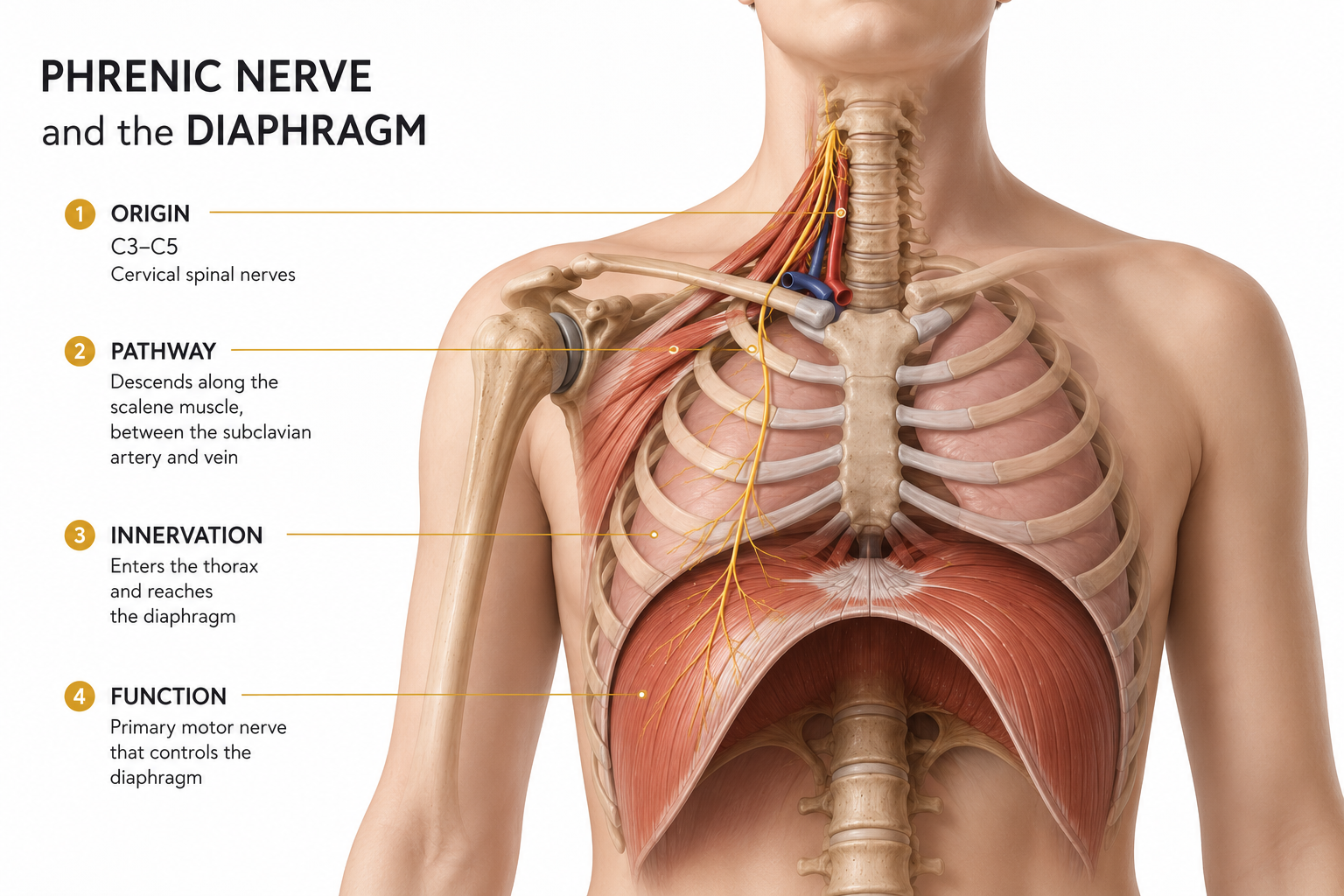
The diaphragm is your primary breathing muscle — a dome-shaped structure separating your chest cavity from your abdomen. What most people never learn is that the phrenic nerve, which controls the diaphragm, originates from the cervical spine at levels C3, C4, and C5. These are the exact same spinal levels that supply nerve signals to your shoulders and arms.
This shared neurological pathway is the anatomical reason why diaphragm and shoulder pain so frequently occur together. When the diaphragm is not functioning efficiently, the brain can misinterpret the neurological signals and register the discomfort as referred pain in the shoulder region. Countless people have undergone shoulder surgery or years of physical therapy without improvement — simply because no one investigated the diaphragm.
Understanding diaphragm and shoulder pain from this anatomical perspective completely changes how we approach treatment. The shoulder is not the source. It is the messenger.
How Diaphragmatic Dysfunction Creates Chronic Shoulder Tension
When the diaphragm weakens or loses its proper movement pattern, the body does not stop breathing. Instead, it recruits secondary muscles to compensate — specifically the scalenes, the sternocleidomastoid, and the upper trapezius. These are muscles located in your neck and upper shoulder region.
Every single breath then becomes a micro-contraction of your shoulder muscles. Multiply that by 20,000 breaths per day, and you begin to understand why diaphragm and shoulder pain creates such persistent, treatment-resistant tension. The shoulder muscles are being overworked not from exercise or injury — but from the simple act of breathing incorrectly around the clock.
I see this pattern clearly in desk workers, drivers, teachers, and caregivers — anyone who holds a fixed posture for long hours. Chronic stress compounds the problem significantly. Under stress, breathing becomes shallower and faster, accelerating the recruitment of shoulder muscles and deepening the diaphragm and shoulder pain cycle.
What I Observe Before I Touch the Shoulder
In my 12 years of clinical experience at Haim Body Balance Center, I have developed a specific observation protocol before I address any shoulder complaint. I watch the breath first.
Does the chest rise while the abdomen remains flat? That is an immediate red flag for diaphragm and shoulder pain. Does the client sigh frequently, hold their breath under mild stress, or struggle to breathe deeply on command? Each of these patterns tells me the diaphragm is not functioning as the primary breathing muscle.
One client — a 52-year-old teacher — had lived with left shoulder stiffness for two full years. X-rays were clear. MRI results showed minimal findings. Three separate clinics had treated her shoulder directly with zero lasting improvement. When I observed her breathing pattern, the answer became obvious immediately. She was breathing in a shallow, chest-dominant pattern that had been recruiting her left upper trapezius with every single breath for years.
Many clients arrive after years of failed shoulder treatments — the real answer lies in the breath.
This is the hidden reality of diaphragm and shoulder pain that conventional treatment consistently misses.
The Unconscious Nerve Brake: Why the Body Gets Stuck
Here is what makes diaphragm and shoulder pain particularly difficult to resolve with standard treatment. The problem is not simply muscular. Over time, as the body adapts to dysfunctional breathing patterns, the unconscious nervous system begins to lock the tension in place.
I apply the Kim Se-yeon Sbonsdo Unconscious Nerve Management method — a specialized technique that uses a 0.3-second stimulus to release the unconscious nerve brake. This is the key distinction between temporary relief and genuine recovery. When the unconscious nervous system has been holding a tension pattern for months or years, no amount of conscious stretching or exercise can fully override it. The brake must be released at the neurological level first.
With the 52-year-old teacher I mentioned, I applied this unconscious nerve brake release before addressing her breathing or her shoulder directly. Within three sessions, the shoulder stiffness she had carried for two years began to dissolve. She told me it was the first time any treatment had produced a result that actually held.
This neurological release is the foundation of how I approach diaphragm and shoulder pain — not from the outside in, but from the nervous system outward.
The Recovery Sequence That Produces Lasting Results
Once the unconscious nerve brake has been released, the body becomes ready to receive the following recovery steps. Attempting these without the neurological preparation produces only partial results.
Step 1: Unconscious Nerve Brake Release
This is the non-negotiable first step in resolving diaphragm and shoulder pain at the root level. The 0.3-second stimulus of the Sbonsdo method signals the unconscious nervous system to release its protective tension lock. Without this step, the muscles will return to their habitual holding pattern regardless of what other interventions are applied.
Step 2: Diaphragmatic Breathing Retraining
Ten minutes of diaphragmatic breathing daily can break the diaphragm and shoulder
🎵 For deep relaxation while practicing, listen to our 432Hz healing music:
Lie flat on your back. Place one hand on your chest and one hand on your abdomen. Focus on breathing so that only the lower hand rises. The chest should remain relatively still. Practice this for ten minutes daily. This simple exercise begins to break the diaphragm and shoulder pain feedback loop by restoring the diaphragm to its role as the primary breathing muscle.
For more information on diaphragmatic breathing, visit Mayo Clinic.
Step 3: Crocodile Breath Training
Lie face down on the floor. With each inhale, focus on feeling your lower back and ribs expand outward. This position trains the diaphragm to work against gravity, building endurance and depth that most people have never developed. Clients who practice this consistently report significant reduction in upper shoulder tension within two to three weeks.
Step 4: Thoracic Spine Mobility
A stiff thoracic spine mechanically restricts diaphragm movement. When the upper back cannot move freely, the diaphragm cannot fully descend during inhalation. Opening thoracic mobility gives the diaphragm the space it needs — and when the diaphragm moves freely, the shoulders no longer need to compensate. This is one of the most direct ways to interrupt the diaphragm and shoulder pain cycle structurally.
Step 5: Psoas Release
The diaphragm and the psoas muscle share fascial connections through the anterior spine. Releasing the psoas consistently produces immediate relief in both the core and the shoulder girdle — a result that surprises almost every client the first time they experience it. Addressing the psoas is an essential but frequently overlooked component of resolving diaphragm and shoulder pain comprehensively.
Identifying Your Own Risk Pattern
Not everyone experiences diaphragm and shoulder pain the same way. Here are the self-assessment signs I ask every new client to reflect on before their first session.
Do you breathe primarily from your chest rather than your belly? Do you find yourself holding your breath during concentration, stress, or physical effort? Do you sigh frequently throughout the day? Does your shoulder tension return rapidly after massage or stretching? Have you received multiple rounds of shoulder treatment without sustained improvement?
If you answered yes to two or more of these questions, there is a significant probability that diaphragm and shoulder pain is the underlying pattern driving your symptoms. The shoulder is not the origin. The breath is.
Long-Term Prevention: What Every Client Needs to Hear
Resolving diaphragm and shoulder pain is not achieved through a single treatment or a short course of exercises. It requires a fundamental shift in body awareness — specifically, the habit of monitoring your breathing during ordinary daily activities.
Not at the gym. Not during yoga class. At your desk, in your car, while preparing a meal, while talking on the phone. These are the moments when dysfunctional breathing patterns operate without your awareness. These are the moments that determine whether your shoulder tension will return or remain resolved.
When the diaphragm moves freely and the unconscious nerve brake has been released, the shoulders follow naturally. The body does not need to be forced into alignment. It finds its own balance when the root cause has been genuinely addressed.
After 12 years of working with clients whose diaphragm and shoulder pain had been misdiagnosed, undertreated, or dismissed entirely, the most consistent finding I can share is this: the breath is always involved. Always.
Start there. Everything else follows.
Disclaimer: This article is intended for general informational purposes regarding diaphragm and shoulder pain. If you are experiencing severe or persistent shoulder pain, please consult a qualified healthcare professional for personalized evaluation and treatment.
If you are also experiencing chronic pain beyond the shoulder, read our guide on How to Fix Chronic Pain: 5 Hidden Signs in Your Body to understand how foot alignment and body imbalance connect to your daily pain patterns.
Do you know that your body behaves exactly like a giant Jenga Tower? Imagine you are piloting a giant, state-of-the-art robot suit. It’s sleek, fast, and incredibly powerful.
Suddenly, BAM! A red warning light flashes on the control panel: KNEE JOINT FAILURE!
Your body behaves exactly like a giant Jenga Tower.
What do you do?
Option A: Spray paint over the warning light so you don’t have to look at it.
Option B: Slap a piece of duct tape on the outside of the robot’s knee and keep running.
Option C: Open the blueprint, find the actual electrical glitch, and fix it from the roots.
If you chose Option A or B, congratulations—you are doing exactly what most people do when they feel pain!
Whenever we get a headache, we pop a pill. When our knee feels stiff, we slide on a tight brace. But what if your pain is actually a giant liar? What if the real culprit is hiding somewhere else entirely, quietly stabilizing your body’s Jenga Tower?
Let’s dive into the ultimate body detective story to find out why your pain isn’t healing, and how a secret superhero inside you holds the key to saving the day!
1. Stop Chasing the Alarm: Why Your Pain is a Big Liar
We’ve all been there. You play a match of soccer, scroll on your phone for three hours, or sit at your school desk, and suddenly… Ouch! Your shoulder hurts.
Naturally, we react with our Mindless Habits:
The Pill Pop: Swallowing painkillers to mute the alarm.
The Patch Slap: Sticking icy-hot patches on our skin like stickers.
The Compression Squeeze: Wearing braces to force the joint to stay still.
These might make you feel better for an hour or two. But here is the shocking truth: the pain always comes back. Treating only where it hurts is like trying to fix a sinking ship by scooping out water with a teacup. You aren’t plugging the actual hole!
2. The Jenga Tower Effect: How Your Foot Controls Your Jaw
Your body is not a collection of random, separate Lego bricks. It is a highly connected chain—just like a giant Jenga Tower.
If you pull out a block from the very bottom of a Jenga Tower, what happens? The top of the tower starts to wobble, tilt, and eventually… CRASH!
In your body, the bottom of your Jenga Tower is your feet.
[ Your Jaw & Neck ] <– Complains and hurts!
▲
[ Your Shoulders ] <– Tilts to compensate
▲
[ Your Spine ] <– Curves under pressure
▲
[ Your Hips ] <– Shifts out of alignment
▲
[ Your Knees ] <– Absorbs the weird angles
▲
[ Your Feet ] <– THE FOUNDATION (The Glitch starts here!)
If your left foot is slightly tilted or weak, your knee has to bend weirdly to keep you upright. Because your knee is bending weirdly, your hip rotates. To make up for the crooked hip, your spine curves, your shoulder drops, and suddenly… you have a massive headache!
So, when your neck hurts, the actual “criminal” might be your left pinky toe. This bottom-up connection is what we call the Jenga Tower effect.
3. Wake Up Your Autopilot: The Unconscious Nervous System
Watch how activating the foot’s reflexive nerves restores the body’s natural balance mechanism.
If you had to consciously tell your heart to beat, your lungs to breathe, and every single muscle in your leg to contract just to take one step, your brain would literally explode from overload.
Thanks to our body’s built-in wisdom, we have a superhero: The Unconscious Nervous System. Think of this as your body’s Autopilot.
Your body’s autopilot relies on perfect nerve alignment to stay balanced.
When you step on a sharp pebble, you don’t think: “Hmm, a sharp object. I should lift my foot.” No! Your Autopilot yanks your foot away before you even realize what happened. This is an automatic reflex controlled by your nervous system.
Check out this scientific guide on Proprioception and Reflexes to learn more about how your body senses balance and movement.
When this Autopilot glitches, it stops realigning the Jenga Tower automatically, leading to chronic muscle tightness.
4. Calibrate Your Left-Right Balance (The 50/50 Rule)
For your Autopilot to run smoothly, your left side and right side must be perfectly balanced. They need to share the load 50/50.
But what if your Autopilot gets a “glitch” due to an uneven foundation?
If one side of your nervous system becomes lazy or unresponsive, your other side has to work twice as hard to keep you from falling over. Over time, this constant, unconscious muscle tension accumulates.
If you don’t reboot this nervous system Autopilot, your body’s Jenga Tower will remain crooked, and no massage or stretching will ever cure the pain permanently.
5. Rebuilding the Jenga Tower: The Haim Method Audit
At Haim Body Balance Center, we don’t play the guessing game. We don’t just put a hot pack where you point. Instead, we put on our detective hats and examine your body from the ground up, rebuilding your Jenga Tower from the foundation!
Through specialized neural response patterns (the KSNS method), we investigate:
The Foot Blueprint: Finding why your foundation is tilted.
The Postural Alignment: Checking how the wobble travels up to your neck.
The Autopilot Reflex: Verifying if your nerves are reacting at lightning speed.
By waking up those sleepy, unconscious nerves, we help your body heal itself and restore the Jenga Tower to its upright alignment.
Conclusion: Start Listening to Your Body’s True Language!
Pain is not your enemy. Pain is just your body’s way of waving a flag and saying, “Hey! My Jenga Tower is falling!”
The next time you feel a pinch or a stiff joint, don’t just try to silence it with mindless habits. Stop, look down at your feet, and realize that your body is a beautiful, connected masterpiece.
Are you ready to stop treating the symptoms and finally fix the root cause?
Read more on our About page to see how we help you achieve instant, lasting balance.
Let’s get your Jenga Tower perfectly stacked again!
Have you ever sat in a doctor’s office, holding a stack of “perfectly normal” test results, while still dealing with a throbbing skull? If you are reading this, you might know the frustration of unexplained headaches all too well:
A tight, invisible band wrapped around your forehead.
A heavy, dull pressure anchoring on one side of your head.
One ear that constantly feels like it’s underwater.
A strange, floating dizziness that intensifies when you are tired or stressed. You’ve probably had the MRIs. You’ve seen the ENT specialists. They look at the scans, smile, and tell you, “Everything is fine. There is nothing wrong.” But you don’t feel fine. You feel it every single day. Here is the story of a client who walked into our center with these exact symptoms—and how unlocking one core muscle can finally relieve unexplained headaches.
The Gap Between “Normal Scans” and Living Without Unexplained Headaches
When medical tests come back clear, most people feel a brief moment of relief, followed by deep confusion. If there is nothing wrong, why do I keep getting these unexplained headaches? The answer is simple: Scans show structure, not function. An MRI can detect tumors or neurological diseases, but it cannot see:
Chronic muscle guarding
Functional tension patterns
An overworked, hyper-vigilant nervous system These are not structural diseases; they are states of imbalance. Yet, they can cause very real, persistent, and distressing physical symptoms. To find real relief from unexplained headaches, we must look beyond the skull and investigate how the rest of our body functions as a whole. According to clinical research on unexplained headaches, muscle tightness and dysfunction in the neck and shoulder region are major contributors to persistent head pressure. But what causes this muscle tightness in the first place?
The Core Muscle You Need to Unlock: The Diaphragm
During our initial assessment of this client, we didn’t start with his head. We looked at his whole body as an interconnected system. While his standing posture looked fine at a glance, we noticed something unexpected during the physical assessment: the tissue just below his left ribcage was incredibly rigid. The area around his diaphragm—the primary core muscle of respiration—was hard, almost locked in place. When we gently pressed it, he winced.
“I didn’t even know that was tight,” he said.
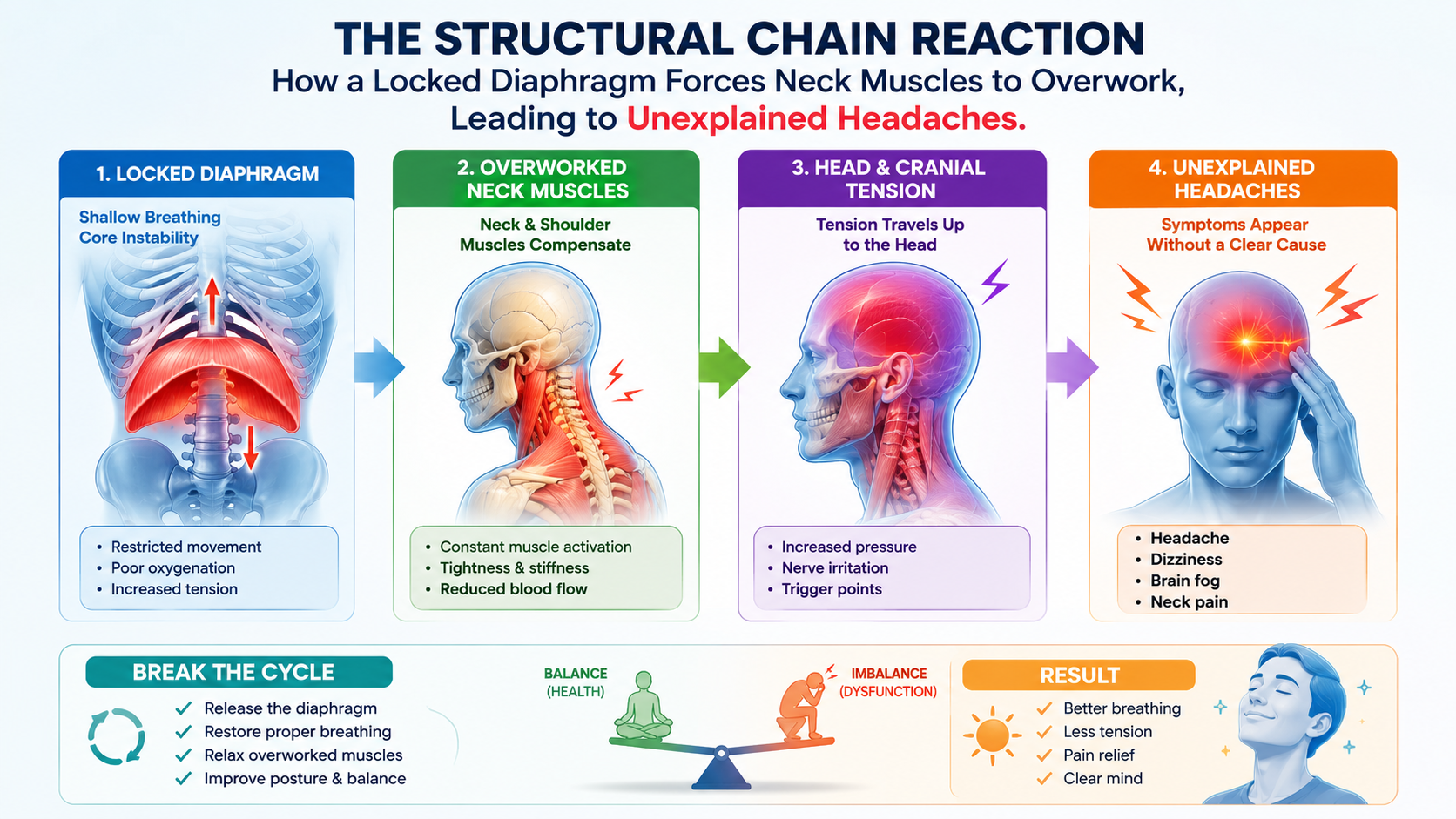
How a locked diaphragm triggers muscular imbalance, leading to neck tension and unexplained headaches.
   [ Locked Diaphragm ]  -->  Limits deep diaphragmatic breathing
            │
            ▼
   [ Overworked Neck Muscles ]  -->  Step in to lift the ribcage (Scalenes, Suboccipitals)
            │
            ▼
   [ Head & Cranial Tension ]  -->  Triggers unexplained headaches, forehead heaviness & dizziness
How a Tight Diaphragm Triggers Unexplained Headaches
When your diaphragm stops doing its job, your body doesn’t stop breathing. Instead, it adapts. It recruits “helper” muscles in your neck and shoulders—specifically the scalenes and suboccipitals—to manually pull your ribcage up with every single breath. These small neck muscles were never designed for 24/7 labor. Over time, they become exhausted, shorten, harden, and pull relentlessly on the base of your skull. This structural chain reaction is the hidden root cause of your chronic and unexplained headaches:
Temple Tension: Caused by overworked neck and jaw muscles pulling on the facial fascia.
Forehead Heaviness: Triggered by restricted blood flow and tight cranial tissue.
Ear Fullness: Caused by tension radiating near the jaw, compressing the eustachian tubes.
Dizziness: Triggered when tight muscles at the base of the skull send confused, hyper-tense signals to your brain’s balance centers. Often misdiagnosed as standard migraines, these unexplained headaches are actually biomechanical alarms telling you that your breathing mechanics are completely out of order.
The structural chain reaction: How a locked diaphragm forces neck muscles to overwork, leading to unexplained headaches.
Letting the Body Breathe Again
Our sessions are slow, quiet, and gentle. We don’t crack joints or force the tissue with heavy pressure. Instead, we focus on helping the diaphragm soften, guiding the nervous system out of “fight-or-flight” and into safety. As that deep, core tension began to melt, we worked our way up the ribcage, eased the overworked muscles of the neck, and finally addressed the forehead. About twenty minutes into the session, the client took a long, deep, audible sigh. His shoulders visibly dropped, and his history of chronic, unexplained headaches began to make perfect sense to him.
“Something just let go,” he whispered.
When he stood up at the end of the session, his face looked entirely different. The heavy, exhausted cloud had lifted from his eyes. “How did you know exactly where it hurt?” he asked. “I never even told you my forehead was tight.” “Your body told us,” was the honest answer.
Self-Check: Are Unexplained Headaches Stemming from Your Respiration?
If you are experiencing unexplained headaches, try this simple, two-step check at home to see if your breathing pattern might be contributing to your symptoms.
1. The Hand-on-Chest Test
Place one hand on your chest and one hand on your belly. Take a deep breath.
Does the hand on your chest rise first and highest? * Do your shoulders shrug upward toward your ears?
If yes, your neck muscles are working overtime to pull air in, bypassing your diaphragm.
2. The Rib Release Breath (A Daily Practice)
To help invite your diaphragm back into the conversation and find relief from unexplained headaches, try this gentle reset:
Sit comfortably and wrap your hands gently around the sides of your lower ribcage.
Inhale slowly through your nose, focusing on pushing your ribs outward into your hands (like an umbrella opening), rather than lifting your chest upward.
Exhale slowly through your mouth, letting your ribs sink back inward.
Practice this for 2 to 3 minutes when you feel head pressure rising.
Listen to the Whispers of Your Body
Watch this self-care guide to release deep physical tension and find natural relief from unexplained headaches.
Your body rarely starts by shouting. It whispers first. It whispers with a slight neck stiffness in the morning, a mild ear fullness that comes and goes, or unexplained headaches at the end of a long workday. These are not imaginary complaints, and they are not “all in your head.” They are physical signals that your breathing, posture, and nervous system have drifted out of balance. If your symptoms are new, sudden, or worsening, always consult a medical doctor first. Ruling out underlying medical conditions is an essential step. But if you have done that, and you are still searching for answers, it might be time to stop looking at the scans and start listening to your body. Treating unexplained headaches requires an integrated approach that addresses the root muscular imbalances, not just the symptoms. If you are ready to stop managing symptoms and start restoring your posture, explore our Sole to Body balancing services to find the root cause of your tension and reclaim your daily comfort.
Most parents assume that severe teenager muscle stiffness, postural tension, and chronic circulation problems are adult concerns — the inevitable toll of decades spent at a desk.
Chronic muscle stiffness in teenagers is no longer rare — it now appears at the same intensity once seen only in adult office workers.
But what happens when a fifteen-year-old walks through your door carrying the same physical burden as a forty-five-year-old office worker? This is exactly what we encountered recently in our assessment, revealing a deeply concerning trend in teenager muscle stiffness.
”His Shoulders Feel Like Stone”
A high school freshman recently came in with his mother. She was calm, but clearly worried.
”His shoulders feel like stone. Even when he lies down, his body posture looks uncomfortable.”
At first glance, he appeared to be simply another tired student — the kind whose exhaustion reads as ordinary in environments where academic pressure begins before sunrise and ends well after midnight.
But as we began a careful postural and muscular assessment, the picture became far more complex. This wasn’t just temporary fatigue; it was a severe case of developmental teenager muscle stiffness.
His daily routine told the real story:
Heavy Backpack: A heavy bag carried every day across both shoulders.
Prolonged Sitting: Six to eight hours of seated study, often with the head pushed forward.
Gaming Habits: Evening gaming sessions lasting two to three hours, body hunched toward the screen.
This is not an unusual schedule for high school students today. In fact, it is almost universal. What was unusual was how completely his body had adapted to it — and how it accelerated his physical degradation.
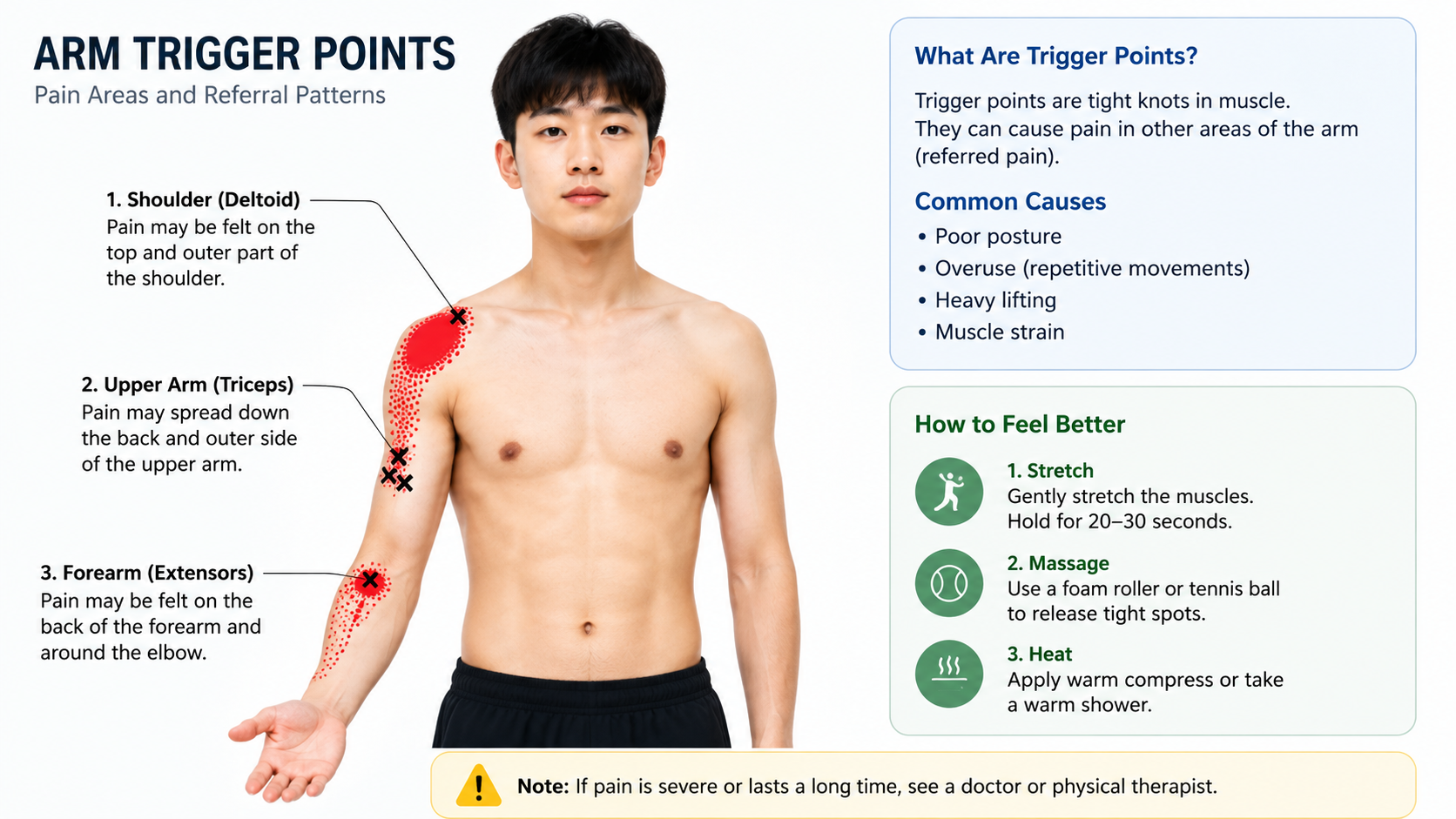
Key muscle trigger points commonly activated in teenagers with chronic muscle stiffness — including the pectoralis major, deltoid, biceps brachii, and infraspinatus.
When we observed his posture lying flat on the treatment bed, several indicators of advanced teenager muscle stiffness immediately stood out.
The arms and shoulders were in a state of chronic contraction. Not simply “tight” in the way a muscle feels after exercise — but hardened, with individual muscle groups compressed together and resistant to movement. The right forearm, in particular, felt dense and immobile around the biceps and triceps region. The tissue had lost its natural pliability.
This is a condition sometimes described in clinical body work as myofascial densification — where layers of muscle and connective tissue lose their ability to slide and glide freely against each other, creating a sensation of thickness and restriction that goes beyond ordinary soreness.
The lower body told a parallel story of compensation. His left foot had fallen outward passively, with the outer ankle bone resting against the bed without any muscular control holding it in neutral alignment. This kind of passive external rotation suggests that the stabilizing muscles of the hip, lower leg, and foot were no longer maintaining their baseline tone — a common compensatory pattern when the upper body is chronically overloaded with heavy tension.
In body balance assessment, we rarely look at one region in isolation. The human body communicates systemically, especially when dealing with chronic teenager muscle stiffness.
Why the Body Responds to Teenager Muscle Stiffness
According to Mayo Clinic, chronic muscle tension that persists beyond normal fatigue requires professional assessment. The human muscular system is designed around a fundamental principle: tension and release.
The human muscular system is designed around a fundamental principle: tension and release.
Muscles contract to create movement and maintain posture, then release to allow recovery and circulation. When this cycle is disrupted — by prolonged static postures, chronic psychological stress, or insufficient movement — the system defaults to a state of sustained contraction.
For teenagers, the compounding factors are significant. The table below breaks down how modern daily habits lead to systemic physical lockdown:
Heavy backpack load: Forward head posture, upper trapezius compression
Prolonged desk sitting: Hip flexor shortening, thoracic rounding
Low movement volume: Reduced fascial hydration, circulation stagnation
None of these factors alone would cause serious dysfunction. Together, sustained over months and years during a period of active skeletal and muscular development, they create the perfect storm for chronic teenager muscle stiffness.
1. Tension Release Through Traditional Cupping Therapy
Traditional cupping therapy was applied to the forearm, shoulder, and clavicle region. This approach uses localized suction to decompress compressed tissue layers, encourage circulatory movement, and interrupt sustained muscular contraction patterns.
After the session, darker reaction marks appeared across the treatment area — a common response in cases of long-term muscle tension and reduced local circulation, well-recognized in traditional East Asian body care traditions.
The student’s immediate feedback was telling:
“My arms feel lighter now. My shoulders move more easily.”
This is not simply a subjective impression of relaxation. When compressed tissue is decompressed and circulation is encouraged to flow through areas that have been chronically restricted by teenager muscle stiffness, the perceived weight and resistance in the limbs decreases noticeably within the same session.
2. Foot Reflex and Neurological Movement Management
Foot reflex techniques and non-conscious neurological balance management were also applied to the lower extremities.
This component of clinical posture care is essential but often overlooked. The feet are not simply the foundation of standing posture — they are a continuous feedback system sending postural signals upward through the kinetic chain at all times.
When the feet lose their stability and grounding, the body compensates by increasing muscular tension throughout the lower leg, thigh, hip, and eventually the lumbar and thoracic spine. This compensation travels upward, contributing to shoulder and neck tension that appears, on the surface, to be entirely unrelated to the feet.
Addressing the lower body was not secondary. It was essential to solving his upper body stiffness. For a deeper look at how foot health affects whole-body posture, see our guide on ingrown toenails and postural imbalance.
The Upward Chain: Why Foot Instability Reaches the Shoulders
One of the most important concepts in body care is understanding how tension travels through connected systems. When the feet are unstable, the body recruits muscular compensation from progressively higher regions, amplifying the overall teenager muscle stiffness:
[Shoulders & Neck] — Severe stiffness, tension, and persistent pain (Final visible stress point)
By the time a patient notices shoulder stiffness, the pattern may have originated much further down the body — sometimes months or years earlier.
This is why treating only the area of complaint rarely produces lasting results. Comprehensive body balance management works across the full kinetic chain to eradicate teenager muscle stiffness at its source.
Teenager Muscle Stiffness: A Rapidly Growing Modern Pattern
The case described above is not exceptional. Over recent years, posture clinics have seen a consistent, alarming increase in teenagers presenting with physical tension patterns that were previously associated almost exclusively with working-age adults.
The modern lifestyle factors driving this shift are structural and hard to avoid:
Screen time — smartphones, tablets, and computers now occupy several hours of most students’ evenings.
Postural monotony — hours in the same seated position without adequate movement breaks.
Load imbalance — heavy school bags carried asymmetrically over developing spines.
Sleep disruption — late-night studying and blue light screen use reducing restorative rest.
Movement poverty — physical education reduced in favor of intense academic preparation.
Many students normalize their discomfort because it has been present for so long. They say: “I’m just tired from studying,” or “My shoulders are naturally stiff.” These rationalizations are understandable — but they delay the recognition that the body is desperately asking for professional attention.
432Hz healing music for deep relaxation and muscle tension relief.
Why Early Intervention for Teenager Muscle Stiffness Matters
Adolescence is a period of rapid musculoskeletal development. The patterns established during these years — postural habits, muscular tension tendencies, and movement preferences — tend to persist and deepen into adulthood.
This is both a major challenge and a powerful opportunity.
When chronic tension patterns are identified and addressed early, during a period when the body retains high adaptive capacity, the potential for meaningful improvement is significant. Correction becomes exponentially more difficult with each year that compensatory patterns are allowed to consolidate into adult bone and muscle structures.
Early body balance care for teenager muscle stiffness is not a luxury. It is proactive maintenance of a physical system that is still in the process of forming itself.
Appropriate interventions may include:
Postural awareness education — learning what neutral alignment feels like and how to return to it.
Targeted stretching and mobility work — particularly for the hip flexors, thoracic spine, and upper trapezius.
Load management — reassessing backpack weight and carry method.
Movement integration — regular breaks to interrupt prolonged static postures.
Professional body balance assessment — when tension has already become chronic.
A Final Thought on Whole-Body Balance
At the end of the session, the student sat up and rotated his shoulders slowly. The heavy stiffness that had settled into his upper body so gradually that he had stopped noticing it — was, for the moment, completely gone.
His mother watched quietly, then asked: “Why didn’t we seek help sooner?”
It is a question worth sitting with — not just for this family, but for anyone caring for a young person today. The body keeps a strict record of everything it carries. It is worth paying attention before the record becomes a permanent burden.
If you’ve been dealing with recurring knee, back, or shoulder chronic pain for months—or even years—this article may explain something your doctors haven’t mentioned yet. (1)
Have you ever met someone who says: “I’ve had injections, medicine, physical therapy, and endless exercises… but the chronic pain always comes back.” (2) At first, it sounds strange. If the treatment was successful, why does the body continue to struggle with this persistent chronic pain? (3)
Over 12 years of working with clients, I have observed this exact pattern repeatedly. It is the defining hallmark of chronic pain sufferers who have already tried every conventional treatment available. (4) When we looked closer, almost all of them shared a common, overlooked physical foundation in their feet.
How big toe range of motion affects your body’s center of gravity and triggers chronic pain.
Many of these individuals showed specific signs in their feet:
Weak big toe grip strength
Toes that could not bend or splay properly
Stiff, unstable ankles and weak foundation
Difficulty balancing their weight while walking
Muscles that fatigued quickly and caused tension up the body
Surprisingly, most of these individuals could not bend their toes anywhere close to the angle required for a healthy walking stride, which directly triggers chronic pain. (5)
The Problem Most People Never Notice: The “Invisible Brake”
Most people assume that chronic pain begins exactly where it hurts.
Knee pain? It must be a knee problem.
Back pain? It must be a spine issue and not related to the feet.
Shoulder pain? It must be a joint issue.
But the human body does not work in isolated pieces; it operates as a continuous kinetic chain from your feet to your head. Your feet are the literal foundation of your entire body. When your toes lose their natural strength, your body doesn’t just stop moving—it begins compensating silently, which eventually leads to severe chronic pain.
This compensation acts like an invisible brake system inside your body. When your brain no longer trusts the stability of your feet and ankles, your nervous system automatically triggers muscle tightness as a protective mechanism. This protective tension travels upward from the base, radiating through your calves, knees, hips, and lower back, creating systemic chronic pain.
Over time, this compensation becomes your body’s default movement pattern. You treat the symptoms upward, while the real root of the chronic pain—your dysfunctional feet—remains completely unaddressed.
Why Temporary Relief From Chronic Pain Fades
Many people feel genuinely better after getting a massage or taking medication for chronic pain. (9) These treatments are excellent for reducing localized inflammation in the short term. However, if your underlying movement mechanics in your feet remain unchanged, the mechanical stress will keep returning to the same spots, causing the same chronic pain. (10)
Think of it like driving a car with the parking brake slightly engaged. No matter how often you treat the car, the strain will eventually cause a breakdown. When your muscles stop functioning naturally, your nervous system keeps holding onto tension patterns. This is why so many people experience the frustrating cycle of: “It gets better for a few days… and then the soreness returns.”
5 Chronic Pain Signs Found in Your Feet (11)
Clinical analysis of a 60-year-old patient overcoming severe jaw pain and autonomic imbalance by restoring big toe nerve circulation.
How do you know if your body’s stiffness is secretly originating from the ground up? People with this pattern almost always display these five warning signs in their feet:
1. Weak Toe Grip Strength in Your Feet
If you try to grip the floor with your bare toes, it feels difficult. Your toes might feel “numb” to the ground or lack the strength to actively stabilize you against postural stress.
2. Locked or Unstable Ankles
Your ankles feel stiff, restricted, or click constantly. Without strong alignment, your ankles lose stability, and this instability travels upward to cause muscle strain.
3. Uneven Weight Distribution on Your Feet
When standing still, you naturally shift almost all of your body weight to one side. If you look at the soles of your old shoes, you will notice highly uneven wear patterns caused by unbalanced steps.
4. Chronic Calf Tightness Connected to Posture
Your calf muscles feel like tight bands of steel. No matter how much you stretch them, they tighten right back up because your lower posture is not supporting your weight properly.
5. Rapid Fatigue While Standing on Your Feet
Standing in one place for more than 10 minutes feels exhausting. Your lower back begins to ache, and your body feels heavy because your alignment has lost its natural shock absorption.
Interactive: The 3-Second “Big Toe” Test
Why proper big toe movement is critical to preventing compensatory chronic pain in your knees, hips, and lower back.
Want to test your foundation right now? Try this simple test while sitting or standing barefoot:
Keep your feet flat on the floor.
Try to lift only your big toe while keeping the other four toes pressed firmly into the ground.
Now, try the reverse: press your big toe down and lift the other four toes.
If your toes refused to move independently, your brain has lost proper connection to your lower muscles. This is a classic sign of compensatory tension traveling up your body to create long-term strain.
Rebuilding the Foundation: 3 Simple Steps for Better Feet
True recovery is not just about silencing discomfort temporarily; it’s about making your nervous system feel safe again by restoring basic function to your lower body. To break the cycle of compensation, you must restore your foundation.
Here are three simple exercises to start waking up your lower body:
1. Toe Splitting & Splaying
Spend 2 minutes daily manually spreading your toes apart with your fingers to restore the natural width of your stride. This gives you a wider, more stable base to prevent posture issues.
2. The Towel Curl (Strengthening the Foundation)
Place a small towel flat on the floor. Using only your toes, slowly scrunch and pull the towel toward you. This rebuilds the intrinsic arch muscles and reduces mechanical stress.
3. Slow Ankle Circles
Sit with your leg crossed and slowly rotate your ankle in the largest circle possible. This improves mobility from the ground upward, relieving the tension that causes back tightness.
Final Thoughts: Look to Your Feet
Persistent discomfort is a messenger, but it doesn’t always tell you where the crime was committed. Sometimes, your aching lower back is simply tired of working overtime to compensate for a foundation that went offline years ago.
By restoring natural movement to your feet and toes, you allow your entire kinetic chain to relax. You might just find that when your foundation finally learns to support you, the rest of your body can finally let go of the chronic pain. (12)
For those suffering from chronic muscle tension, the frustration of unexplained physical discomfort can be overwhelming. Many people living with this silent struggle of chronic muscle tension hear this disappointing sentence: “Doctor, the pain is still there… but all my test results say I’m completely fine.”
Medical Disclaimer: The information provided in this article is for educational and informational purposes only and is not intended as medical advice. Always consult with a qualified healthcare professional or physician regarding any medical condition, diagnosis, or treatment plan.
A close friend of mine recently shared this frustrating, anxiety-inducing story with me. For nearly six months, he lived with a persistent, nagging discomfort on the right side of his waist and rib area. It wasn’t the kind of sharp, agonizing pain that would send you rushing to the emergency room. Instead, it was a dull, constant tightness—uncomfortable enough to disrupt his focus every single day. Sitting at his desk for more than an hour felt strangely exhausting. Twisting his upper body felt tight and restricted.
To find answers, he visited a major hospital and underwent a series of comprehensive medical examinations. He had an abdominal ultrasound, an MRI of his lumbar spine, and routine blood work. Yet, every single time, the medical reports returned with the same puzzling verdict: “No structural abnormalities found.”
At first glance, hearing this news should have brought a massive wave of relief. But strangely, it had the opposite effect. He asked himself, “If there is absolutely nothing wrong with my body, why do I still feel this discomfort every single second?” What my friend didn’t realize is that his body was experiencing the profound physical effects of chronic muscle tension. When medical scans find nothing, the culprit is almost always rooted in the nervous system and muscular system.
Prolonged sitting with poor posture is a silent trigger for chronic muscle tension.
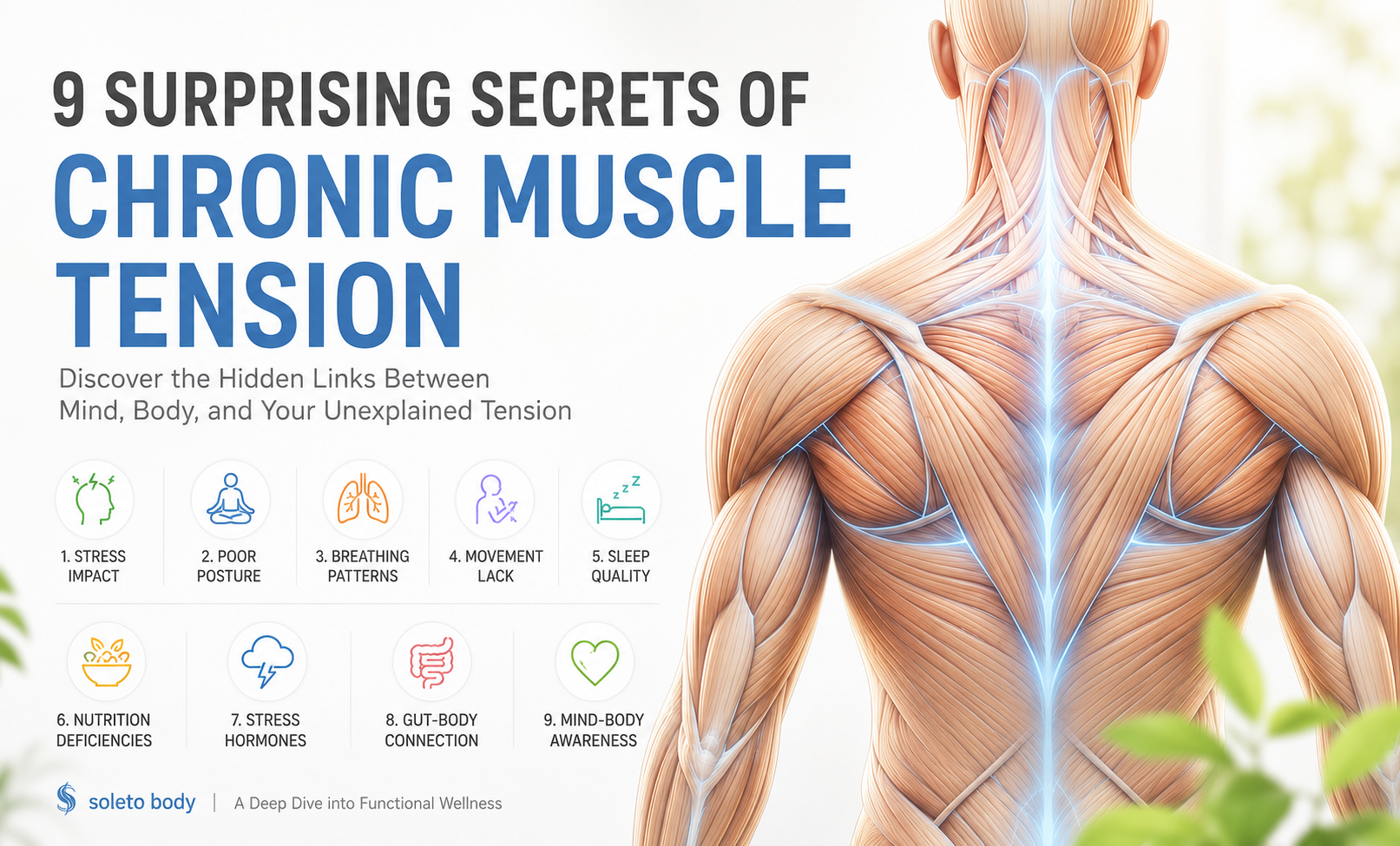
Here are the 9 surprising secrets of chronic muscle tension that you are likely ignoring, and how they completely dictate your physical well-being.
Watch how the revolutionary KSNS (Sbonsdo) method restores deep muscular and nerve balance to relieve long-standing back pain that standard MRI scans often miss.
Modern medical imaging technology is incredibly advanced. An MRI, CT scan, or ultrasound can detect structural crises with microscopic precision. They are designed to spot tumors, herniated discs, fractures, acute inflammation, and advanced organ diseases.
However, these advanced machines have a massive blind spot: they cannot measure the invisible pain of chronic muscle tension or soft-tissue ischemia. Muscles, tendons, and fascia do not show “pain” on an MRI unless they are physically torn or ruptured. A muscle can be severely locked up, starved of oxygen, and firing continuous pain signals to your brain, yet it will look completely normal on a high-tech scan. If your tests are clear but you are still hurting, your pain is not imaginary—it is simply structural-free. To understand how chronic muscle tension behaves, we must look deeper into our daily stress responses.
2. Your Brain Subconsciously “Guards” Areas of Stress
When you experience psychological stress, financial anxiety, or physical fatigue, your brain instinctively perceives a threat. It triggers a primitive survival mechanism known as muscle guarding.
Without you ever realizing it, your brain sends a continuous, low-grade electrical signal to your muscles to “brace for impact.” Your shoulders shrug toward your ears, your jaw clenches, and your core muscles tighten. If the stress never truly stops, the muscles never get the signal to relax. This subconscious reaction directly triggers chronic muscle tension, keeping your body in an ongoing state of physical alarm and deep postural restriction.
3. The Deep Diaphragm is the Epicenter of Unexplained Side Pain
When we are stressed or sitting hunched over a laptop for eight hours a day, our breathing patterns instinctively change. We stop breathing deeply into our abdomen and begin taking shallow, rapid chest breaths.
This is often the primary root of upper torso chronic muscle tension. This bad breathing habit causes the deep diaphragm—the primary muscle of respiration sitting right up under your ribs—to tighten and seize up. Because the diaphragm shares profound myofascial connections with the lower back, ribs, and waist, a locked diaphragm projects a constant, vague sense of pressure or aching right around the lower rib cage, which can worsen overall chronic muscle tension over time.
4. The Quadratus Lumborum (QL) Mimics Internal Organ Pain
The Quadratus Lumborum (QL) is a deep lower back muscle that connects your lowest rib to your pelvis. It is a notorious culprit for unexplained side-waist pain and structural chronic muscle tension.
When you sit with poor posture—such as leaning heavily to one side, crossing your legs, or slouching—the QL muscle on one side is forced to stay in a constantly stretched or locked position. Over time, it develops hyper-irritable knots called trigger points. These trigger points are famous for radiating deep, sickening discomfort to the front of the abdomen, hips, and lower waist. This chronic muscle guarding leads to localized chronic muscle tension, making people believe they have a kidney or bowel issue when it is simply a suffocating muscle.
5. Chronic Tension Starves Your Muscles of Crucial Oxygen
When a muscle remains in a state of constant, uninterrupted contraction, it physically squeezes the microscopic blood vessels running through it. This localized restriction of blood flow is known as micro-chemia.
Because the blood flow is restricted, the muscle tissue is starved of fresh oxygen and vital nutrients. At the same time, metabolic waste products like lactic acid cannot be efficiently flushed out. This toxic, low-oxygen environment directly causes chronic muscle tension, creating a constant, burning, or dull ache that resting alone will not fix. To help alleviate chronic muscle tension, restoring normal blood flow and oxygenation to the affected tissues is an absolute priority.
6. The Nervous System Becomes “Hyper-Sensitized” Over Time
If a muscle stays tight for months on end, the relationship between that muscle and your central nervous system completely changes. This neurological phenomenon is called central sensitization, which acts as an amplifier for chronic muscle tension.
Your spinal cord and brain become hyper-reactive to the constant stream of distress signals. Essentially, the volume knob on your pain receptors gets turned all the way up. Once this neurological link to chronic muscle tension is established, even normal, gentle movements—like twisting your torso, bending over, or sitting down—are misinterpreted by your brain as dangerous threats, triggering an intensified sensation of pain.
7. Youth and Regular Exercise Do Not Make You Immune
Many young adults in their 20s and 30s believe that severe muscle stiffness is an old-age issue. This is a dangerous misconception. Today, young office workers, software developers, dedicated gamers, and even regular gym-goers are highly vulnerable to chronic muscle tension due to prolonged static postures.
In fact, people who lift weights regularly often overlay heavy physical stress on top of an already exhausted, poorly aligned posture. The human body adapts to daily stress silently, accumulating micro-tensions until one day, a seemingly simple movement causes the entire system to lock up under the weight of accumulated chronic muscle tension.
8. Postural Adaptation Creates a Domino Effect in the Body
The human body is bound together by a continuous, interconnected web of connective tissue called fascia. No muscle operates in isolation, meaning that the physical manifestation of chronic muscle tension in one area will quickly travel to another.
If you have a tight right waist or QL muscle, your body will instinctively tilt or shift your weight to the opposite side to avoid discomfort. This subtle, subconscious shift forces your opposite hip, your mid-back, and even your neck muscles to overwork to keep your eyes level. What started as a small, localized tension in your lower ribs can slowly morph into a full-body structural imbalance, worsening your systemic chronic muscle tension, altering your gait and sleep quality.
9. True Relaxation is Not a Luxury—It is Essential Maintenance
When my friend asked me, “If the medical tests are normal but I’m still hurting, what am I supposed to do?” my answer was simple: Your body does not need aggressive medical intervention. To treat chronic muscle tension, it needs systematic, neurological safety.
When your muscles are locked in a chronic guarding state, pushing through the pain or attempting aggressive, heavy workouts will only make your nervous system tighten up further. True relaxation is not about being lazy or pampering yourself; it is a vital physiological requirement to signal back to your brain that the danger has passed, allowing you to resolve long-standing chronic muscle tension.
Consistent, gentle somatic stretching is essential to signal safety to your nervous system and release deep tissue tightness.
Calming your mind with natural soundscapes is a powerful way to reduce somatic guarding and ease chronic muscle tension.
Calming your mind with natural soundscapes is a powerful way to reduce somatic guarding and ease chronic muscle tension.
🛠️ The 4-Step Recovery Action Plan
1. Diaphragmatic Breathing (The 4-7-8 Reset): Inhale deeply through your nose for 4 seconds, allowing your belly to expand. Hold for 7 seconds, and exhale slowly through your mouth for 8 seconds. Do this for 5 minutes daily to immediately down-regulate your fight-or-flight response and release a locked diaphragm, easing chronic muscle tension.
2. Gentle, Passive Mobility Work: Avoid intense stretching that causes your muscles to fight back. Instead, perform gentle movements like the Cat-Cow stretch, passive supine spinal twists, and gentle side bends. Focus on breathing smoothly through the movement to reduce chronic muscle tension.
3. Progressive Muscle Relaxation (PMR): Before sleep, deliberately tense a specific muscle group (like your shoulders or lower back) for 5 seconds, then completely let go for 10 seconds. This contrast trains your brain to recognize and release subconscious muscle guarding.
4. Implement Movement Snacking: Never sit continuously for hours. Set an alarm to stand up, shake out your limbs, and walk around for 2 minutes every single hour to prevent micro-ischemia from setting into your lower back and waist.
(Note: For more professional guidance on physical health and alignment, check out high-quality health resources like Mayo Clinic’s guide on myofascial pain to learn more about somatic recovery.)
Conclusion: Listen to the Whisper Before Your Body Screams
Your body is an incredibly intelligent, communicative system. It rarely begins with an unbearable medical crisis. Instead, it starts with a subtle whisper—a slight tightness in your side, a faint restriction when you twist, or an unexplainable dull ache after a stressful day.
When a doctor tells you that your scans are clear but it looks like muscular tension, it is not a dismissive diagnosis. It is a profound invitation to re-evaluate how you live, breathe, and handle daily stress. By understanding chronic muscle tension and actively giving your body the restorative care, hydration, and neurological safety it deserves, you can finally break free from invisible pain and guide your physical health back into perfect, vibrant balance.
(If you found this guide helpful, be sure to read our Sole to Body somatic health blog for daily somatic wellness and posture management.)
Picture this: You wake up at 7:00 AM, ready to crush your day.
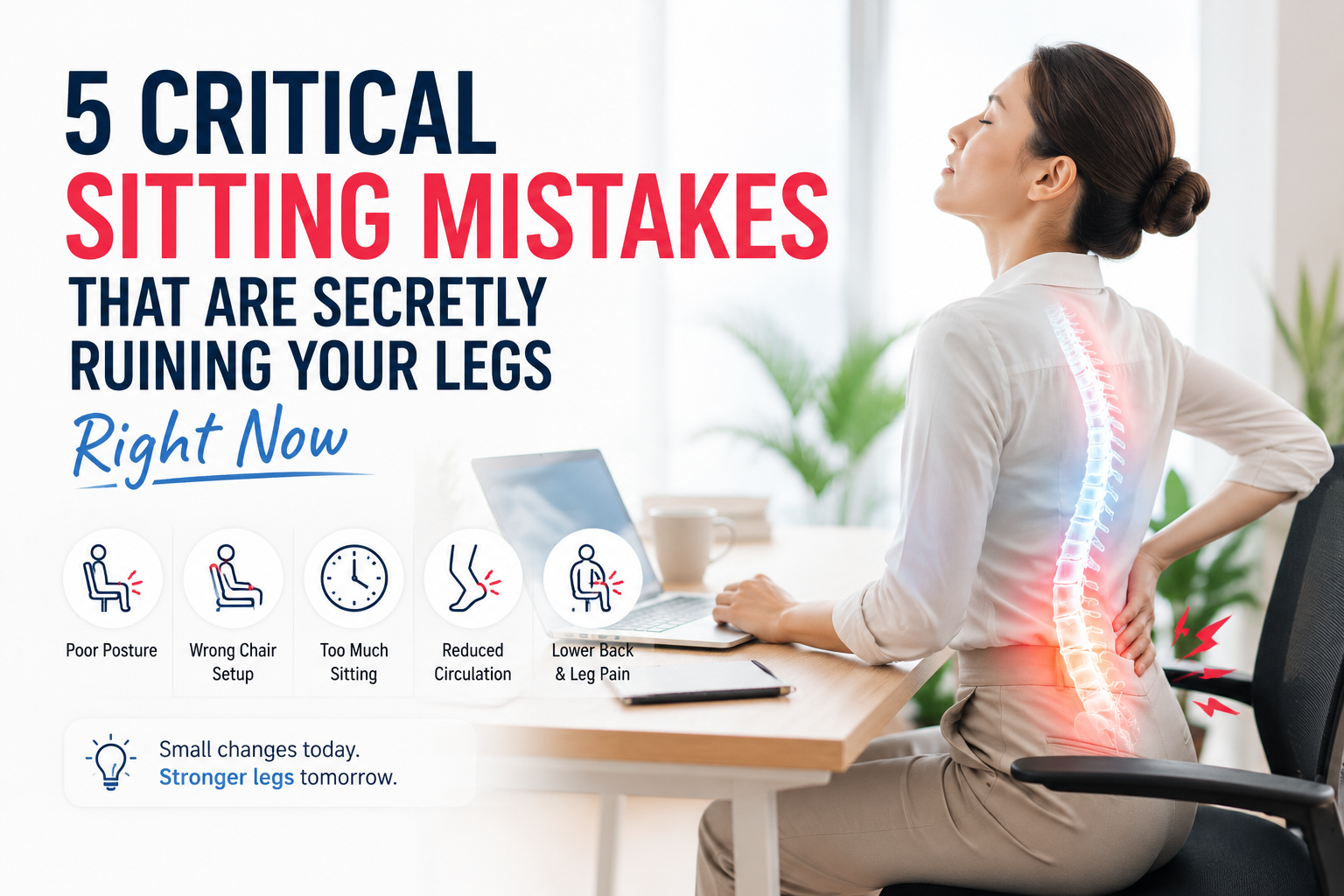
Unconsciously, you might be making critical sitting mistakes that silently damage your body.
Long hours of sitting at a desk can quietly increase tension in the legs, hips, and lower back.
You swing your legs out of bed, but the moment your feet hit the floor, a blinding, white-hot agony rips through your right calf.
It feels like your muscle is violently wringing itself out like a wet towel. You gasp, clutching your leg, waiting for the “charlie horse” to pass.
But here’s the kicker—the cramp fades, but the nightmare doesn’t.
When you try to stand, your right calf feels completely fossilized. It’s rock-hard, heavy, and throbbing, as if someone overnight snuck into your room and replaced your muscle with a 10-pound sandbag. Walking feels like dragging an anchor.
You immediately open TikTok or Google. “Is it a magnesium deficiency?” “Should I eat a banana?” Hold that thought.
If you’ve recently transitioned into a lifestyle where you’re glued to a desk for 5 to 6 hours a day, that rock-hard leg isn’t just an annoying cramp.
Whether you’re a 20-something college student cramming for finals, a hardcore gamer climbing the ranks, a remote software developer, or a seasoned professional adapting to long hours of deep digital work—these physical issues are often triggered by daily sitting mistakes related to your chair.
Are your daily sitting habits secretly straining your lower-body muscles?
The Anatomy of the Leg Anchor: Sitting Mistakes Explained
To understand exactly what is happening inside your body, let’s dissect this sudden, terrifying symptom using a strategic framework: PASONA (Problem, Agitation, Solution, Opportunity, Narrow Down, Action).
1. Problem: The Sudden “Sandbag” Calf
The immediate crisis is two-fold: a sudden, excruciating nighttime or early-morning muscle spasm (cramping) followed by a persistent, heavy, tight, and rock-hard sensation in just one leg.
Unlike normal fatigue that affects both limbs equally after a long run, this structural imbalance targets one specific side, refusing to relax even hours after the initial cramp has subsided.
2. Agitation: The Hidden Danger of the Seat
Here is where it gets dangerous. When you experience a symptom this intense, your first instinct might be to grab a foam roller and violently massage the knot, or pop three magnesium supplements and wait it out.
Stop right there. If this stiffness is caused by an underlying vascular or neurological issue, aggressive massaging can turn a silent condition into a life-threatening emergency.
When you sit continuously for 5 to 6 hours a day, the edge of your chair acts like a physical dam, pinching the deep veins and nerves running behind your knees and through your glutes. Over a period of 3 months, these daily sitting mistakes and mechanical stresses silently accumulate.
If a blood clot (Deep Vein Thrombosis, or DVT) has formed in that stagnant environment, aggressively massaging the calf can break that clot loose. From there, it travels straight to your lungs, causing a pulmonary embolism—a sudden medical emergency.
Alternatively, that “sandbag” feeling could mean a lumbar nerve is being severely pinched by a compressed spinal disc or a suffocated piriformis muscle in your hip, throwing your lower-body nervous system into a chronic state of emergency. Dismissing these posture-induced sitting mistakes as a simple “lack of vitamins” wastes critical diagnostic time.
3. Solution: Medical Evaluation Over Self-Diagnosis
The absolute, non-negotiable solution is professional clinical verification. You must look past the surface symptom (the cramp) and investigate the structural and vascular plumbing of your leg.
Vascular Ultrasound: To check the deep veins for any signs of blood pooling or clotting.
Neurological and Orthopedic Assessment: To verify if a hidden lumbar disc compression or pelvic misalignment is sending distorted, continuous electrical signals to your calf muscle, forcing it to lock up.
4. Opportunity: Transforming Your Workspace into a High-Performance Lab
The silver lining? This terrifying wake-up call is your body’s ultimate warning system, forcing you to redesign how you live, work, and move before permanent structural damage occurs.
By identifying the exact root cause, you can stop these harmful sitting mistakes and optimize your workspace. You will shift from a sedentary, stagnant posture to an active, dynamic flow that boosts both vascular health and cognitive focus.
5. Narrow Down: Who is Most at Risk?
This condition specifically targets individuals who have undergone a sudden, drastic shift in their daily habits within the last 90 days.
If you went from an active lifestyle to sitting continuously for over 5 hours without breaking, or if you are over 60 managing unconscious nerve pathways, your vascular and nervous systems are highly vulnerable to sudden posture-induced shocks.
6. Action: Your Immediate 3-Step Survival Guide
Don’t wait for tomorrow. Take these three immediate steps right now to protect your leg and correct those daily sitting mistakes:
Elevate and Rest: Lie down and prop your right leg up on a few pillows so it rests slightly above the level of your heart. This uses gravity to naturally drain stagnant fluid and ease structural pressure. Do not massage it forcefully.
Schedule a Clinical Scan: Book an appointment with an orthopedic, neurological, or vascular specialist. Explicitly tell them: “I recently shifted to sitting 5-6 hours a day for the past 3 months, and now my right calf is chronically hard and heavy like a sandbag.”
Implement the 50-5 Rule: For every 50 minutes of desk work, set a hard alarm to stand up for 5 minutes. Pump your ankles up and down actively to force your calf muscles to act as a natural pump, sending blood straight back to your heart.
.
Why Magnesium Isn’t the Magic Bullet Here
It is incredibly common to blame muscle cramps on a lack of magnesium or hydration. While electrolytes are vital for nerve signaling, a nutritional deficiency is systemic—meaning it affects your entire body. If your body lacked magnesium, both of your calves, your eyelids, and your hands would be twitching or cramping randomly.
When the crisis is strictly localized to your right calf, and when it leaves behind a heavy, compressed, stone-like tightness, the cause is mechanical, not nutritional. It is a physical structural blockage born from the exact angle, pressure, and duration of your seated posture.
Listen to your body’s alarm system. Step away from the desk, elevate that leg, and get it checked by a professional. Your health, your mobility, and your longevity depend entirely on correcting the minor sitting mistakes you maintain today.
To explore more professional insights on maintaining your body alignment and preventing posture-induced Sitting Mistakes, visit our main resource hub at https://soletobody.com and start your journey toward a balanced, pain-free life today.
”At first, I thought my lower back was the only problem. But then, my chest began to tighten, and taking a full breath felt nearly impossible. I was terrified that something was fatally wrong with my heart or lungs.”
This is the real-life story of Sarah, a hardworking office manager in her early fifties. For years, she lived with chronic, nagging lower back pain. Like many people who spend their days looking after others, she constantly brushed it off with a familiar excuse:
“I’m just getting older. Everyone lives with some aches and pains anyway.”
So, she kept pushing through. She dragged her aching body out of bed, sat for hours at her office desk, and managed her daily household duties. She completely ignored the quiet alarm bells her body was ringing.
But our bodies have a finite capacity to tolerate stress. One day, her pain turned into something completely unexpected—and terrifying.
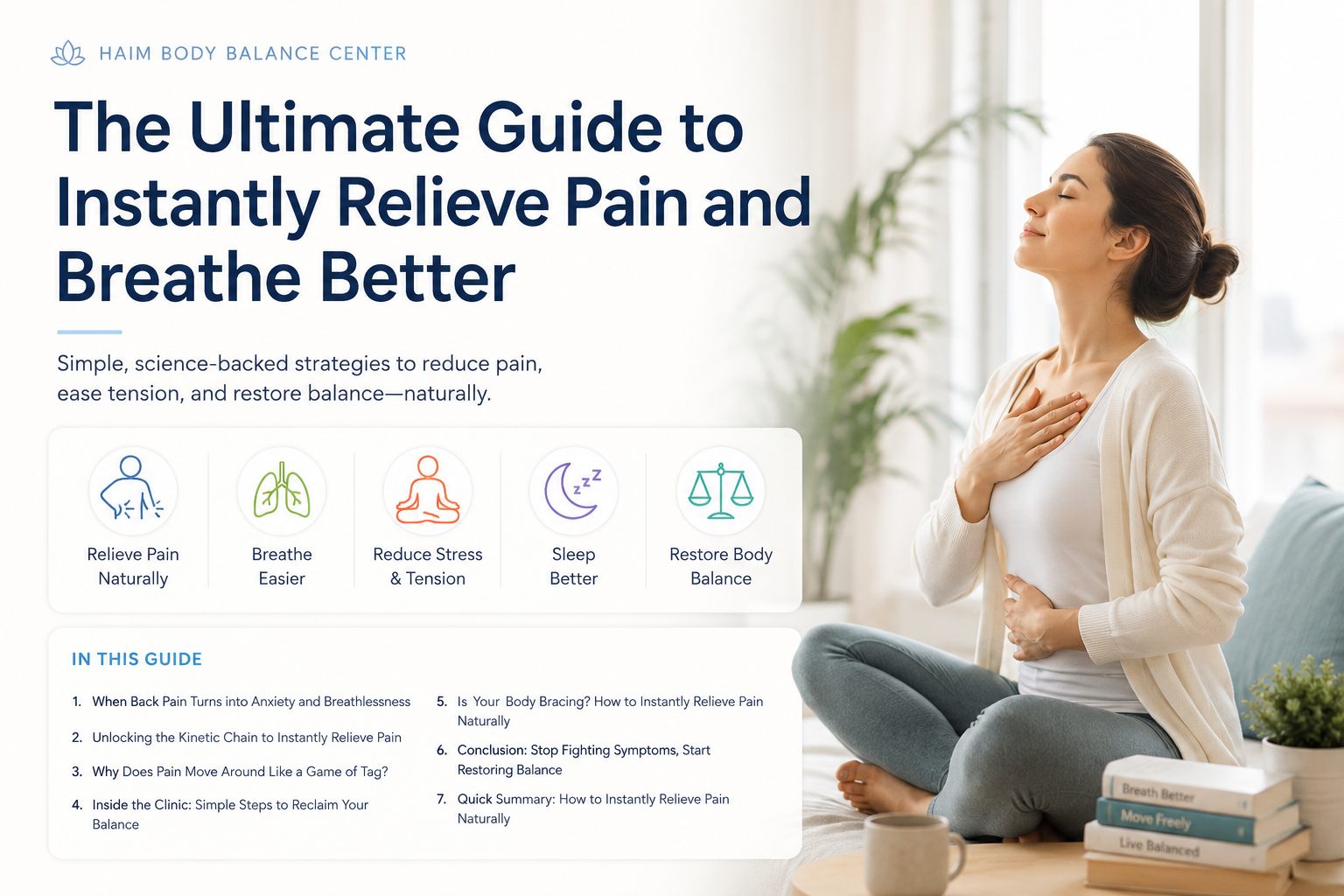
If you want to know how to instantly relieve pain and reclaim your natural breath, you must understand how your body is connected from head to toe.
1. When Back Pain Turns into Anxiety and Breathlessness
It started one ordinary morning. Sarah woke up and felt her neck and shoulders completely locked up. They were as stiff as concrete. No matter how much she slept, she woke up utterly exhausted.
Then came the scariest part: a heavy, crushing tightness in her chest.
Her heart would race for no reason. Breathing—something she never had to think about in her entire life—suddenly felt like climbing a mountain.
Terrified, she visited three major hospitals, including a large university medical center. She took spinal MRI scans, comprehensive blood tests, and heart checks. The doctors all said the same thing: “Everything is normal.”
They gave her muscle relaxants, pain relievers, and anti-anxiety pills. She tried deep tissue massage, physical therapy, and various alternative treatments. But the relief lasted only a few hours. The suffocating tightness always came back, often moving to different parts of her body.
Eventually, the explanations she received fell into a discouraging pattern:
“It’s just stress. You must learn to live with it.”
Those words hurt more than the physical pain. She felt abandoned, wondering how to instantly relieve pain permanently. But here, we must ask a different, more comprehensive question:
“What is your body trying to protect by holding itself so tightly?”
The human kinetic chain: How structural misalignment leads to severe back pain and breathing restrictions.
2. Unlocking the Kinetic Chain to Instantly Relieve Pain
Our bodies are not made of separate parts like a Lego set. Instead, we are wrapped in a giant, continuous web of elastic tissue called fascia. Think of it like a tight, one-piece superhero bodysuit under your skin.
In structural medicine, we call this the kinetic chain (muscle chain).
Where you feel pain is rarely where the problem started. The painful spot is just the “victim” that screams for help. The real “culprit” is usually hiding somewhere else, far away from the symptom.
In Sarah’s case, her breathing trouble was the final step of an anatomical domino effect that started at the very bottom of her body: her feet.
Here is exactly how the chain of tension climbs up your body:
1. Stiff & Contracted Soles of the Feet ⬇️ (Unabsorbed ground shock travels upward)
2. Super Tight Calves & Achilles Tendons ⬇️ (Pulls the joints out of alignment)
3. Tilted & Twisted Pelvis (Hips) ⬇️ (Deprives the spine of a stable foundation)
4. Locked Lower Back (Lumbar Spine) ⬇️ (Seizes up to force the body upright)
5. Stiff Mid-Back (Thoracic Spine) Acting Like Armor ⬇️ (Locks the chest area to protect the lower spine)
7. Frozen Diaphragm & Shallow Breathing ⬇️ (Brain interprets oxygen shortage as an emergency)
🚨 Result: Racing Heart, Sudden Panic, and Tight Chest!
Your feet are the foundation of your entire body. When the soles of your feet become stiff and hard, they cannot absorb shock when you walk.
To compensate, your calves tighten up like steel cables. This pulls your knees back and twists your pelvis out of line. A crooked pelvis deprives your lower back of a stable base, forcing your back muscles to seize up to keep you upright.
Understanding this connected system is the true secret to learn how to instantly relieve pain from the ground up.
The real disaster happens at your mid-back (thoracic spine) and ribcage.
To protect your hyper-stressed lower back, your nervous system automatically stiffens your mid-back. Your ribcage, which should expand and contract flexibly like an accordion, becomes locked like a metal cage.
Therefore, treating the lungs alone won’t work; you must unlock the spine to instantly relieve pain and restore natural breathing.
When your ribs cannot move, your main breathing muscle (the diaphragm) cannot drop down to let air in. Your breathing becomes shallow and fast. When you breathe this way, your brain thinks: “Emergency! We are running out of oxygen!” This triggers your sympathetic nervous system (“fight-or-flight” mode), making your heart race and filling your mind with sudden, unexplained anxiety.
Sarah’s breathing difficulty was not a lung disease. It was a physical straightjacket created by her own body.
3. Why Does Pain Move Around Like a Game of Tag?
Many people with chronic pain complain about “migrating pain”:
“First my back hurt, then it stopped but my shoulder flared up. Now my neck is killing me!”
This is not bad luck. It is the natural result of treating symptoms instead of the root cause. When you are looking for ways to instantly relieve pain, you must look at the whole system rather than just the localized symptom.
Think of a leak in your roof. If water drips onto your living room floor, you can mop it up. But if you do not fix the hole in the roof, the water will simply find another path. Soon, it will ruin your kitchen floor or bedroom wall.
Your body is a master of sharing the workload. When one joint gets stiff, your neighboring muscles work twice as hard to help you move. Eventually, those overworked muscles get tired and start to hurt. If you only treat that new sore spot, the strain simply shifts to the next vulnerable link. This is why local treatments often fail—they are chasing the “stains” while ignoring the “leak.”
4. Inside the Clinic: Simple Steps to Reclaim Your Balance
When Sarah first stepped into our postural alignment clinic, we did not start by massaging her sore back or her tight neck. Instead, we looked at how she stood, how she walked, and how her feet touched the ground.
We found that her feet were incredibly rigid. Her toes were clawing at the floor, desperately trying to grip the earth to keep her balanced on an unstable foundation.
Our recovery program was designed to instantly relieve pain by resetting her muscle chain from the bottom up:
Step 1: Release the Foundation We started by releasing the tight, frozen tissue under her feet. The moment her feet could flex and feel the ground properly, the tension in her calves and hips began to melt. After this first session, she took a huge breath and gasped, “I haven’t felt air go that deep in my chest in years.”
Step 2: Unlock the Spine Next, we straightened her pelvis and gently mobilized the locked joints in her mid-back. By releasing the tiny muscles between her ribs, we gave her lungs the physical space they needed to expand.
Step 3: Calm the Nervous System Finally, we released the tension at the base of her skull. This turned off the “emergency danger switch” in her brain, allowing her body to go from survival mode to deep, peaceful relaxation.
Her body was never broken. It was just exhausted from holding itself together. Once the foundation was stable, the tight armor fell off. Her heart rate went down, the chest tightness disappeared, and her long-term anxiety melted away.
5. Is Your Body Bracing? How to Instantly Relieve Pain Naturally
Chronic structural issues build up slowly, sending small warning signs. Check if you have these indicators to learn how to instantly relieve pain naturally:
[ ] First-Step Pain: You feel a sharp, tight pain in your heels or soles during your first steps in the morning.
[ ] Heavy Legs: Your calves and thighs feel heavy and tired after standing for just 10 minutes.
[ ] The 3-Day Reset: You get a massage or treatment, but the pain returns to the exact same spot within 2 to 3 days.
[ ] The Permanent Shrug: Your shoulders always feel raised toward your ears, and it is hard to just let them drop.
[ ] Tired Mornings: You sleep for 8 hours but wake up feeling stiff, heavy, and unrefreshed.
[ ] Air Hunger: You constantly feel the need to take a sudden, deep sigh or a big yawn because you feel like you aren’t getting enough air.
Listen to this deep healing music designed to calm your nervous system, relax your body’s kinetic chain, and help you breathe better instantly.Reclaiming natural structural balance is the key to deep breathing and a pain-free life.
When people are trapped in chronic pain, they often ask: “What is wrong with my body?”
Perhaps a much better and kinder question to ask is:
“What is my body trying so hard to protect, and what does it need to finally feel safe enough to let go?”
Pain and stiffness are not punishments. They are highly intelligent, protective signals from your nervous system to prevent you from getting hurt when your alignment is off.
By correcting your posture from the feet up, unlocking your ribs for deep breathing, and showing your nervous system that it is safe, you can break the cycle of tension. Our advanced structural approach helps to instantly relieve pain and brings deep comfort back to your everyday life. True, lasting health begins when you stop fighting the symptoms and start restoring the natural, beautiful balance your body was designed to keep.
Watch this clinical case demonstrating how restoring the foot’s structural balance and natural alignment completely cures 40 years of chronic asthma and severe breathing restrictions.
Disclaimer: This article is for informational and educational purposes only. It represents clinical observations of myofascial and structural alignment patterns. It is not intended as medical diagnosis, treatment, or direct medical advice. Please always consult with a qualified healthcare professional regarding any specific medical conditions.
Quick Summary: How to Instantly Relieve Pain Naturally
If you want to instantly relieve pain from chronic back tension, you must look at your feet. Many people wonder if they can instantly relieve pain without taking strong medications. The answer lies in your body’s alignment; when you release the stiff fascia under your soles, you can instantly relieve pain and tension throughout your entire kinetic chain.
Furthermore, to instantly relieve pain in your chest and recover your natural breathing, you must unlock your tight ribs and thoracic spine. Do not just treat the local symptoms; focusing on the root cause is the only way to instantly relieve pain permanently. We hope this ultimate guide helps you instantly relieve pain and find deep comfort. To learn more about how to instantly relieve pain and live a healthier life, explore our recommended posture correction guides.
Imagine waking up, stepping out of bed, and realizing your shrinking thigh muscle feels weaker than ever.
For years, my client—a passionate tennis player who spent his weekends sprinting across courts—noticed a strange, subtle shift. His left knee felt slightly unstable. Then, his lower back began to ache. He did what anyone would do: he ignored it, pushed through the pain, and trained harder.
But the human body has a quiet, non-negotiable way of forcing us to listen.
One afternoon, while changing into his sports gear, he looked down. His left quadricep—the massive muscle above the knee—was flattening out. It was losing its shape, its density, and its power. He spent the next twelve months on a relentless quest. He did heavy leg extensions, swallowed massive amounts of protein, received deep tissue massages, and underwent multiple cortisone injections. The result? Nothing. The left thigh kept shrinking.
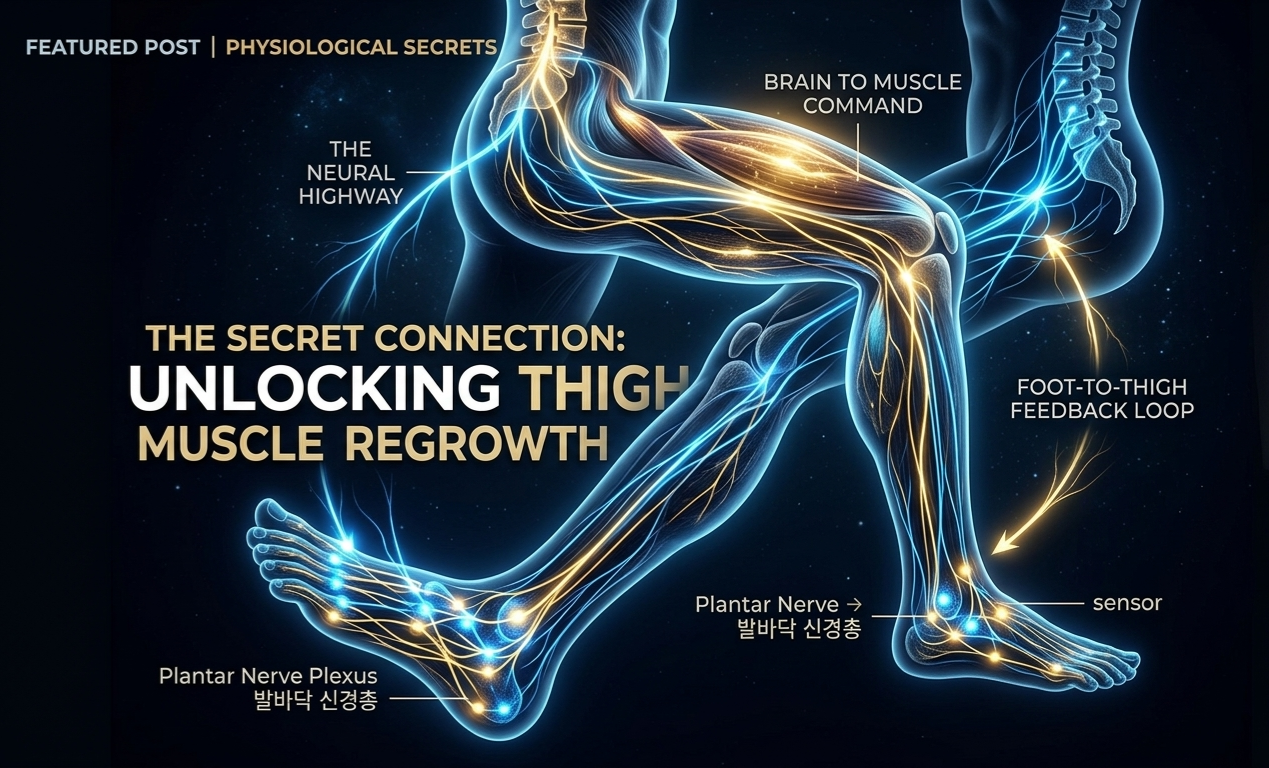
A shrinking thigh muscle that refuses to respond to exercise is more common than you think — and the cause is often hidden deep in the nervous system.
Neural distribution map illustrating the hidden connection between foot sensors and thigh muscle regrowth.
Secret 1: Your Brain is Halting the Signal (The Survival Lock)
The first hidden secret to recovering lost muscle mass is understanding that a shrinking thigh muscle is rarely a muscle problem; it is a neurological command.
When you exercise a weak muscle and it refuses to grow, you are trying to force electricity through a cut wire. In my clinical experience with body alignment, I often see the nervous system act as a protective governor.
When a joint, a ligament, or a nerve pathway is chronically overloaded, the brain makes an unconscious decision: To protect this person from a catastrophic injury, I must cut the power to the shirnking thing muscle.
This is not a malfunction. It is a brilliant survival mechanism. Your brain quietly dampens the motor unit activation to your thigh. No matter how many squats you perform, if the brain has locked the gate from the source, the muscle fibers will never receive the signal to contract and grow.
Restoring foot sensors using nerve management to unlock a shrinking thigh muscle.
Secret 2: The Source is in Your Shoes (The Forgotten Foundation)
The second secret is the one that conventional treatments miss entirely: The neurological brake holding back your shrinking thigh muscle is almost always located in your foot.
When this client came to our center, we didn’t look at his thigh first. We looked at how his feet interacted with the earth.
Underneath the human foot lies a complex web of unconscious nerves—what the Sbonsdo (KSNS) framework recognizes as the body’s primary balance and safety sensors. Over years of wearing tight, rigid shoes and sustaining micro-injuries on the tennis court, this client’s big toe and lateral foot arch had lost their natural reflex responses.
Because the foot was no longer properly sensing the ground, the ankle became unstable. To prevent the knee and hip from collapsing, the nervous system locked down the calf and threw the “emergency brake” directly onto the left thigh. You cannot fix a roof by staring at the ceiling while the foundation is sinking. To unlock the thigh, we had to fix the ground contact patterns first.
Demonstration of KSNS (Sbonsdo) reflex testing and nerve management for structural balance.
Recommended Reading: How Chronic Pain Instantly Shuts Down Your Nervous System
Secret 3: Release Precedes Growth (Take Your Foot Off the Brake)
The third and final secret is a paradigm shift in physical recovery: The body does not need more force; it needs safety. Traditional rehabilitation tells you to fight the weakness—to push, lift, and strain. But if the nervous system is in a state of chronic guarding, adding more force only triggers a deeper protective lockdown.
Our work at the center was not about building strength through effort. It was about using precise, non-invasive nerve management to restore the unconscious reflex signals in his feet and ankles. We were not stepping on the gas pedal; we were simply taking the foot off the brake.
The shift happened with shocking speed. Once the safety sensors in his foot felt stable, the brain realized the threat was gone. The unconscious protective guard lowered.
For the first time in years, during a simple standing assessment, he gasped. “I can feel the bottom of my foot, and my thigh suddenly feels warm.” That warmth was blood flow, neurological connection, and life returning to a dormant muscle chain. Within weeks of restoring this balance, his left thigh finally began to fill out and grow again.
Is Your Nervous System Guarding Your Body?
If you are trapped in a cycle of chronic pain, structural asymmetry, or muscle loss that defies all training, stop fighting your body.
The human body is an beautifully interconnected chain. An imbalance in the toe shifts the ankle; a frozen ankle disrupts the knee; a guarded knee shuts down the shrinking thigh muscle.
Recovery doesn’t begin with heavier weights. It begins from the ground up, by listening to the quiet, unconscious signals of the nervous system and giving the body the balance it needs to feel safe again.
Learn more about the physiological mechanisms of muscle atrophy on Wikipedia.
432Hz therapeutic soundscape designed to release bodily tension and support physical alignment.
What Happens Inside the Nervous System When a Muscle Stops Growing
Most people assume that a shrinking thigh muscle means the muscle itself is damaged or diseased. But in many cases, the muscle tissue is completely intact. The real problem is the signal — or rather, the absence of it. Think of your nervous system like an electrical grid. Every muscle in your body needs a clear, uninterrupted signal from the brain to contract, grow, and stay strong. When that signal is blocked, the muscle simply waits. It does not atrophy because it is broken. It atrophies because it is not receiving the command to stay active. This is called neurological inhibition — and it is far more common than most people realize. In cases of chronic pain, overuse injury, or long-term postural imbalance, the brain can begin to “mute” certain muscles as a protective strategy. The body is not giving up. It is trying to protect itself from further damage. The problem is that this protective response can last long after the original injury has healed. The nervous system stays in defense mode. The muscle stays silent. And no amount of exercise can override a signal that is not being sent. Why the Foot Is the Starting Point One of the most overlooked connections in the human body is the relationship between the foot and the thigh. When the foot loses proper ground contact — due to flat arches, overpronation, or years of improper footwear — the entire movement chain above it begins to compensate. The ankle stiffens. The calf tightens. The knee shifts. The hip rotates. And the thigh muscle, caught in the middle of this chain reaction, slowly loses its normal activation pattern. This is why treating only the thigh rarely works. The shrinking thigh muscle is often the last symptom in a long chain of imbalance that started much lower — sometimes as low as the sole of the foot. Restoring foot balance is not just about comfort. It is about re-establishing the neurological foundation that allows the entire leg to function naturally again.
How to Rebuild a Shrinking Thigh Muscle
Recovery is not always about exercising harder. In many cases, restoring balance, improving walking mechanics, and increasing normal muscle activation can help the body move more efficiently. As movement quality improves, the thigh muscle often becomes more active during everyday activities. This process may help support better strength, stability, and confidence over time.