Tag: chronic pain

  • 5 Hidden Causes of Whole-Body Aches That Tests Never Catch

    5 Hidden Causes of Whole-Body Aches That Tests Never Catch

    You went to the doctor. You had the blood work done. Maybe even an X-ray or MRI.

    And the result? “Everything looks normal.”

    But your body still aches. Your legs feel heavy. Your shoulders never fully relax. And by the afternoon, you are exhausted in a way that sleep does not seem to fix.

    If this sounds familiar, you are not alone — and you are not imagining it.

    The truth is, some of the most common causes of whole-body aches simply do not show up on standard medical tests. They are hidden inside the way your body moves, balances, and compensates — day after day, without you ever noticing.

    Here are the 5 hidden causes of whole-body aches that tests never catch.

    1. Your Body Is Quietly Compensating for Hidden Instability

    Watch how the Sbonsdo method addresses unconscious nerve compensation to restore whole-body balance and relieve chronic aches.

    When one part of your body becomes unstable or weak, other muscles automatically step in to help. This is called compensatory tension — and it is one of the most overlooked causes of whole-body aches.

    For example, if your foot arch collapses slightly when you walk, your ankle, knee, and hip all adjust their movement patterns to keep you upright. Over time, those adjustments create chronic muscle overload — and that overload spreads upward through the entire body.

    The result is a dull, persistent ache that seems to have no single location. It moves around. It comes and goes. And no test will ever find it — because the problem is not in any one tissue. It is in the pattern.

    2. Poor Hip Stability Is Overloading Your Entire Body

    Experience 432Hz healing music designed to support body relaxation and nervous system balance.

    The hips are the body’s central powerhouse. They connect the upper and lower body, absorb the shock of every step, and distribute movement forces through the spine and legs.

    When hip stability decreases — often due to prolonged sitting, muscle imbalance, or years of poor posture — the surrounding muscles are forced to overwork. The lower back tightens. The thighs become chronically stiff. Even the neck and shoulders can feel the strain.

    This is one of the most common hidden causes of whole-body aches, especially in people who sit for long hours or feel that their legs “give out” easily.

    • Lower back ache that worsens after sitting
    • Heavy, tired legs by midday
    • Knee discomfort when climbing stairs
    • Stiffness that is worst in the morning

    3. Shallow Breathing Is Keeping Your Muscles Tense

    Man sitting on bed holding his neck due to muscle tension and whole-body aches from shallow breathing
    Chronic neck and shoulder tension is often a sign that your breathing pattern is keeping your nervous system on high alert.

    Most people never think of their breathing as a cause of whole-body aches. But shallow, upper-chest breathing is one of the hidden causes of whole-body aches that tests never catch — and it affects far more people than you might expect.

    When breathing becomes shallow, the body interprets it as a low-level stress signal. In response, the nervous system keeps muscle tension elevated throughout the body — particularly in the neck, shoulders, and upper back.

    This tension rarely causes sharp pain. Instead, it creates a constant background stiffness that feels like your body can never fully relax, no matter what you do.

    A simple test: Place one hand on your chest and one on your belly. Take a normal breath. If only your chest rises, your breathing pattern may be contributing to your whole-body aches.

    4. Foot Instability Is Disrupting Your Entire Body Chain

    The kinetic chain diagram showing how feet ankles knees hips and spine are connected causing whole-body aches
    The kinetic chain diagram showing how feet ankles knees hips and spine are connected causing whole-body aches

    The feet are the foundation of the entire body — yet they are almost always overlooked when people search for the cause of whole-body aches.

    Every time your foot makes contact with the ground, a chain of forces travels upward through the ankle, knee, hip, and spine. When the foot is unstable or poorly aligned, that chain becomes inefficient. Muscles throughout the entire body must work harder to maintain balance and posture.

    Over months and years, this constant extra effort accumulates — and shows up as general fatigue, stiffness, and aching that spreads throughout the body.

    If you notice that your feet tire quickly, that your shoes wear unevenly, or that you feel more comfortable in supportive footwear, foot instability may be one of your hidden causes.

    5. Long-Term Postural Habits Are Silently Loading Your Muscles

    The way you sit, stand, and move throughout the day creates patterns in your muscles and joints. Over time, these patterns become habits — and some of those habits place a continuous, low-grade load on the body that standard tests will never detect.

    Forward head posture, rounded shoulders, and a flattened lower back are among the most common postural habits that contribute to whole-body aches. Each of these positions shifts the body’s center of gravity and forces certain muscle groups to work constantly — even when you are at rest.

    The body adapts remarkably well to these demands. But adaptation has a limit. And when that limit is reached, the whole body begins to speak up through stiffness, fatigue, and aching that seems to have no clear cause.

    What You Can Do Starting Today

    Understanding that whole-body aches often come from hidden structural patterns — not from a single diagnosable condition — is the first and most important step.

    1. Walk daily with attention to how your feet land and how your hips move
    2. Practice slow belly breathing for 5 minutes each morning
    3. Avoid sitting for more than 45 minutes without standing or moving
    4. Stretch the chest and hip flexors gently every day
    5. Pay attention to foot comfort and balance throughout the day

    Small, consistent changes in how you move and hold your body often do more for whole-body aches than any single treatment — because they address the hidden patterns that tests never catch.

    This article is for general informational purposes only and does not replace professional medical advice. If you are experiencing persistent pain or weakness, please consult a qualified healthcare provider.
  • Personalized Exercise: Why It Leads to Better Outcomes

    Personalized Exercise: Why It Leads to Better Outcomes

    Personalized Exercise and Body Alignment Treatment at Haim Body Balance Center
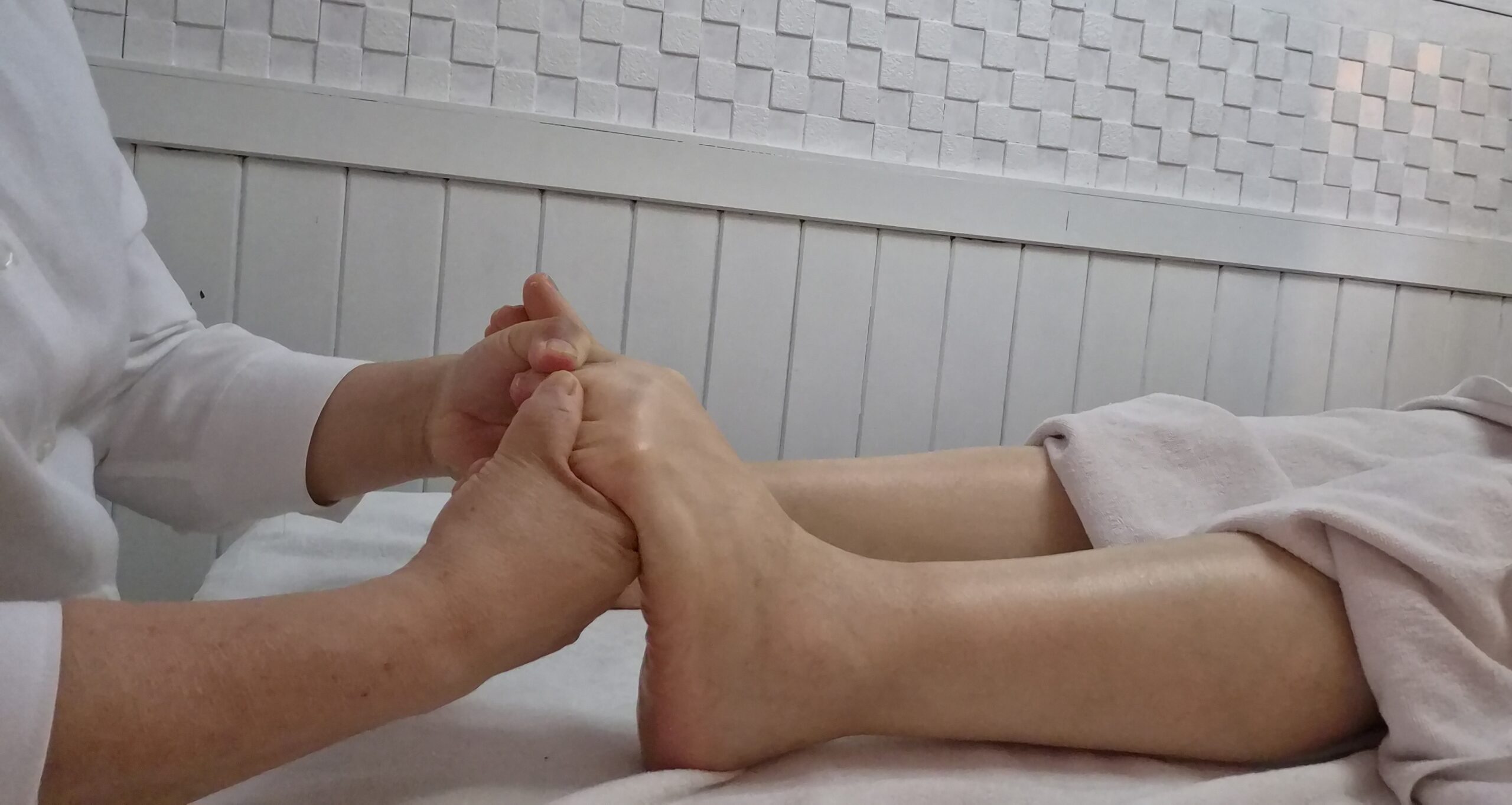
    At Haim Body Balance Center, we combine manual nerve management with personalized exercise to improve movement patterns and overall body alignment.

    Personalized exercise is often the missing key for those who believe that general activities like cycling or swimming are the only answer to knee pain or hip discomfort. While these are commonly recommended as low-impact exercises, they may not yield the best results for everyone without a tailored approach.

    However, have you ever noticed that two people can do the same exercise and get completely different results?

    One person may feel stronger and healthier after cycling, while another may experience increased knee discomfort. One swimmer may enjoy improved mobility, while another may continue to feel stiffness in the hips.

    The answer may not be the exercise itself. Instead, it may be related to the condition of the body before the exercise begins. Personalized exercise helps people understand that every body has different movement habits, strengths, and limitations.

    Why Personalized Exercise Starts with the Foundation

    Imagine driving a car with misaligned wheels. Even if the engine works perfectly, the tires may wear unevenly over time. The human body works in a similar way.

    When the feet, ankles, knees, and hips are not working together efficiently, repetitive movements may reinforce existing movement patterns. Personalized exercise focuses on improving the foundation first, rather than simply increasing exercise intensity.

    Why Personalized Exercise Starts with the Foundation

    Imagine driving a car with misaligned wheels. Even if the engine works perfectly, the tires may wear unevenly over time.

    The human body works in a similar way.

    When the feet, ankles, knees, and hips are not working together efficiently, repetitive movements may reinforce existing movement patterns. This does not mean the activity is harmful. It simply means that different bodies may respond differently.

    Before focusing on exercise intensity, it may be helpful to pay attention to movement quality and body awareness.

    Understanding Movement Patterns

    Many people with knee discomfort also experience weakness in their feet or reduced toe mobility.

    Others may rely heavily on one side of the body while walking. Some may have limited ankle mobility without realizing it.

    When these movement habits continue for months or years, the body often adapts in ways that are not always efficient.

    This is why a single exercise program cannot guarantee the same outcome for everyone.

    Studies on biomechanics and movement efficiency show that individual physical foundations are critical. For more on scientific approaches to movement, you can refer to resources like the American Council on Exercise (ACE).

    Benefits of Personalized Exercise

    Personalized exercise helps people move more comfortably.
    It focuses on individual needs rather than a one-size-fits-all approach.
    Many people find that personalized exercise supports long-term consistency.

    Watch how personalized nerve management helps resolve chronic hip pain that has persisted for years.

    Why Personal Differences Matter

    Cycling and swimming are excellent forms of exercise for many individuals.

    Cycling can improve cardiovascular fitness and leg endurance.

    Swimming can reduce impact on joints while encouraging full-body movement.

    Yet every activity places unique demands on the body.

    For some individuals, certain movement patterns may need attention before increasing exercise volume. Others may benefit from strengthening, mobility work, balance training, or simply improving daily walking habits.

    The goal is not to avoid exercise but to choose the right approach for your current condition.

    Listening to Your Body

    One of the most valuable skills in health and fitness is learning to observe how your body responds.

    Does a particular activity help you move more comfortably?

    Do you feel stronger and more balanced afterward?

    Or does discomfort gradually increase over time?

    These questions are often more important than following a popular exercise trend.

    Health is rarely about finding a perfect exercise. It is about finding the right exercise for the right person at the right time.

    A More Personalized Approach

    Modern health and wellness discussions increasingly recognize that individual differences matter.

    Age, movement habits, flexibility, strength, balance, lifestyle, and daily activity levels can all influence how a person responds to exercise.

    Because of this, a personalized approach often produces better long-term results than simply copying what works for someone else.

    The most effective exercise plan is not necessarily the most intense one.

    It is the one that matches your body’s current needs and supports steady, sustainable progress.

    “Before choosing an exercise, it may be worth asking a deeper question.
    Has your nervous system learned to move efficiently?
    The body remembers every movement pattern — both good and bad.
    When the nervous system holds onto old, inefficient habits, even the best exercise may not deliver the results you expect.
    This is where body alignment awareness and unconscious nerve management become essential — not as a replacement for exercise, but as the foundation that makes exercise work.”

    Final Thoughts

    Cycling is not bad.

    Swimming is not bad.

    Walking is not automatically the best solution for everyone.

    Every exercise has benefits, and every person has unique needs.

    Rather than asking, “What is the best exercise?”

    A better question may be:

    “What is the best exercise for my body right now?”

    When we start with that mindset, we move closer to long-term health, better movement, and a more balanced lifestyle.

    Learning to monitor your body’s response is a fundamental skill in injury prevention. The National Institute of Arthritis and Musculoskeletal and Skin Diseases (NIAMS) provides comprehensive guides on maintaining healthy physical activity.

  • ​Tired eyes: It’s not your eyes, it’s your scalp.

    ​Tired eyes: It’s not your eyes, it’s your scalp.

    tired eyes from computer screen fatigue
    Tired eyes from prolonged screen time may signal deeper muscle tension in your scalp and neck.

    Tired eyes are one of the most common complaints we hear at our body balance center. Do you ever feel like something is stuck in your eye? That gritty, heavy, uncomfortable sensation that just won’t go away — even after a full night’s sleep?

    One client walked into our center with that exact complaint. He kept rubbing his tired eyes throughout the day. Sometimes his eyes felt heavy. Sometimes they felt dry. At other times, he described it as feeling like a tiny grain of sand was trapped inside.

    The surprising part? He had already visited an eye clinic. His examination showed no major problems. So, what was causing the persistent discomfort?

    While eye symptoms can stem from many sources — and only a qualified doctor can diagnose medical conditions — there is a common possibility that most people overlook: Muscle Tension.

    Why Tired Eyes Are Often a Body Problem

    Most people with tired eyes assume the problem starts and ends with the eye itself. But the muscles around your eyes, temples, forehead, scalp, and neck are all intricately connected. When we spend hours staring at computers, smartphones, or books, we focus only on the fatigue inside the eyes. However, the muscles surrounding them are never working in isolation.

    • The forehead becomes tense from deep concentration.
    • The temples become tight, restricting blood flow.
    • The back of the head and neck stiffen from poor posture.
    • The scalp loses its natural flexibility, acting like a tight, restrictive cap.

    Research by the American Optometric Association confirms that prolonged screen use contributes significantly to eye strain — and that postural tension in the neck and shoulders plays a key role in worsening symptoms.

    Two Real Cases: Tired Eyes Relieved by Body Work

    During our assessment, we noticed this client’s temples were unusually firm. The muscles around the side of his head were tight, and his neck showed significant tension. When we applied gentle relaxation techniques focused on the scalp and neck, he immediately reported feeling “lighter” and more comfortable. His tired eyes felt noticeably less strained after just one session.

    I recall another office worker who visited our center with chronic tired eyes. After just a few sessions focused on releasing his shoulder and neck tension, he told me that his “sand-in-the-eye” feeling had decreased by more than half — simply because he was no longer carrying that constant physical strain in his upper body.

    Think of Tired Eyes Like Wearing a Tight Hat

    Imagine wearing a hat two sizes too small all day long. Even if your vision is perfect, the constant pressure around your head would make you feel uncomfortable, fatigued, and mentally drained. Modern life — long screen time, stress, poor posture, and lack of sleep — creates this exact “tight hat” effect on your skull and neck muscles.

    This is why so many people experience tired eyes not from vision problems, but from accumulated physical tension they are not even aware of.

    3 Simple Ways to Relieve Tired Eyes

    If you find yourself rubbing your eyes repeatedly, try these simple habits to see if the fatigue subsides:

    1. Scalp Massage: Use your fingertips to gently massage your scalp in circular motions. Focus on the area right above your ears. Even 2–3 minutes can noticeably reduce tension.
    2. Neck Release: Slowly tilt your head from side to side, holding for 10 seconds on each side to release the trapezius muscles. Repeat 3 times daily.
    3. The “Look Away” Rule: Every 30 minutes, look at something at least 20 feet away for 20 seconds. While doing this, consciously drop your shoulders and unclench your jaw. This follows the 20-20-20 rule recommended by eye care professionals.

    For additional support,explore our related guide on why your body still feels unsafe after rehabilitation— because tension rarely exists in isolation.

    Important Note on Wellness Care

    tired eyes scalp tension neck massage relief
    Gentle scalp and neck care at Haim Body Balance Center —
    helping clients find relief from tired eyes and chronic tension.

    In our practice, we help clients improve body balance through gentle care focused on the scalp, neck, and shoulders. However, always understand the limits of wellness care. If you experience severe symptoms like blurred vision, double vision, sudden eye pain, or unusual headaches, please consult an eye specialist immediately. Professional medical evaluation is the safest choice for serious conditions.

    Is Your Body Asking for Rest?

    Take a moment to relax your eyes and breathe.
    This 432Hz healing music may help release
    the tension you’ve been carrying all day.

    Sometimes, tired eyes aren’t just about the eyes. They are a signal that your neck is carrying too much tension and your head has been working overtime.

    How many hours a day do you spend looking at a screen? Take a moment right now to roll your shoulders back and take a deep breath. You might be surprised by how much tension you are holding without even realizing it.

    The first step toward feeling better is simply paying attention to the signals your body has been sending all along.

    Are you ready to let go of that tension?

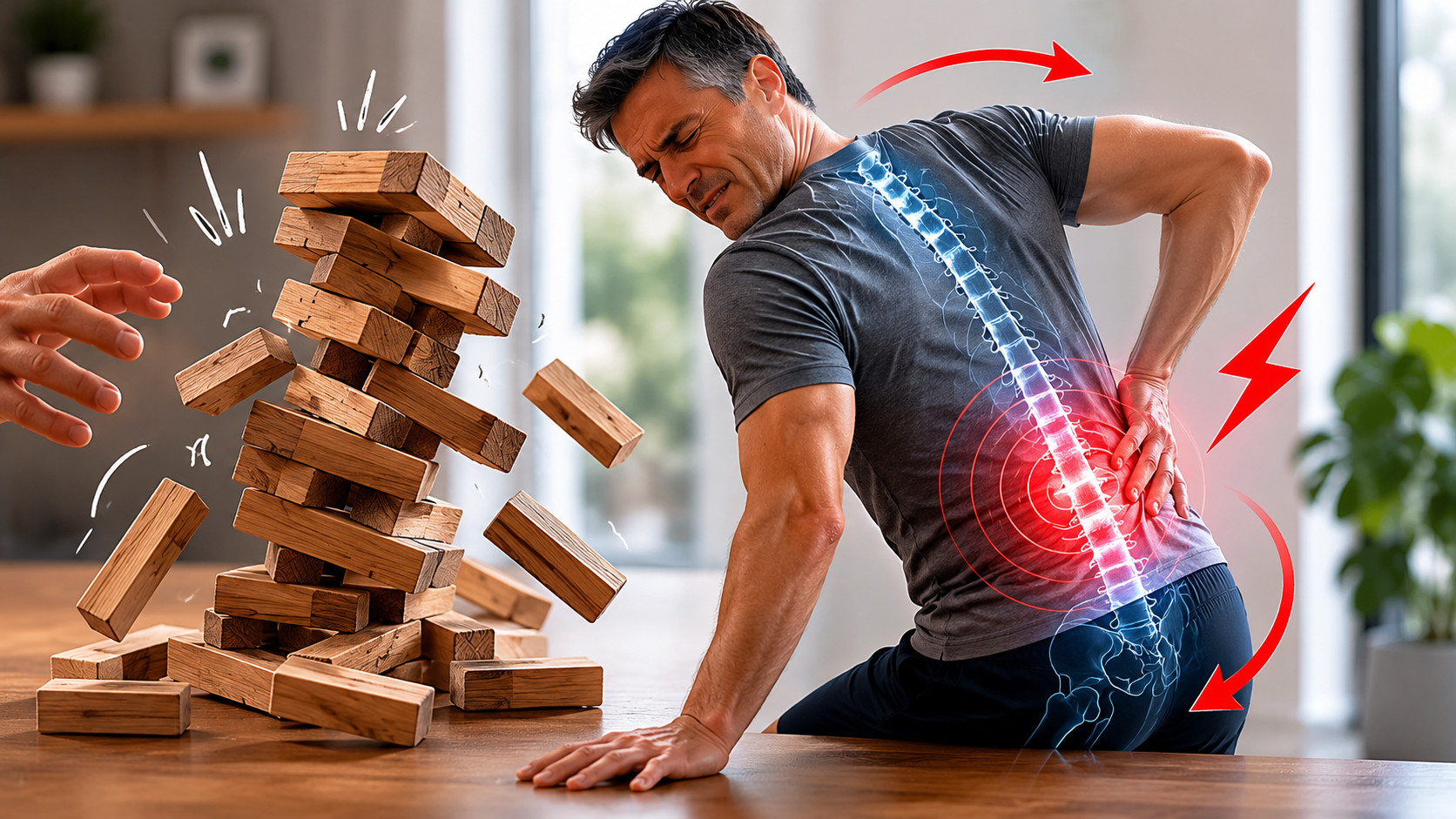
  • How to Heal Your Body’s Jenga Tower: 5 Shocking Secrets of Instant Balance

    How to Heal Your Body’s Jenga Tower: 5 Shocking Secrets of Instant Balance

    ​Do you know that your body behaves exactly like a giant Jenga Tower? Imagine you are piloting a giant, state-of-the-art robot suit. It’s sleek, fast, and incredibly powerful.

    ​Suddenly, BAM! A red warning light flashes on the control panel: KNEE JOINT FAILURE!

    A stacked wooden Jenga tower being carefully adjusted by hands, illustrating body balance and alignment.
    Your body behaves exactly like a giant Jenga Tower.

    ​What do you do?

    • ​Option A: Spray paint over the warning light so you don’t have to look at it.
    • ​Option B: Slap a piece of duct tape on the outside of the robot’s knee and keep running.
    • ​Option C: Open the blueprint, find the actual electrical glitch, and fix it from the roots.

    ​If you chose Option A or B, congratulations—you are doing exactly what most people do when they feel pain!

    ​Whenever we get a headache, we pop a pill. When our knee feels stiff, we slide on a tight brace. But what if your pain is actually a giant liar? What if the real culprit is hiding somewhere else entirely, quietly stabilizing your body’s Jenga Tower?

    ​Let’s dive into the ultimate body detective story to find out why your pain isn’t healing, and how a secret superhero inside you holds the key to saving the day!

    ​1. Stop Chasing the Alarm: Why Your Pain is a Big Liar

    ​We’ve all been there. You play a match of soccer, scroll on your phone for three hours, or sit at your school desk, and suddenly… Ouch! Your shoulder hurts.

    ​Naturally, we react with our Mindless Habits:

    • ​The Pill Pop: Swallowing painkillers to mute the alarm.
    • ​The Patch Slap: Sticking icy-hot patches on our skin like stickers.
    • ​The Compression Squeeze: Wearing braces to force the joint to stay still.

    ​These might make you feel better for an hour or two. But here is the shocking truth: the pain always comes back. Treating only where it hurts is like trying to fix a sinking ship by scooping out water with a teacup. You aren’t plugging the actual hole!

    ​2. The Jenga Tower Effect: How Your Foot Controls Your Jaw

    ​Your body is not a collection of random, separate Lego bricks. It is a highly connected chain—just like a giant Jenga Tower.

    ​If you pull out a block from the very bottom of a Jenga Tower, what happens? The top of the tower starts to wobble, tilt, and eventually… CRASH!

    ​In your body, the bottom of your Jenga Tower is your feet.

    ​[ Your Jaw & Neck ]  <– Complains and hurts!

    [ Your Shoulders ]   <– Tilts to compensate

    [ Your Spine ]     <– Curves under pressure

    [ Your Hips ]     <– Shifts out of alignment

    [ Your Knees ]     <– Absorbs the weird angles

    [ Your Feet ]     <– THE FOUNDATION (The Glitch starts here!)

    ​If your left foot is slightly tilted or weak, your knee has to bend weirdly to keep you upright. Because your knee is bending weirdly, your hip rotates. To make up for the crooked hip, your spine curves, your shoulder drops, and suddenly… you have a massive headache!

    ​So, when your neck hurts, the actual “criminal” might be your left pinky toe. This bottom-up connection is what we call the Jenga Tower effect.

    ​3. Wake Up Your Autopilot: The Unconscious Nervous System

    Watch how activating the foot’s reflexive nerves restores the body’s natural balance mechanism.

    ​If you had to consciously tell your heart to beat, your lungs to breathe, and every single muscle in your leg to contract just to take one step, your brain would literally explode from overload.

    ​Thanks to our body’s built-in wisdom, we have a superhero: The Unconscious Nervous System. Think of this as your body’s Autopilot.

    A person adjusting a wooden block in a tall Jenga tower, focusing on delicate nerve and structural balance.
    Your body’s autopilot relies on perfect nerve alignment to stay balanced.

    ​When you step on a sharp pebble, you don’t think: “Hmm, a sharp object. I should lift my foot.” No! Your Autopilot yanks your foot away before you even realize what happened. This is an automatic reflex controlled by your nervous system.

    ​Check out this scientific guide on Proprioception and Reflexes to learn more about how your body senses balance and movement.

    ​When this Autopilot glitches, it stops realigning the Jenga Tower automatically, leading to chronic muscle tightness.

    ​4. Calibrate Your Left-Right Balance (The 50/50 Rule)

    ​For your Autopilot to run smoothly, your left side and right side must be perfectly balanced. They need to share the load 50/50.

    ​But what if your Autopilot gets a “glitch” due to an uneven foundation?

    If one side of your nervous system becomes lazy or unresponsive, your other side has to work twice as hard to keep you from falling over. Over time, this constant, unconscious muscle tension accumulates.

    ​If you don’t reboot this nervous system Autopilot, your body’s Jenga Tower will remain crooked, and no massage or stretching will ever cure the pain permanently.

    ​5. Rebuilding the Jenga Tower: The Haim Method Audit

    ​At Haim Body Balance Center, we don’t play the guessing game. We don’t just put a hot pack where you point. Instead, we put on our detective hats and examine your body from the ground up, rebuilding your Jenga Tower from the foundation!

    ​Through specialized neural response patterns (the KSNS method), we investigate:

    • ​The Foot Blueprint: Finding why your foundation is tilted.
    • ​The Postural Alignment: Checking how the wobble travels up to your neck.
    • ​The Autopilot Reflex: Verifying if your nerves are reacting at lightning speed.

    ​By waking up those sleepy, unconscious nerves, we help your body heal itself and restore the Jenga Tower to its upright alignment.

    ​Conclusion: Start Listening to Your Body’s True Language!

    ​Pain is not your enemy. Pain is just your body’s way of waving a flag and saying, “Hey! My Jenga Tower is falling!”

    ​The next time you feel a pinch or a stiff joint, don’t just try to silence it with mindless habits. Stop, look down at your feet, and realize that your body is a beautiful, connected masterpiece.

    ​Are you ready to stop treating the symptoms and finally fix the root cause?

    ​Read more on our About page to see how we help you achieve instant, lasting balance.

    ​Let’s get your Jenga Tower perfectly stacked again!

    ​Let’s get your Jenga Tower perfectly stacked again!

    A perfectly stacked and stable wooden Jenga tower on a table, representing ideal body posture and spinal alignment.
    Let’s get your Jenga Tower perfectly stacked again!
    A body balance expert adjusting a patient's posture next to a medical chart, and a man stretching on a mat.
    Professional alignment and active calibration restore your body’s natural balance.
  • How to Fix Chronic Pain: 5 Hidden Signs in Your

    If you’ve been dealing with recurring knee, back, or shoulder chronic pain for months—or even years—this article may explain something your doctors haven’t mentioned yet. (1)

    ​Have you ever met someone who says: “I’ve had injections, medicine, physical therapy, and endless exercises… but the chronic pain always comes back.” (2) At first, it sounds strange. If the treatment was successful, why does the body continue to struggle with this persistent chronic pain? (3)

    ​Over 12 years of working with clients, I have observed this exact pattern repeatedly. It is the defining hallmark of chronic pain sufferers who have already tried every conventional treatment available. (4) When we looked closer, almost all of them shared a common, overlooked physical foundation in their feet.

     chronic pain.
    How big toe range of motion affects your body’s center of gravity and triggers chronic pain.

    ​Many of these individuals showed specific signs in their feet:

    • ​Weak big toe grip strength
    • ​Toes that could not bend or splay properly
    • ​Stiff, unstable ankles and weak foundation
    • ​Difficulty balancing their weight while walking
    • ​Muscles that fatigued quickly and caused tension up the body

    ​Surprisingly, most of these individuals could not bend their toes anywhere close to the angle required for a healthy walking stride, which directly triggers chronic pain. (5)

    ​The Problem Most People Never Notice: The “Invisible Brake”

    Most people assume that chronic pain begins exactly where it hurts.

    • ​Knee pain? It must be a knee problem.
    • ​Back pain? It must be a spine issue and not related to the feet.
    • ​Shoulder pain? It must be a joint issue.

    ​But the human body does not work in isolated pieces; it operates as a continuous kinetic chain from your feet to your head. Your feet are the literal foundation of your entire body. When your toes lose their natural strength, your body doesn’t just stop moving—it begins compensating silently, which eventually leads to severe chronic pain.

    ​This compensation acts like an invisible brake system inside your body. When your brain no longer trusts the stability of your feet and ankles, your nervous system automatically triggers muscle tightness as a protective mechanism. This protective tension travels upward from the base, radiating through your calves, knees, hips, and lower back, creating systemic chronic pain.

    ​Over time, this compensation becomes your body’s default movement pattern. You treat the symptoms upward, while the real root of the chronic pain—your dysfunctional feet—remains completely unaddressed.

    ​Why Temporary Relief From Chronic Pain Fades

    ​Many people feel genuinely better after getting a massage or taking medication for chronic pain. (9) These treatments are excellent for reducing localized inflammation in the short term. However, if your underlying movement mechanics in your feet remain unchanged, the mechanical stress will keep returning to the same spots, causing the same chronic pain. (10)

    ​Think of it like driving a car with the parking brake slightly engaged. No matter how often you treat the car, the strain will eventually cause a breakdown. When your muscles stop functioning naturally, your nervous system keeps holding onto tension patterns. This is why so many people experience the frustrating cycle of: “It gets better for a few days… and then the soreness returns.”

    ​5 Chronic Pain Signs Found in Your Feet (11)

    Clinical analysis of a 60-year-old patient overcoming severe jaw pain and autonomic imbalance by restoring big toe nerve circulation.

    ​How do you know if your body’s stiffness is secretly originating from the ground up? People with this pattern almost always display these five warning signs in their feet:

    ​1. Weak Toe Grip Strength in Your Feet

    ​If you try to grip the floor with your bare toes, it feels difficult. Your toes might feel “numb” to the ground or lack the strength to actively stabilize you against postural stress.

    ​2. Locked or Unstable Ankles

    ​Your ankles feel stiff, restricted, or click constantly. Without strong alignment, your ankles lose stability, and this instability travels upward to cause muscle strain.

    ​3. Uneven Weight Distribution on Your Feet

    ​When standing still, you naturally shift almost all of your body weight to one side. If you look at the soles of your old shoes, you will notice highly uneven wear patterns caused by unbalanced steps.

    ​4. Chronic Calf Tightness Connected to Posture

    ​Your calf muscles feel like tight bands of steel. No matter how much you stretch them, they tighten right back up because your lower posture is not supporting your weight properly.

    ​5. Rapid Fatigue While Standing on Your Feet

    ​Standing in one place for more than 10 minutes feels exhausting. Your lower back begins to ache, and your body feels heavy because your alignment has lost its natural shock absorption.

    ​Interactive: The 3-Second “Big Toe” Test

    How improper big toe movement triggers chronic pain
    Why proper big toe movement is critical to preventing compensatory chronic pain in your knees, hips, and lower back.

    ​Want to test your foundation right now? Try this simple test while sitting or standing barefoot:

    1. ​Keep your feet flat on the floor.
    2. ​Try to lift only your big toe while keeping the other four toes pressed firmly into the ground.
    3. ​Now, try the reverse: press your big toe down and lift the other four toes.

    ​If your toes refused to move independently, your brain has lost proper connection to your lower muscles. This is a classic sign of compensatory tension traveling up your body to create long-term strain.

    ​Rebuilding the Foundation: 3 Simple Steps for Better Feet

    ​True recovery is not just about silencing discomfort temporarily; it’s about making your nervous system feel safe again by restoring basic function to your lower body. To break the cycle of compensation, you must restore your foundation.

    ​Here are three simple exercises to start waking up your lower body:

    ​1. Toe Splitting & Splaying

    ​Spend 2 minutes daily manually spreading your toes apart with your fingers to restore the natural width of your stride. This gives you a wider, more stable base to prevent posture issues.

    ​2. The Towel Curl (Strengthening the Foundation)

    ​Place a small towel flat on the floor. Using only your toes, slowly scrunch and pull the towel toward you. This rebuilds the intrinsic arch muscles and reduces mechanical stress.

    ​3. Slow Ankle Circles

    ​Sit with your leg crossed and slowly rotate your ankle in the largest circle possible. This improves mobility from the ground upward, relieving the tension that causes back tightness.

    ​Final Thoughts: Look to Your Feet

    ​Persistent discomfort is a messenger, but it doesn’t always tell you where the crime was committed. Sometimes, your aching lower back is simply tired of working overtime to compensate for a foundation that went offline years ago.

    ​By restoring natural movement to your feet and toes, you allow your entire kinetic chain to relax. You might just find that when your foundation finally learns to support you, the rest of your body can finally let go of the chronic pain. (12)

    Bible Meditation RAIN & 528Hz THE TRUE LIGHT

    Want to learn more about body balance and posture? Visit our Home for more insights.

  • 3 Hidden Secrets to Instantly Regrow Your Shrinking Thigh Muscle

    3 Hidden Secrets to Instantly Regrow Your Shrinking Thigh Muscle

    The Day the Strength Disappeared

    Imagine waking up, stepping out of bed, and realizing your shrinking thigh muscle feels weaker than ever.

    For years, my client—a passionate tennis player who spent his weekends sprinting across courts—noticed a strange, subtle shift. His left knee felt slightly unstable. Then, his lower back began to ache. He did what anyone would do: he ignored it, pushed through the pain, and trained harder.

    But the human body has a quiet, non-negotiable way of forcing us to listen.

    One afternoon, while changing into his sports gear, he looked down. His left quadricep—the massive muscle above the knee—was flattening out. It was losing its shape, its density, and its power. He spent the next twelve months on a relentless quest. He did heavy leg extensions, swallowed massive amounts of protein, received deep tissue massages, and underwent multiple cortisone injections. The result? Nothing. The left thigh kept shrinking.

    A shrinking thigh muscle that refuses to respond to exercise is more common than you think — and the cause is often hidden deep in the nervous system.

    ​shrinking thigh muscle
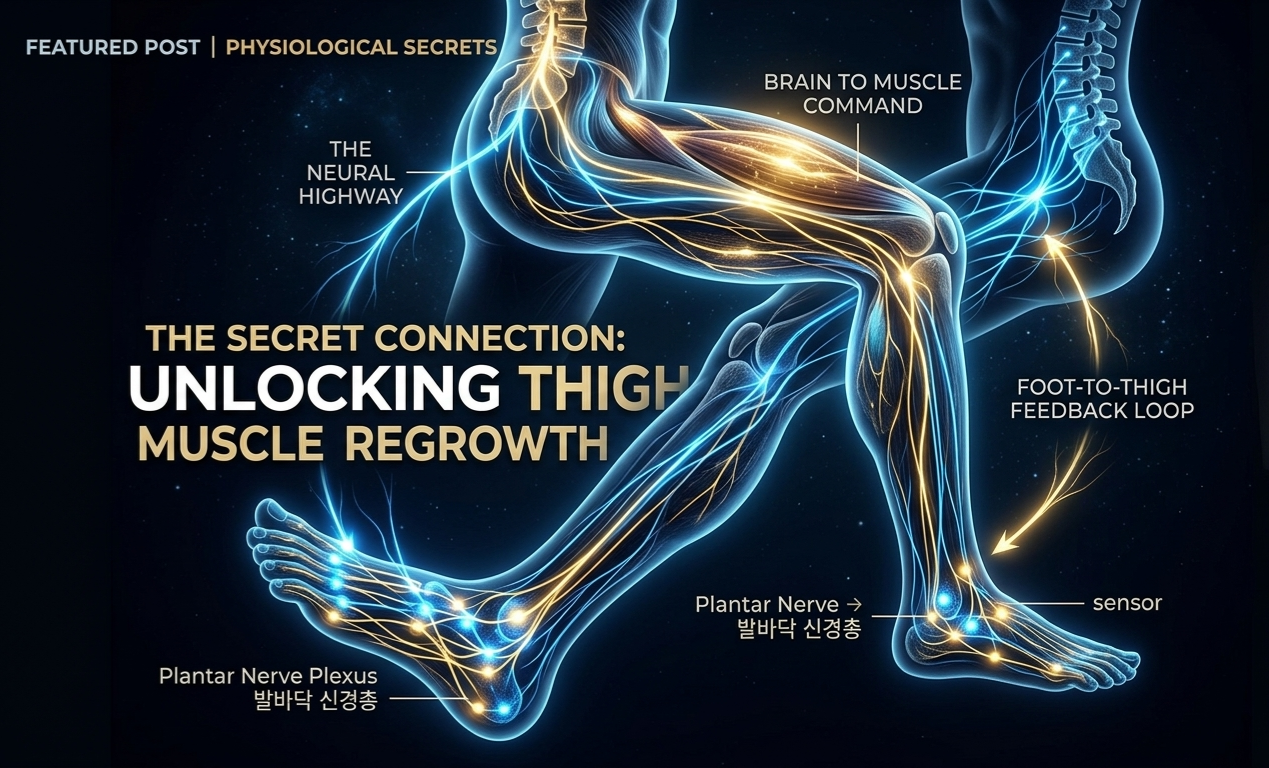
    Neural distribution map illustrating the hidden connection between foot sensors and thigh muscle regrowth.

    Secret 1: Your Brain is Halting the Signal (The Survival Lock)

    The first hidden secret to recovering lost muscle mass is understanding that a shrinking thigh muscle is rarely a muscle problem; it is a neurological command.

    When you exercise a weak muscle and it refuses to grow, you are trying to force electricity through a cut wire. In my clinical experience with body alignment, I often see the nervous system act as a protective governor.

    When a joint, a ligament, or a nerve pathway is chronically overloaded, the brain makes an unconscious decision: To protect this person from a catastrophic injury, I must cut the power to the shirnking thing muscle.

    This is not a malfunction. It is a brilliant survival mechanism. Your brain quietly dampens the motor unit activation to your thigh. No matter how many squats you perform, if the brain has locked the gate from the source, the muscle fibers will never receive the signal to contract and grow.

    shrinking thigh muscle
    ​Restoring foot sensors using nerve management to unlock a shrinking thigh muscle.

    Secret 2: The Source is in Your Shoes (The Forgotten Foundation)

    The second secret is the one that conventional treatments miss entirely: The neurological brake holding back your shrinking thigh muscle is almost always located in your foot.

    When this client came to our center, we didn’t look at his thigh first. We looked at how his feet interacted with the earth.

    Underneath the human foot lies a complex web of unconscious nerves—what the Sbonsdo (KSNS) framework recognizes as the body’s primary balance and safety sensors. Over years of wearing tight, rigid shoes and sustaining micro-injuries on the tennis court, this client’s big toe and lateral foot arch had lost their natural reflex responses.

    Because the foot was no longer properly sensing the ground, the ankle became unstable. To prevent the knee and hip from collapsing, the nervous system locked down the calf and threw the “emergency brake” directly onto the left thigh. You cannot fix a roof by staring at the ceiling while the foundation is sinking. To unlock the thigh, we had to fix the ground contact patterns first.

    ​Demonstration of KSNS (Sbonsdo) reflex testing and nerve management for structural balance.

    Recommended Reading: How Chronic Pain Instantly Shuts Down Your Nervous System

    Secret 3: Release Precedes Growth (Take Your Foot Off the Brake)

    The third and final secret is a paradigm shift in physical recovery: The body does not need more force; it needs safety. Traditional rehabilitation tells you to fight the weakness—to push, lift, and strain. But if the nervous system is in a state of chronic guarding, adding more force only triggers a deeper protective lockdown.

    Our work at the center was not about building strength through effort. It was about using precise, non-invasive nerve management to restore the unconscious reflex signals in his feet and ankles. We were not stepping on the gas pedal; we were simply taking the foot off the brake.

    The shift happened with shocking speed. Once the safety sensors in his foot felt stable, the brain realized the threat was gone. The unconscious protective guard lowered.

    For the first time in years, during a simple standing assessment, he gasped. “I can feel the bottom of my foot, and my thigh suddenly feels warm.” That warmth was blood flow, neurological connection, and life returning to a dormant muscle chain. Within weeks of restoring this balance, his left thigh finally began to fill out and grow again.

    Is Your Nervous System Guarding Your Body?

    If you are trapped in a cycle of chronic pain, structural asymmetry, or muscle loss that defies all training, stop fighting your body.

    The human body is an beautifully interconnected chain. An imbalance in the toe shifts the ankle; a frozen ankle disrupts the knee; a guarded knee shuts down the shrinking thigh muscle.

    Recovery doesn’t begin with heavier weights. It begins from the ground up, by listening to the quiet, unconscious signals of the nervous system and giving the body the balance it needs to feel safe again.

    • Learn more about the physiological mechanisms of muscle atrophy on Wikipedia.
    ​432Hz therapeutic soundscape designed to release bodily tension and support physical alignment.

    What Happens Inside the Nervous System When a Muscle Stops Growing

    Most people assume that a shrinking thigh muscle means the muscle itself is damaged or diseased.
    But in many cases, the muscle tissue is completely intact.
    The real problem is the signal — or rather, the absence of it.
    Think of your nervous system like an electrical grid.
    Every muscle in your body needs a clear, uninterrupted signal from the brain to contract, grow, and stay strong.
    When that signal is blocked, the muscle simply waits.
    It does not atrophy because it is broken.
    It atrophies because it is not receiving the command to stay active.
    This is called neurological inhibition — and it is far more common than most people realize.
    In cases of chronic pain, overuse injury, or long-term postural imbalance, the brain can begin to “mute” certain muscles as a protective strategy.
    The body is not giving up.
    It is trying to protect itself from further damage.
    The problem is that this protective response can last long after the original injury has healed.
    The nervous system stays in defense mode.
    The muscle stays silent.
    And no amount of exercise can override a signal that is not being sent.
    Why the Foot Is the Starting Point
    One of the most overlooked connections in the human body is the relationship between the foot and the thigh.
    When the foot loses proper ground contact — due to flat arches, overpronation, or years of improper footwear — the entire movement chain above it begins to compensate.
    The ankle stiffens.
    The calf tightens.
    The knee shifts.
    The hip rotates.
    And the thigh muscle, caught in the middle of this chain reaction, slowly loses its normal activation pattern.
    This is why treating only the thigh rarely works.
    The shrinking thigh muscle is often the last symptom in a long chain of imbalance that started much lower — sometimes as low as the sole of the foot.
    Restoring foot balance is not just about comfort.
    It is about re-establishing the neurological foundation that allows the entire leg to function naturally again.

    How to Rebuild a Shrinking Thigh Muscle

    Recovery is not always about exercising harder.
    In many cases, restoring balance, improving walking mechanics, and increasing normal muscle activation can help the body move more efficiently.
    As movement quality improves, the thigh muscle often becomes more active during everyday activities.
    This process may help support better strength, stability, and confidence over time.

  • Probiotics and Joint Pain: The Gut-Joint Connection You Need

    The connection between probiotics and joint pain is something most people have never considered. When your knees ache, your hips feel stiff, or your feet throb after a long day, the last place you think to look is your gut.

    Understanding the scientific link between probiotics and joint pain is the first step toward long-term relief.

    Probiotics and Joint Pain infographics
    Understanding the Gut-Joint Axis: How probiotics help reduce systemic inflammation and relieve joint pain.

    ​However, emerging research—and over 12 years of clinical observation at Haim Body Balance Center—suggests that what is happening inside your intestines may be directly influencing the inflammation in your joints. In this post, I will explain how your gut health and joint pain are connected and what you can do about it.

    ​1. Probiotics and Joint Pain: How Your Gut Microbiome Work

    ​When your gut microbiome becomes imbalanced—a state called dysbiosis—the consequences are not limited to digestive problems. Dysbiosis triggers a low-grade, chronic inflammatory response that can affect joints, muscles, and connective tissue far from the digestive tract.

    Researching the scientific connection between probiotics and joint pain is becoming essential for those seeking natural inflammatory relief.

    The Path from Gut to Joint:

    1. Microbiome Imbalance: Poor diet, stress, and lack of sleep reduce beneficial bacteria.
    2. Leaky Gut Syndrome: The gut wall becomes permeable, allowing toxins to enter the bloodstream.
    3. Systemic Inflammation: The immune system triggers inflammation that circulates throughout the body.
    4. Joint Vulnerability: Joints already under mechanical stress become targets for this inflammation, resulting in increased pain and morning stiffness.
    5. Many patients are surprised to learn that managing probiotics and joint pain through diet can be more effective than topical creams alone

    2. Clinical Evidence: What the Science Says

    ​A 2025 meta-analysis of randomized controlled trials involving nearly 700 participants found that oral probiotic supplementation significantly improved pain levels and joint function in patients with knee osteoarthritis.

    ​Among the strains studied, Lactobacillus casei Shirota has shown the strongest clinical evidence for reducing joint pain and inflammation. Other effective strains include:

    • Lactobacillus rhamnosus
    • Bifidobacterium animalis
    • Lactobacillus acidophilus
    • By improving gut health, the synergy of probiotics and joint pain reduction becomes much more apparent over time.

    3. Three Steps to Total Body Harmony

    In my 12 years of experience, I’ve found that addressing probiotics and joint pain simultaneously leads to faster physical recovery.”

    ​To truly address joint pain, we must look at the body as a whole system. Here is the framework I recommend at Haim Body Balance Center:

    • Support the Gut: Use high-quality probiotics and an anti-inflammatory diet rich in fiber and fermented foods.
    • Correct Alignment: Address pelvic tilts, leg length discrepancies, and poor foot posture that create mechanical stress.
    • Healthy Movement: Rebuild muscle balance to prevent uneven pressure on joints.

    According to medical research on gut health, probiotics play a key role in reducing systemic inflammation.

    Conclusion: Healing Starts from Within

    ​The journey to healthy joints begins in your gut. By maintaining a healthy microbiome and addressing your physical body balance, you provide your body with the internal environment it needs to heal naturally.

    Expert Tips for a Healthier Gut and Stronger Joints

    A high-quality 3D visualization showing the connection between gut health and joint pain, featuring a glowing digestive system linked to knee and shoulder joints with natural probiotic foods like Kimchi and Miso in the foreground.
    The Gut-Joint Connection: Healing from Within.” Consuming natural probiotics like Kimchi and Miso is the first step toward reducing systemic inflammation and supporting joint health.

    ​As an expert with over a decade of experience in physical correction, I have seen that the most effective healing happens when we treat the body as a whole. Supplementing with probiotics is just the first step. Here is how you can maximize your results:

    • Diverse Probiotic Sources: Don’t rely on just one type of supplement. Try to include natural probiotics from fermented foods like Kimchi, Kefir, or Miso. These offer a variety of bacterial strains that help lower systemic inflammation.
    • Fuel Your Gut with Prebiotics: For probiotics to work effectively, they need fuel. Eat plenty of high-fiber foods such as garlic, onions, and asparagus. These act as prebiotics, helping the “good” bacteria flourish in your digestive system.
    • The Power of Hydration: Water is the delivery system for nutrients in your body. Staying well-hydrated helps your gut maintain motility and ensures that inflammatory toxins are flushed out of your system, reducing the burden on your joints.

    Conclusion: Real Change Starts from Within

    “Ultimately, staying consistent with probiotics and joint pain management will help you

    ​At Haim Body Balance Center, our goal is to help you achieve lasting comfort. By balancing your gut microbiome with the right probiotics and maintaining proper physical alignment, you are giving your body the best chance to stay mobile and pain-free. Remember, healthy joints are supported by a healthy gut!

    Check out my other post on body balance