Table of Contents
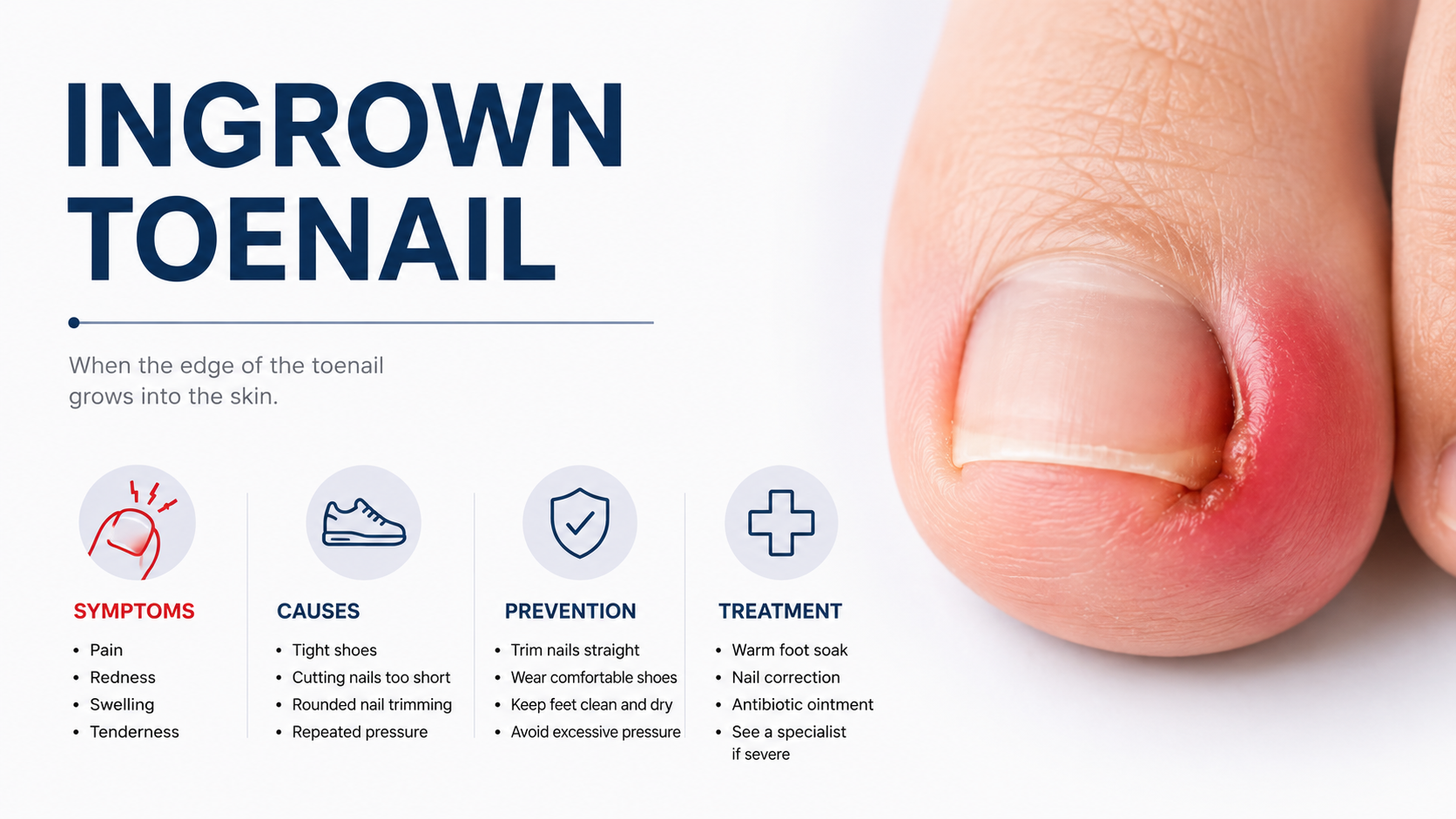
Are you struggling with ingrown toenails (clinically known as onychocryptosis) that keep coming back no matter how many times you visit the doctor?
For many, chronic foot pain becomes a frustrating cycle of temporary relief and agonizing relapse. Most people perceive an ingrown toenail as a localized, minor issue—just a sharp piece of nail hitting the sensitive nail fold. However, after 20 years of clinical experience in podiatric health and advanced biomechanics, we have discovered that ingrown toenails are actually the “ending” of a much deeper story involving your entire musculoskeletal system and postural alignment. If the pain still returns after multiple procedures, it is time to stop treating the symptom and start addressing the structural root cause: your body balance.
In this definitive guide, we reveal 7 professional secrets to breaking the cycle of recurring ingrown toenails and restoring your body’s natural structural integrity.
Why Traditional Surgery Often Fails for Ingrown Toenails

Before diving into the secrets, we must understand why even surgical interventions like a matrixectomy (partial or total nail removal) sometimes fail to provide permanent relief. Surgery addresses the anatomy of the nail plate, but it does not address the pathological mechanical load placed on the toe.
If your natural walking pattern forces your big toe into the ground at an unnatural angle, the surrounding soft tissue will remain inflamed even if the nail is narrowed. The nail is simply a passenger on a ship that is tilting. This is why a holistic, whole-body approach is mandatory for those who suffer from chronic ingrown toenails.
1. Decoding the “Kinetic Chain” and Biomechanical Forces

The first secret is recognizing that your feet are the final link in your body’s Kinetic Chain. In biomechanics, every joint from your cervical spine down to your metatarsals is interconnected through complex fascia and muscle groups.
!
Caption: The Kinetic Chain illustrates how a tilted pelvis leads to collapsed arches and recurring foot issues.
When you have a postural imbalance, such as an anterior pelvic tilt, it forces your femur (thigh bone) and tibia (shin bone) to rotate internally. This internal rotation creates a downward pressure that leads to overpronation—the collapse of the foot arch. When the arch collapses, the hallux (big toe) is forced to absorb excessive “shear force” with every step. This force literally mashes the skin against the nail edge, creating the perfect environment for ingrown toenails. To fix the issue permanently, you must address the functional alignment of the hip and pelvis.
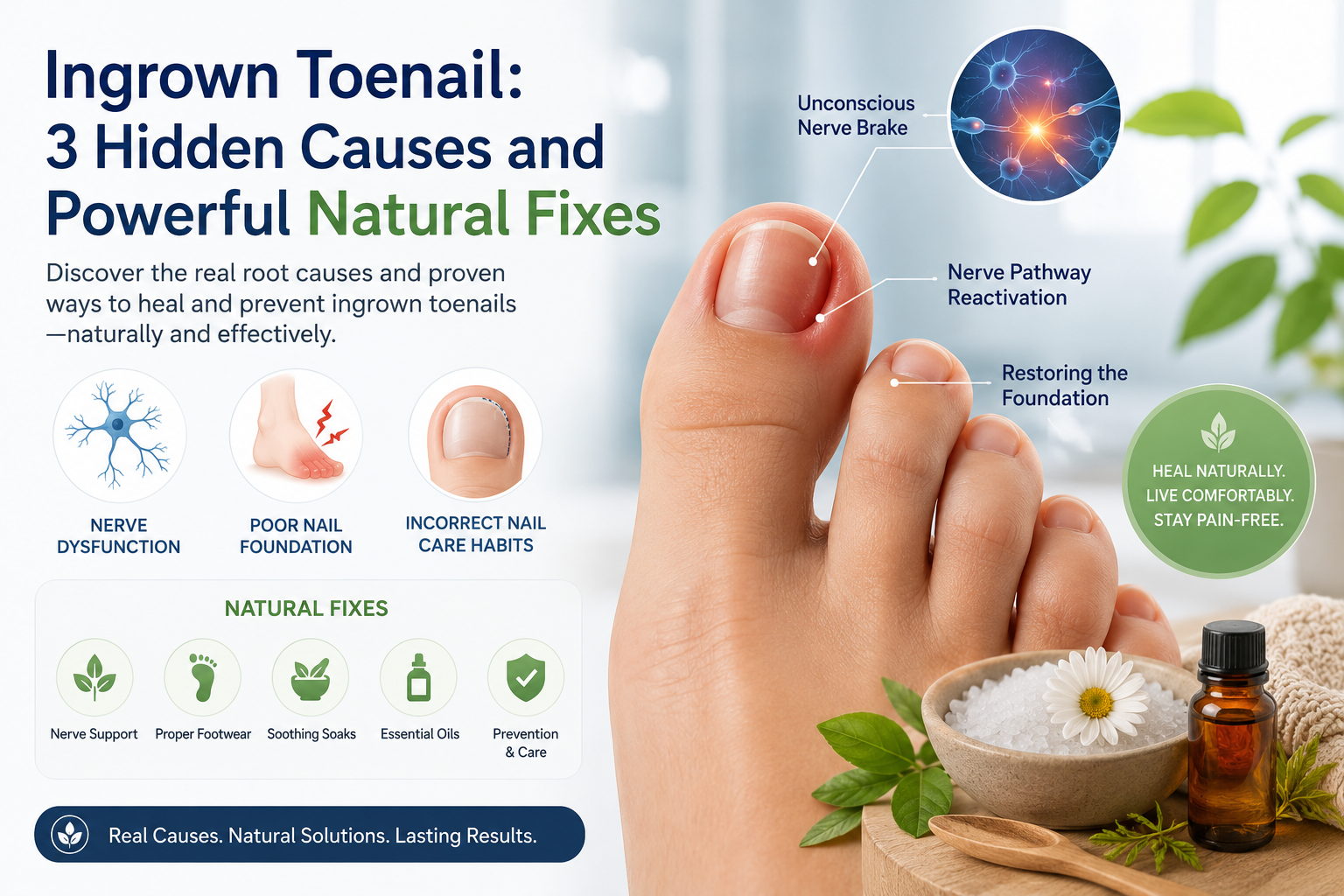
2. Releasing the “Unconscious Nerve Brake” (KSNS Theory)
Your central nervous system is hardwired for survival and protection. When you experience chronic stress or poor ergonomic habits, your brain locks certain muscles in a state of hyper-tension as a protective measure. This creates a high risk for developing ingrown toenails because your body loses its ability to absorb shock naturally.
This subconscious tension, which we call the Unconscious Nerve Brake, alters your center of gravity and creates a dysfunctional gait cycle. This concept aligns with the KSNS (Kim Ses-yeon New Structure) theory, which emphasizes the recovery of unconscious neurological sensing in the feet.
[Video: How KSNS Techniques and Sbonsdo Restore Foot Sensation and Balance – Healing YouTube. ALT: KSNS Therapy for Ingrown Toenails]
Caption: Watch how restoring the neurological ‘nerve brake’ through KSNS can naturally resolve chronic foot pain.
Releasing this “muscle memory” through specialized neurological body balancing is a prerequisite for long-term relief from ingrown toenails. Without calming the nervous system and restoring natural reflexes, physical therapy often provides only temporary results.
3. Detecting Postural Compensation Patterns
Chronic ingrown toenails are rarely isolated events; they are often the loudest warning signal of a larger compensation pattern within your skeleton. Your body is a master at hiding pain by shifting mechanical stress to other joints.
Perform this quick self-assessment to see if your body is compensating:
- Do you experience chronic lumbar stiffness or lower back fatigue by the afternoon?
- Does one knee ache more than the other after a long walk?
- Are the heels of your shoes worn down asymmetrically?
If you answered yes, your body is likely compensating for a structural imbalance. This shift in your vertical axis acts as a silent, constant force driving your toe into your soft tissue 10,000 times a day, triggering the recurrence of ingrown toenails.
4. The Stability Secret: Beyond “Wide-Toe-Box” Shoes
While narrow, pointed footwear is a primary enemy of podiatric health, simply buying “wider shoes” isn’t always the solution for ingrown toenails. The real secret lies in torsional stability.
A shoe that is too flexible or lacks a proper shank can exacerbate the pressure on your feet. If the midfoot collapses inward, it increases lateral pressure on the nail bed. You need footwear that respects your anatomy while providing enough stability to prevent excessive pronation and further ingrown toenails. Look for a firm heel counter and anatomical arch support. Avoid “minimalist” or “zero-drop” shoes if your foundation is already unstable, as they may increase the load on your forefoot.
5. Master the Gait Cycle: Correcting Your Walking Pattern
The way you strike the ground dictates the health of your nail folds and prevents ingrown toenails. A healthy gait cycle consists of three phases: heel strike, mid-stance, and terminal stance (toe-off).
Many chronic sufferers have a malfunctioning “toe-off” phase. Instead of weight being distributed across all five metatarsals, they “push off” exclusively from the inner edge of the big toe. Relearning a balanced gait through proprioceptive awareness can eliminate the friction that triggers ingrown toenails, paronychia (nail fold infection), and nail plate deformities. Focusing on a “straight-ahead” foot position during the stride can significantly reduce medial pressure.
6. Restoring Ankle Mobility and Dorsiflexion
The human foot is an engineering marvel with 26 bones and 33 joints, all designed for efficient movement to prevent chronic ingrown toenails. If your ankle joint is stiff, your big toe is forced to work twice as hard to clear the ground during the “swing phase” of walking.
!
Caption: Proper ankle dorsiflexion is critical for redistributing weight away from the big toe.
Stiffness in the ankle, specifically limited dorsiflexion, is a major contributor to persistent foot pain. When the ankle doesn’t bend enough, the foot is forced to turn outward (abduct), placing the big toe in a high-pressure “valgus” position. Improving the flexibility of the talocrural joint ensures the nail bed is no longer the primary impact zone for your body weight, helping you avoid ingrown toenails for good.
7. Professional Body Balancing and Structural Integration
The final secret is seeking professional intervention that focuses on whole-body integration to resolve ingrown toenails. Standard medical treatments are necessary for acute infections, but they rarely address the biomechanical root cause.
At Haim Body Balance Center, we specialize in identifying these hidden structural links. Our holistic approach involves:
- Comprehensive Postural Mapping: Analyzing the tilt in your structural foundation.
- Neurological Release: Deactivating the “nerve brakes” in your muscular system.
- Alignment Integration: Ensuring your pelvis, knees, and feet work as a synchronized unit.
Therapeutic Exercises for Foot Alignment
To support your recovery and prevent ingrown toenails, try these three simple daily exercises:
- Short Foot Exercise: Try to pull the ball of your foot toward your heel without curling your toes. This strengthens the intrinsic muscles of the arch.
- Ankle Circles: Perform 20 slow circles in each direction every morning to improve joint lubrication and mobility.
- Toe Spreading: Sit with your feet flat and try to spread your toes as wide as possible. This helps reverse the compression caused by modern footwear.
5 Common Myths About Ingrown Toenails
- Myth: Cutting a “V” in the middle of the nail helps. (Fact: This does nothing to change how the edges grow and can lead to bacterial traps.)
- Myth: It’s purely genetic. (Fact: While nail shape is genetic, the pressure that makes it ingrow is usually mechanical or postural.)
- Myth: Antibiotics will cure it. (Fact: They treat the infection, but not the physical trauma of the nail hitting the skin.)
- Myth: Tight socks don’t matter. (Fact: Any external compression can worsen ingrown toenails if your foot is already overpronating.)
- Myth: Once you have surgery, it’s gone forever. (Fact: Recurrence rates are surprisingly high if underlying biomechanical issues are ignored.)
How to Properly Trim Nails to Prevent Issues
To minimize the risk of ingrown toenails, follow these expert trimming steps:
- Always cut straight across; never round the corners into a “C” shape.
- Leave the nail long enough so that the corners sit comfortably beyond the skin fold.
- Use a proper straight-edge toenail clipper, not curved fingernail clippers.
- File away sharp edges gently with an emery board to prevent snagging on socks.
FAQ: Solving the Mystery of Recurring Foot Pain
Q: I have had surgery twice. Why do my ingrown toenails return?
A: Surgery removes the nail, but not the pathological pressure pattern. If your biomechanical alignment still forces the toe into the ground at an angle, the surrounding skin will remain irritated even without the nail.
Q: Can emotional stress really cause physical foot pain?
A: Indirectly, yes. Stress increases systemic muscle memory tension, particularly in the calves and pelvis, which “tightens” your gait and increases localized mechanical stress on your toes, eventually leading to ingrown toenails.
Q: Is there a simple home check for imbalance?
A: Stand in front of a mirror with feet hip-width apart. If your kneecaps point inward toward each other (“squinting patellae”), your hips are internally rotated, placing excessive pressure on your toes and potentially causing ingrown toenails.
Conclusion: Start Listening to the Signal
Pain is a sophisticated language. A recurring ingrown toenail is a persistent distress signal that your foundation is struggling to support your structure. Stop chasing the symptom with temporary, painful fixes. By understanding the Kinetic Chain and addressing your body balance, you can finally achieve lasting relief. Your journey to a pain-free, balanced life begins with a single, aligned step.
https://soletobody.com/your-other-post-link
Also see: How Pelvic Alignment Affects Foot Health
Conclusion: Start Listening to the Signal
Pain is a sophisticated language. A recurring ingrown toenail is a persistent distress signal that your foundation is struggling to support your structure. Stop chasing the symptom with temporary, painful fixes. By understanding the Kinetic Chain and addressing your body balance, you can finally achieve lasting relief. Your journey to a pain-free, balanced life begins with a single, aligned step.
### Summary: The Ultimate Path to Foot Health
Achieving permanent relief from persistent foot discomfort requires shifting your focus from the symptoms to the entire skeletal framework. True physical balance cannot be achieved overnight, nor can it be resolved by treating an isolated area. It demands a systematic and holistic approach that targets the nervous system, core alignment, and joint mobility altogether.
For those who wish to study these structural connections further, conducting regular postural self-assessments and analyzing your daily walking habits is highly recommended. True recovery begins when you listen to your body’s subtle warnings and take a synchronized approach to body stabilization.