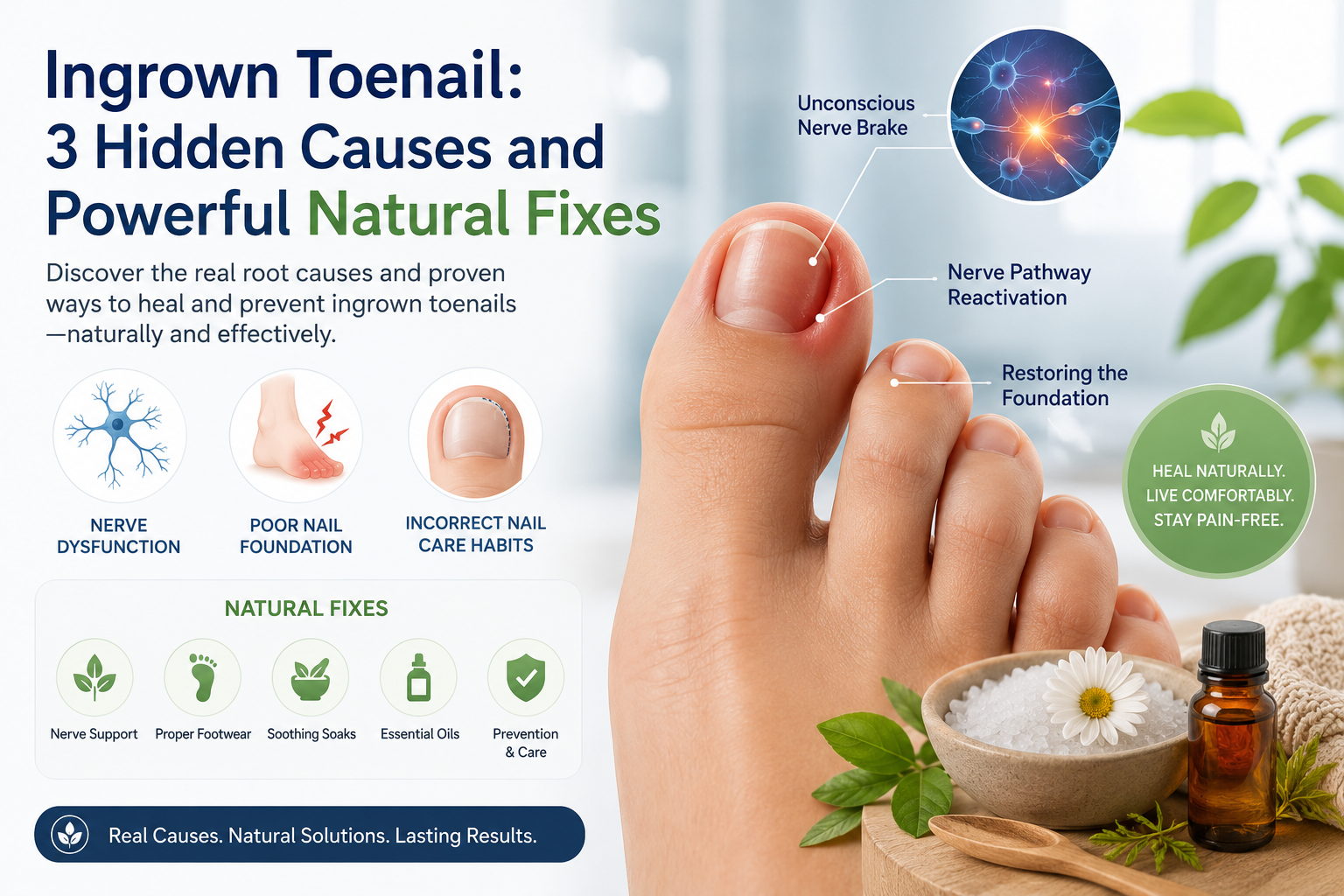
Ingrown toenail: 3 hidden causes and how to prevent recurrence naturally.
Many people live with the constant discomfort of an ingrown toenail, a condition medically known as Onychocryptosis. It begins as a slight pressure, but soon escalates into sharp, stabbing pain and chronic inflammation. For those who have reached their limit, the most common path is having the nail removed. However, the most frustrating part of this journey is the high rate of recurrence.
Ingrown toenail problems often begin with subtle nerve sensitivity and foot imbalance.
Improving ingrown toenail nerve sensitivity is key to preventing recurrence.
Improving ingrown toenail nerve sensitivity is essential for long-term recovery.

Why does a new nail, after a painful removal process, grow back into the skin again? To understand this, we must look beyond the surface. Traditional treatments often view the nail as the sole problem. In reality, the nail is merely a reflection of the environment beneath it. If the soil is tilted, the tree will always grow crooked. In the human body, this “tilted soil” is often a result of a dysfunctional nervous system in the foot.
Foot balance plays a critical role in preventing recurring nail problems and improving overall stability.

This condition is often related to ingrown toenail nerve sensitivity and poor foot balance.
Improving ingrown toenail nerve sensitivity is key to preventing recurrence.
3 Causes of Ingrown Toenail and Why It Keeps Returning
When a nail is surgically removed, the trauma can further desensitize the surrounding nerves. If the underlying cause—the lack of neurological feedback and poor circulation—is not addressed, the nail bed remains constricted. As the new nail attempts to grow, it follows the path of least resistance, which is often right back into the tender skin.
The Hidden Culprit: The “Unconscious Nerve Brake”
At the Haim Body Balance Center, we have identified a phenomenon called the “Unconscious Nerve Brake.” The big toe serves as the primary anchor for bodily balance. When the sensory nerves in the toe are “inhibited” or “braked”—due to structural misalignment or trauma—the brain restricts the toe’s natural movement as a protective measure.
This is a common pattern in ingrown toenail recurrence cases.
Improving ingrown toenail nerve sensitivity is essential to prevent recurrence.
This neurological inhibition leads to a cascade of issues:
- Micro-circulation Collapse: Reduced nerve signals lead to constricted blood vessels.
- Loss of Nail Bed Elasticity: Without proper flow, the skin becomes rigid and prone to deformation.
- Growth Path Distortion: The nail “loses its way” and starts piercing the soft tissue.
Restoring the Foundation: Nerve Pathway Reactivation
Our approach focuses on “releasing the brake.” Instead of cutting the nail, we focus on reactivating the dormant sensory receptors. By restoring the unconscious nerve response, we improve the systemic flow to the toe. When the nerves are active and foot balance is restored, the nail bed flattens, and the new nail begins to grow straight and healthy.
How to Check Your Nerve Health (Self-Assessment)
Is your ingrown toenail caused by a “Nerve Brake”? Check if you have these symptoms:
- Does the pain persist even when you aren’t wearing tight shoes?
- Does the toe feel cold or have a different skin texture compared to other toes?
- Is there a loss of sensation or a tingling feeling around the nail?
- Have you had multiple recurrences after professional nail care or surgery?
According to Mayo Clinic, ingrown toenails are often caused by improper nail growth and pressure from tight shoes.
You can also learn more about foot balance and nerve sensitivity.
If you answered “yes” to more than two, your nervous system likely needs professional attention.
A Real Clinical Success Story
In one notable clinical case, a client came to us after failing three separate surgical procedures over five years. Her toe was in a state of permanent inflammation. By focusing on her nerve response rather than the nail, we were able to stop the inflammation within weeks. Six months later, her nail had completely returned to its normal, healthy shape for the first time in a decade.
In many cases, the body does not need more aggressive treatment, but better awareness and proper stimulation.
When the nervous system regains its natural responsiveness, the toe can recover its normal function, and the nail can grow in a healthier direction.
This is why addressing the root cause — nerve balance and circulation — is essential for long-term results.
Healthy nail growth is not only about the nail itself, but about restoring proper nerve sensitivity, foot balance, and circulation within the body.