Tag: spinal alignment

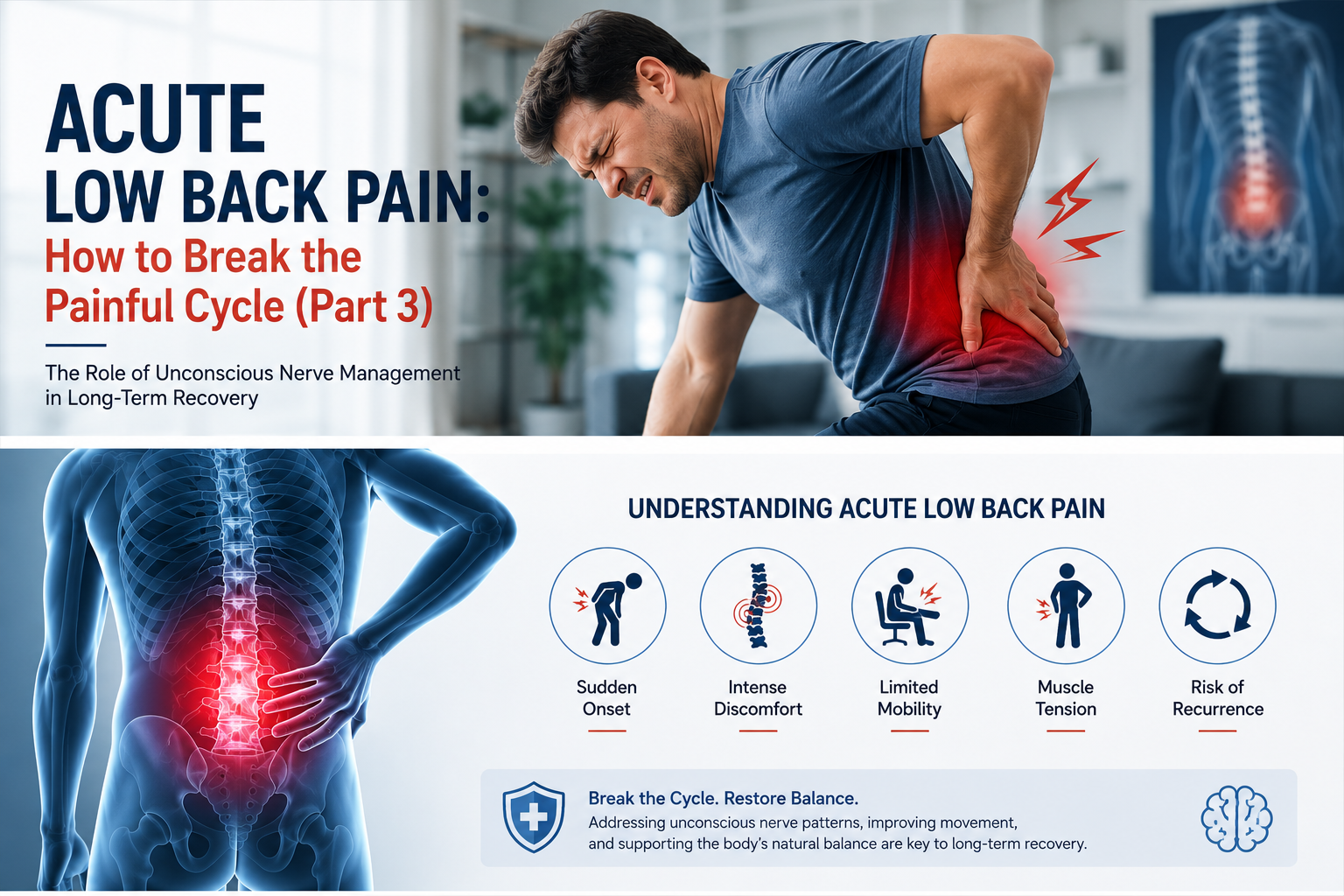
  • Acute Low Back Pain: How to Break the Painful Cycle(Part3)

    Acute Low Back Pain: How to Break the Painful Cycle(Part3)

    Acute low back pain can strike without warning — and for many people, it keeps coming back. This article explores why recurrence happens and introduces the role of unconscious nerve management in long-term recovery.

    A Real Story: The Pain That Returned

    Therapist performing neurological biofeedback and unconscious nerve management for a patient with acute low back pain
    Unconscious nerve management (KSNS) helps restore deep core stability to break the cycle of recurring acute low back pain.

    Six months ago, a man experienced a severe episode of acute low back pain. The pain was so intense that he could barely move. He visited a hospital, received injections and treatment, and after some time, the discomfort disappeared.

    Like many people, he assumed the problem had been solved. He returned to his normal routine — and thought nothing more of it.

    Recently, however, the same pain returned. This time it became so severe that he had to leave a social gathering early and head straight to the hospital for treatment again.

    His experience raises an important question: Why do some people experience repeated episodes of acute low back pain even after treatment?

    Pain Relief Does Not Always Mean the Problem Is Gone

    Many people assume that when pain disappears, the body has fully recovered. In reality, pain relief and complete recovery are not always the same thing.

    Medical treatment can be extremely helpful for reducing inflammation, calming irritated tissues, and providing short-term relief. However, if daily movement habits remain unchanged, the body may continue to place stress on the same structures. Over time, these hidden stresses accumulate again — and trigger another episode of acute low back pain.

    Person achieving long-term recovery from acute low back pain through unconscious nerve management and improved posture
    True recovery: Moving from recurring pain to a balanced, upright life through unconscious nerve coordination.

    The Body Often Gives Warning Signs

    Before a severe pain episode occurs, many people notice subtle changes in how their body feels and moves:

    • Morning stiffness
    • Tight hips
    • Reduced flexibility
    • Difficulty standing upright
    • Fatigue after walking
    • One-sided muscle tightness
    • Discomfort after sitting for long periods

    Unfortunately, these early warning signs are often ignored because they do not seem serious. The body may be quietly asking for attention long before pain becomes unbearable.

    Why Recurrence Happens: Common Contributing Factors

    Recurring acute low back pain is rarely caused by a single event. More often, it develops from a combination of factors that go unaddressed after the first episode:

    Poor Posture

    Long hours of sitting can place continuous stress on the lower back, especially when posture is not supported.

    Weak Core Stability

    When deep stabilizing muscles become inactive, other muscles compensate and become overworked — creating imbalance throughout the spine.

    Limited Hip Mobility

    Restricted hip movement often forces the lower back to move excessively, placing strain on joints and soft tissues that are not designed for that range of load.

    Returning to Old Habits

    Once pain improves, people frequently stop paying attention to posture, walking patterns, and movement quality. Without conscious awareness, old habits return — and so does the pain.

    The Missing Piece: Unconscious Nerve Management (KSNS)

    Breaking the cycle of chronic back pain through unconscious nerve management (KSNS).

    One factor that is often overlooked in the management of acute low back pain is the role of the nervous system — specifically, what we call unconscious nerve management, or KSNS (Kinesthetic Subconscious Nerve System).

    The human body does not move by conscious thought alone. A large portion of postural control, muscle coordination, and spinal stabilization is governed by automatic, subconscious nerve signals that operate below the level of awareness. When these signals become disrupted — through injury, poor habits, or prolonged stress — the body loses its ability to self-regulate efficiently.

    In clinical practice, we observe that many patients who recover from acute low back pain and then relapse have not restored this unconscious regulation. Their pain resolves on the surface, but the underlying nerve-muscle communication patterns that protect the spine remain dysfunctional.

    Unconscious nerve management — the Sbonsdo approach — focuses on identifying and retraining these subconscious patterns. Rather than simply targeting muscles or joints, this method works with the nervous system’s automatic responses to restore balance from the inside out. By addressing the root level of neurological control, it becomes possible to reduce the risk of recurrence more effectively than symptom-based treatment alone.

    When the nervous system learns to stabilize the spine automatically and efficiently again, the body no longer needs to compensate in ways that create vulnerability to re-injury.

    Recovery Requires More Than Temporary Relief

    Long-term improvement often involves more than simply waiting for pain to disappear. Many health professionals emphasize the importance of:

    • Consistent daily movement
    • Regular walking habits
    • Maintaining flexibility and hip mobility
    • Improving posture awareness throughout the day
    • Building deep core stability
    • Restoring unconscious nerve control and muscle coordination

    Small daily actions performed consistently can often have a greater long-term impact than occasional intensive efforts.

    A Different Way to Think About Back Pain

    Instead of asking: “How can I stop today’s pain?”

    A better question may be: “What daily habits — and what patterns in my nervous system — are causing my body to repeat this cycle?”

    This shift in thinking encourages a focus on prevention, root-cause awareness, and the restoration of proper nerve-body communication — rather than simply reacting when acute low back pain returns.

    Relaxation for the nervous system: Soothing 432Hz healing music to complement your physical recovery and reduce tension.

    Conclusion

    The man in this story found relief from acute low back pain six months ago — yet the pain eventually returned, forcing him to seek treatment once again. His experience reflects a challenge faced by many people around the world.

    Pain may disappear, but underlying movement patterns, lifestyle habits, and unconscious nerve regulation often remain unchanged. Understanding the body’s warning signs, improving daily movement quality, restoring subconscious nerve-muscle coordination through KSNS management, and maintaining consistent self-care may all help reduce the likelihood of future episodes.

    Recovery is not only about feeling better today. It is about creating conditions — in your habits, your movement, and your nervous system — that help your body function better tomorrow.

    Have you ever experienced recurring back pain? Share your thoughts or questions in the comments below.
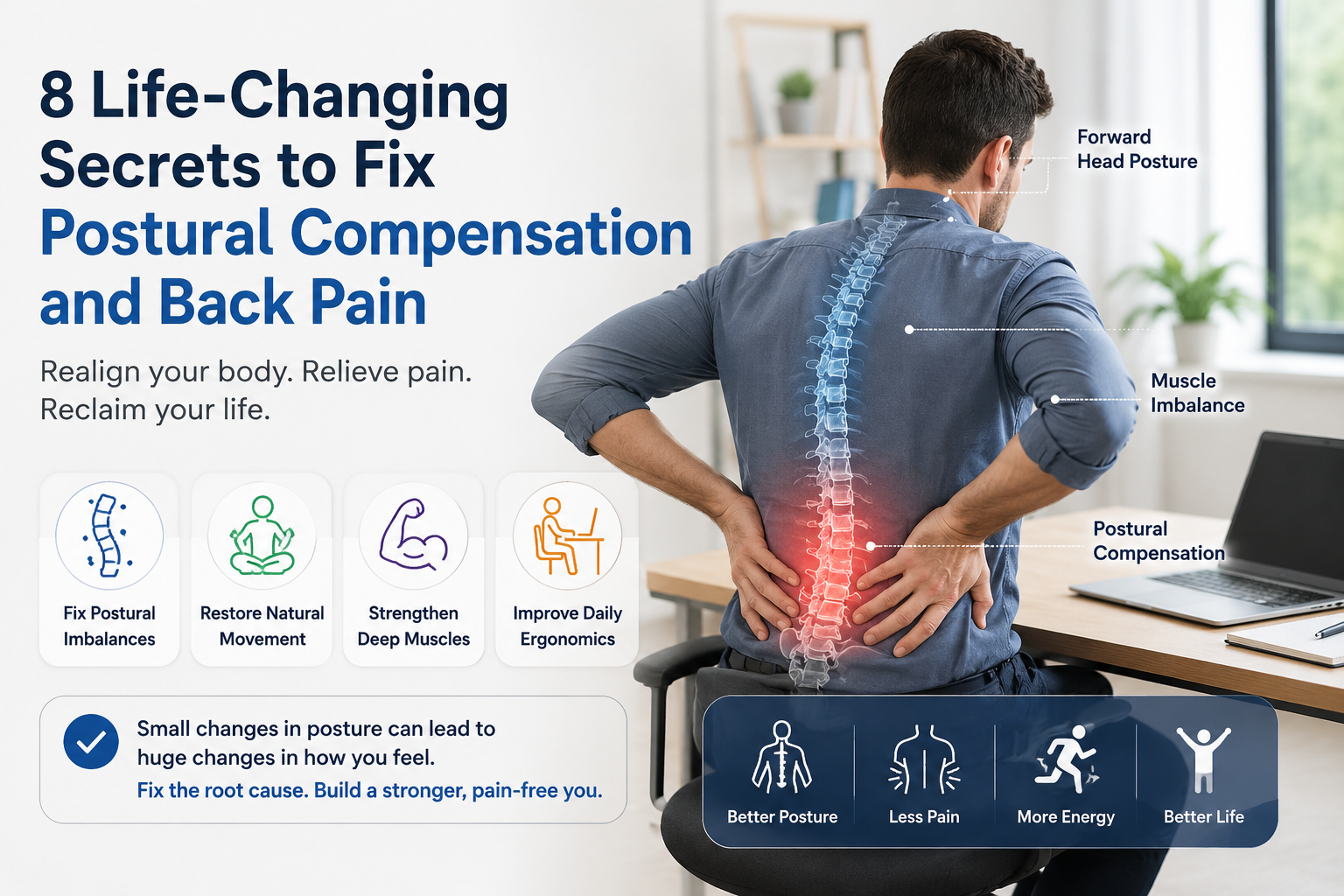
  • ​8 Life-Changing Secrets to Fix Postural Compensation and Back Pain

    ​8 Life-Changing Secrets to Fix Postural Compensation and Back Pain

    Postural Compensation and pelvic imbalance in older women
    Chronic posture imbalance affecting the back, pelvis, and lower body.

    8 Life-Changing Secrets to Fix Postural Compensation and Back Pain

    1. Introduction: The Invisible Burden of Decades

    Understanding body alignment is often the first step toward resolving chronic lower back pain that has lasted for years. In many real-life cases, persistent discomfort is not isolated to one muscle or joint. Instead, the body develops long-term compensation patterns that slowly affect posture, breathing, balance, and movement.

    Many women assume lower back pain or pelvic heaviness are simply part of aging. However, from a structural perspective, these symptoms may reflect years of forward weight shift, muscular guarding, and movement imbalance.

    Your body constantly tries to prevent you from falling. When the center of gravity changes, the nervous system automatically reorganizes muscle tension to keep you upright. Over time, this protective strategy can become deeply ingrained.

    Over time, these Postural Compensation patterns may affect the entire body.


    2. A Real-Life Perspective: The “Leaden Body” Feeling

    A woman in her 60s came seeking help for what she believed was ordinary lower back pain.

    “My legs feel heavy like lead,” she explained.

    After evaluation, it became clear that the lower back itself was not the primary issue. For decades after childbirth, her upper body weight distribution had gradually shifted forward. Her shoulders rounded inward, the rib cage became compressed, and her pelvis continuously tightened to stabilize the body.

    The tension pattern had become so familiar that her nervous system accepted it as normal.


    3. The Biomechanical Shift After Motherhood

    Pregnancy changes the body’s center of gravity dramatically. During this period, the spine, pelvis, and lower body adapt in order to maintain balance.

    For some women, those altered movement patterns never fully reset.

    Years later, they may continue walking, standing, and breathing with the same forward-dominant posture developed decades earlier. This can create excessive stress throughout the lower back, hips, knees, and feet.

    The Hidden Forward Pull

    Even a small forward shift in body weight can place enormous tension on the posterior chain muscles. The upper back stiffens, the pelvis braces, and the body gradually loses fluidity.

    Over time, many people begin experiencing:

    This type of Postural Compensation gradually increases muscular stress.

    • rounded upper back posture
    • shallow breathing
    • pelvic heaviness
    • foot pressure imbalance
    • chronic muscular tightness
    • fatigue while standing

    4. Why the Feet Matter More Than Most People Realize

    Calf tension and foot pressure patterns related to posture imbalance
    Chronic posture imbalance may gradually affect calf tension, foot pressure, and walking stability.

    The feet are often the final “shock absorbers” of long-term imbalance.

    Long-term Postural Compensation often changes foot pressure patterns and standing stability.

    This type of Postural Compensation gradually increases muscular stress.

    In this case, the tissue beneath the toes and forefoot had become stiff and dense, almost like the feet were constantly bracing against the ground.

    When pressure distribution changes for many years, the body loses its natural spring-like movement. Standing becomes exhausting, and even getting up from a chair may feel unusually difficult.

    Many people focus only on the painful area while ignoring the foundation underneath them.


    5. The Fascial Connection and Structural Bracing

    Muscles move the body, but fascia helps maintain long-term tension patterns.

    Under chronic stress, connective tissue can gradually harden and reinforce protective postures. This often creates the sensation of stiffness, heaviness, and restricted movement throughout the torso and pelvis.

    Hydration, breathing mechanics, circulation, and movement quality all influence how flexible these tissues remain over time.


    6. Breathing, Rib Cage Compression, and Stress

    One overlooked factor in chronic discomfort is breathing restriction.

    When the rib cage collapses forward, the diaphragm cannot move freely. This often leads to shallow chest breathing, increased stress signaling, and persistent muscular guarding.

    The body may remain in a low-level “protective mode” for years without the person fully realizing it.

    Restoring natural rib cage movement can significantly reduce overall tension patterns.


    7. Re-Educating Movement Patterns

    Long-standing movement habits do not disappear overnight.

    The nervous system must gradually relearn safer and more balanced movement strategies. Small changes in foot pressure, pelvic alignment, breathing, and walking mechanics can create meaningful improvements over time.

    Many people report:

    • lighter legs
    • easier standing
    • reduced pelvic pressure
    • improved breathing
    • less foot discomfort
    • better body awareness

    8. Moving Toward a Lighter Body

    True physical comfort is not simply the absence of pain.

    It is the feeling that the body no longer has to fight gravity every moment of the day.

    When balance improves and unnecessary muscular guarding decreases, people often describe their bodies as feeling “lighter” and less compressed.

    Especially for women who have spent decades compensating after pregnancy and childbirth, restoring body awareness and movement quality can be an important part of long-term well-being.

    https://youtu.be/5GBP9frJbW4?si=i5F4TXUMG319uGjm

    FAQ

    Can chronic posture imbalance improve after many years?

    According to Harvard Health, posture and movement patterns may influence chronic musculoskeletal discomfort.

    Harvard Health

    Yes. The nervous system can adapt throughout life when movement patterns, breathing, and body awareness are gradually retrained.

    Reducing Postural Compensation often begins with improving balance, breathing, and movement awareness.

    Why does my pelvis feel heavy when standing up?

    Pelvic heaviness is often connected to muscular bracing, altered weight distribution, restricted breathing mechanics, and long-term compensation strategies.

    Why do my feet feel stiff and pressured?

    The feet frequently absorb stress created higher up in the body. Chronic imbalance can change pressure patterns and reduce natural flexibility in the foot tissues.

    You can also explore more posture and body balance articles on our homepage.

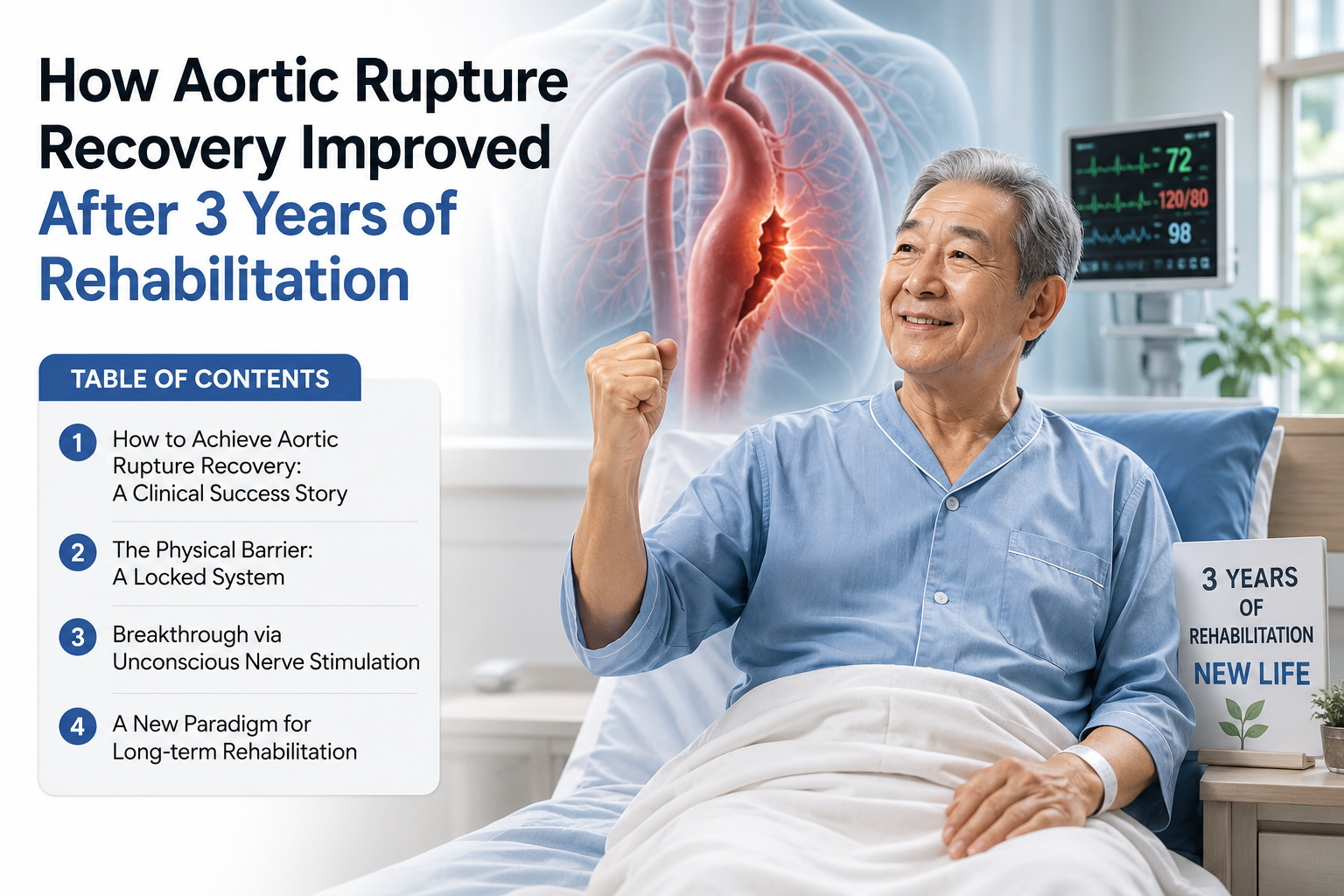
  • How Aortic Rupture Recovery Improved After 3 Years of Rehabilitation

    How Aortic Rupture Recovery Improved After 3 Years of Rehabilitation

    How to Achieve Aortic Rupture Recovery: A Clinical Success Story

    Recovering after an aortic rupture can be a long rehabilitation journey. This report explores how supportive nerve stimulation and circulation-focused care were used alongside long-term rehabilitation to improve mobility and daily function.

    ​Survival after an aortic rupture is a medical phenomenon. This Aortic Rupture Recovery case study highlights a patient who survived the critical “Golden Hour” six years ago but was left with severe physical impairments. After two years of intensive hospital care and four years of continuous rehabilitation, the medical team concluded that no further progress could be made. The client was left dependent on two canes, struggling with a lower body that felt “disconnected” from the brain.

    ​The Physical Barrier: A Locked System

    Rehabilitation care session
    Aortic Rupture Recovery

    Long-term walking rehabilitation.
    Walking rehabilitation

    ​When the client first arrived at the Haim Body Balance Center, the physical state was more than just “weakness.” Walking was impossible without the heavy support of two canes. A striking symptom was the inability to lift the legs while sitting. It wasn’t just muscle atrophy; the neurological pathway to the femoral nerve was effectively “locked.” Even if the legs were lifted manually, they would drop instantly, lacking any neurological “hold.” Furthermore, a massive, involuntary contraction around the abdomen acted like a heavy girdle, creating constant downward pressure on the lower body.

    ​Breakthrough via Unconscious Nerve Stimulation

    ​Our approach to successful Aortic Rupture Recovery focused on “Unconscious Nerve Stimulation” through specific reflex zones in the feet. For a patient with low autonomic nervous system (ANS) efficiency, the initial response is unique.

    ​By applying targeted pressure to specific reflex points for just three seconds, we triggered a “sizzling” (jingle-jingle) sensation. This is a vital clinical sign in Aortic Rupture Recovery. It indicates that the stagnant neurological pathways are being reactivated. Much like releasing a parking brake on a car, this stimulation sent a sudden signal to the brain, overriding the “lock” on the femoral nerves.

    ​Removing Physical Blockages: The Ankle Congestion

    ​Beyond the nerves, a major physical barrier was identified around the ankles. Years of poor circulation led to:

    • Chronic Inflammatory Deposits: The area around the ankle joints was congested with hardened, fatty masses.
    • Circulatory Stagnation: These deposits were so dense that they physically choked the blood flow, exacerbating the numbness.

    ​We initiated an intensive plan to manually break down and release these hardened inflammatory deposits. By physically clearing these “clogs,” we restored the structural freedom the ankle needed to move, which in turn improved the overall circulation, a crucial step in the Aortic Rupture Recovery process.

    ​A New Paradigm for Long-term Rehabilitation

    ​Rehabilitation is not a sprint; it is a marathon. Over three years of consistent management, the transformation has been remarkable. The “lock” on the thigh nerves has loosened, allowing for conscious leg movement. The dependence on the two canes has shifted from a desperate necessity to a supportive aid.

    This Aortic Rupture Recovery case suggests that long-term rehabilitation and supportive neurological care may help improve mobility and daily function after severe physical limitations. By addressing unconscious nerve responses, circulation issues, and overall body balance, gradual physical improvement may continue over time.

    ​Today, the patient still faces challenges, but the “powerless” legs of years ago are gone. There is now strength, coordination, and, most importantly, hope. For those suffering from the after-effects of major surgery, remember: when one door closes, another pathway through neurological stimulation may open.

    More information about aortic conditions and rehabilitation can be found through Mayo Clinic resources.

    Relaxing healing music may also help support emotional comfort during long-term rehabilitation.

    For more information about body balance care and rehabilitation support, visit Haim Body Balance Center.https://soletobody.com