Category: rehabilitation

  • Why Do Your Legs Give Out Without Warning? 7 Causes

    Why Do Your Legs Give Out Without Warning? 7 Causes

    Have you ever been walking normally — then suddenly your legs give out without warning? It’s terrifying, and you’re not alone. Millions of people experience this frightening symptom every year, yet most never find out why it happens.

    In this guide, you’ll discover the 7 most common reasons your legs suddenly give way, what your nervous system is trying to tell you, and what you can do right now to protect yourself.

    What Does It Mean When Your Legs Give Out Without Warning?

    When your legs give out without warning, it usually means one thing: your muscles are not receiving the proper nerve signals they need to hold your body upright. This is not always a sign of a serious disease — but it is always a sign that something in your nervous system or musculoskeletal system needs attention.

    The medical term for this is sudden lower extremity weakness. It can happen while standing, walking, climbing stairs, or even just shifting your weight. The key word is without warning — there’s no pain, no dizziness beforehand. Your leg simply buckles.

    7 Reasons Your Legs Give Out Without Warning

    1. Compressed Spinal Nerves (Radiculopathy)

    compressed spinal nerve vs healthy nerve causing legs to give out without warning
    Spinal nerve compression is one of the leading causes of legs giving out without warning — proper alignment restores healthy nerve function

    One of the most common causes of legs giving out without warning is nerve compression in the lower spine. When a disc bulges or a vertebra shifts, it presses on the nerves that control your leg muscles. The result? Sudden, unpredictable leg weakness.

    Signs this is your cause:

    • Weakness happens more on one side
    • You may also feel tingling or numbness
    • Sitting for long periods makes it worse

    2. Unconscious Nerve Tension (The Hidden Cause Most Doctors Miss)

    Your body holds chronic tension in the nervous system — often without you realizing it. This is what specialists in body balance and nerve management call unconscious nerve tension.

    When your nervous system is constantly in a guarded, tight state, it begins to misfire signals to your leg muscles. The muscles don’t fail because they’re weak — they fail because the nerve commands are being disrupted before they even reach the leg.

    This is why many people with legs that give out without warning have completely normal MRI results. The problem isn’t structural — it’s functional nerve signal disruption.

    Watch how KSNS (unconscious nerve management) technique releases nerve tension that causes legs to give out without warning

    3. Hip and Pelvic Imbalance

    When your pelvis is tilted or rotated — even slightly — the muscles on one side of your body work much harder than the other. Over time, the overworked muscles become fatigued and simply give out under normal loads.

    Signs this is your cause:

    • One leg feels stronger than the other
    • You tend to lean to one side when standing
    • Lower back ache is common

    4. Foot Arch Collapse and Ankle Instability

    foot arch collapse vs normal arch illustration showing how flat feet cause leg weakness and instability
    Foot arch collapse disrupts body alignment and can cause your legs to give out without warning

    Your feet are the foundation of your entire body. When the arches collapse or the ankle rolls inward, the alignment chain from foot to knee to hip to spine is disrupted. This sends incorrect feedback signals up to your brain, which can cause sudden muscle inhibition — meaning your leg muscles temporarily “switch off.”

    This is especially common in people who stand for long hours or wear unsupportive footwear.

    5. Peripheral Neuropathy

    Peripheral neuropathy is damage to the nerves outside the brain and spinal cord. It’s common in people with diabetes, vitamin B12 deficiency, or chronic alcohol use. When these peripheral nerves are damaged, the signals between your brain and your leg muscles become slow and unreliable — causing sudden buckling.

    Signs this is your cause:

    • Burning or “pins and needles” in the feet
    • Weakness that gets worse at night
    • You’ve been diagnosed with diabetes or pre-diabetes

    6. Transient Ischemic Attack (TIA) — Mini Stroke

    A TIA causes a temporary loss of blood flow to the brain. One of its symptoms can be sudden leg weakness or buckling. Unlike the other causes on this list, a TIA is a medical emergency.

    Go to the emergency room immediately if your legs give out AND you also have:

    • Sudden facial drooping
    • Arm weakness on one side
    • Slurred speech
    • Sudden severe headache

    7. Chronic Stress and the Nervous System Overload

    This surprises many people — but chronic psychological stress directly affects muscle function. When your body is under prolonged stress, the nervous system stays in a constant state of “fight or flight.” This floods your muscles with tension signals, and eventually the system becomes so overloaded that it shuts down temporarily — causing your legs to give out.

    Research shows that stress-related muscle weakness is one of the most underdiagnosed causes of unexplained leg buckling in otherwise healthy adults.

    When Should You Be Worried?

    Not every episode of legs giving out without warning is an emergency — but some are. Use this quick guide:

    SymptomWhat to Do
    Legs give out, no other symptomsSee a specialist within 1–2 weeks
    Legs give out + numbness/tinglingSee a doctor within 48 hours
    Legs give out + loss of bladder/bowel controlEmergency — go to ER now
    Legs give out + face drooping + slurred speechEmergency — call 911 now

    How to Stop Your Legs From Giving Out: A Body Balance Approach

    At Haim Body Balance Center, we’ve worked with hundreds of patients whose legs gave out without warning — and whose MRI results showed nothing abnormal. In most cases, the root cause was a combination of:

    • Spinal nerve compression from postural imbalance
    • Foot arch dysfunction sending wrong feedback signals
    • Unconscious nervous system tension disrupting muscle control

    Our approach focuses on restoring the body’s balance from the ground up — starting with the feet, correcting spinal alignment, and releasing chronic nerve tension so that your leg muscles receive clear, consistent signals from your brain.

    The result: legs that hold you steady — even on uneven ground, even after long hours of standing.

    Frequently Asked Questions

    Can stress really cause my legs to give out?

    Yes. Chronic nervous system overload is a well-documented cause of sudden muscle weakness. When the stress response stays activated too long, it can disrupt the normal nerve-to-muscle signaling pathway in your legs.

    Is it normal for legs to give out as you age?

    It becomes more common with age, but it is never “normal.” Leg buckling at any age is a sign that your nervous system or musculoskeletal alignment needs attention.

    Can flat feet cause my legs to give out?

    Yes. Collapsed arches alter the entire alignment chain from foot to spine, which can disrupt nerve signals and cause sudden leg weakness.

    How long does it take to fix legs that give out?

    It depends on the cause. Postural and nerve-related causes often improve within 4–8 weeks of proper treatment. Structural nerve damage may take longer.

    Conclusion

    When your legs give out without warning, your body is sending a clear message: something in your nerve-muscle communication system needs attention. Whether the cause is spinal compression, foot imbalance, nerve tension, or chronic stress — there is a root cause, and there is a solution.

    Don’t accept “there’s nothing wrong on your MRI” as a final answer. The nervous system is complex, and functional imbalances don’t always show up on imaging. A body balance specialist can help you find and fix the real cause.

    Many patients who experience legs give out without warning find that the root cause is a combination of nerve tension and structural imbalance — not muscle weakness alone.

    If your legs give out without warning repeatedly, keeping a symptom diary can help your specialist identify patterns and triggers more quickly.

    The good news is that most people whose legs give out without warning respond well to a structured body balance and nerve rehabilitation program within 6 to 8 weeks.

    Have questions about your specific situation? Leave a comment below or contact Haim Body Balance Center for a consultation.
  • ​How to Fix Uneven Shoulders Body Balance After Surgery

    ​How to Fix Uneven Shoulders Body Balance After Surgery

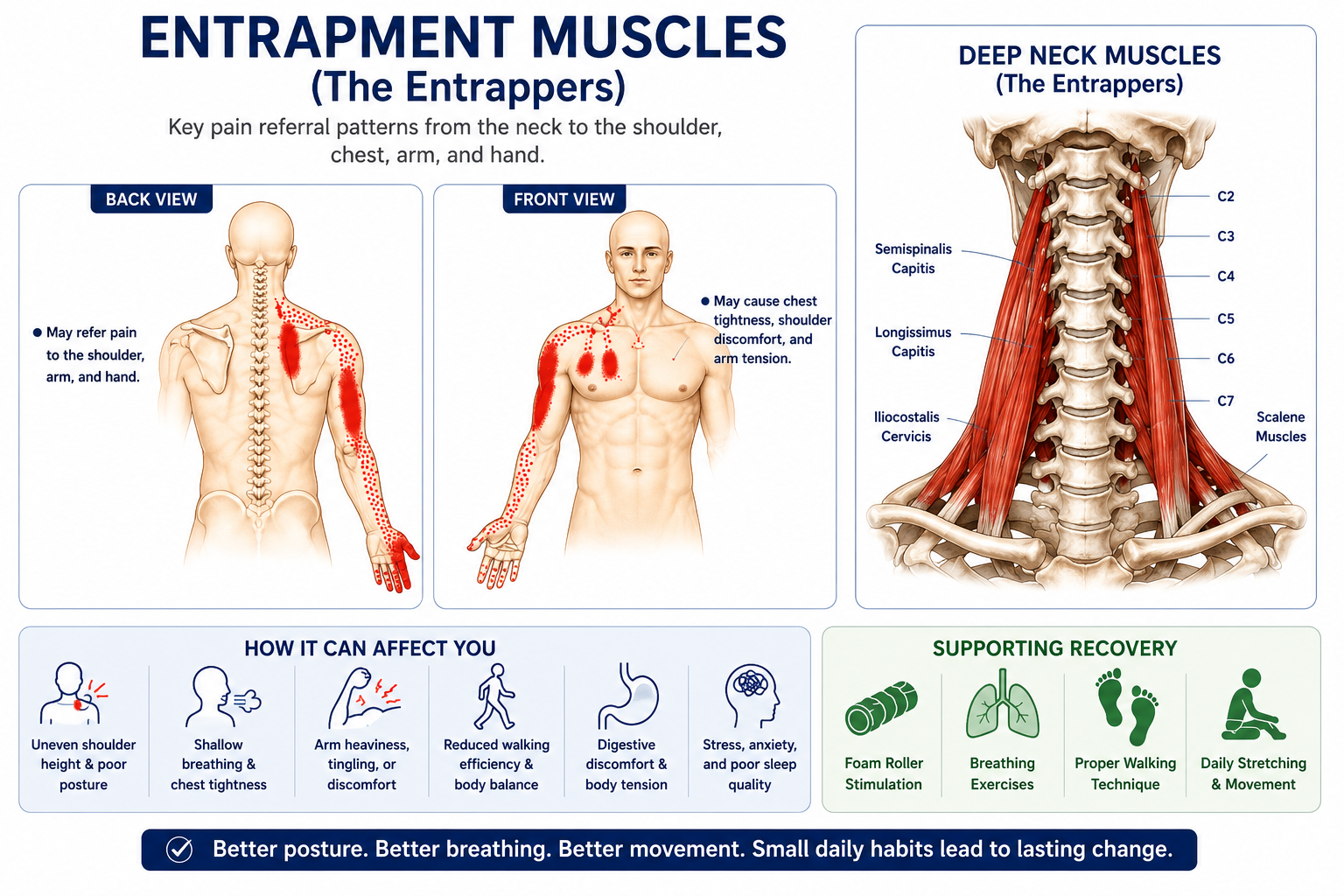
    Many people struggle with an uneven shoulders body, often overlooking that this can be a sign of deeper structural imbalance.

    If you are struggling with uneven shoulders body balance after surgery, you are not alone. It is a common pattern seen in clinical practice — and it is more connected to breathing, digestion, and daily movement than most people realize.

    Imagine this: the surgery goes well. The doctor is pleased. Your family is relieved. But a few weeks later, something still feels wrong. Your body feels tight. Breathing is shallow. You get tired just walking to the kitchen. And your right shoulder sits noticeably higher than your left.

    This is exactly what one client experienced — and it is far more common than most people expect.

    Why Uneven Shoulders Body Balance Affects More Than Your Posture

    uneven shoulders body balance posture comparison
    Small daily movements, like gentle foam rolling, are the key to releasing tension and supporting a healthy posture.”

    Most people treat shoulder imbalance as a local problem — something to stretch or massage. But the body works as a system, not in isolated parts.

    When one shoulder stays elevated for a long time, the surrounding muscles adapt. They shorten on one side and overstretch on the other. This tension then pulls on the chest wall, restricts the ribcage, and makes deep breathing difficult.

    Here is where it gets important: when breathing becomes shallow, the nervous system interprets this as a low-level threat. The body shifts into a protective state — muscles tighten, digestion slows, and energy drops. The body is essentially bracing, even when you are just sitting on the couch.

    Signs your body may be stuck in this pattern:

    • Visible difference in shoulder height
    • Shallow breathing that never feels satisfying
    • Persistent digestive discomfort or bloating
    • General body stiffness that does not improve with stretching
    • Difficulty walking with a smooth, balanced gait
    • Low energy even after rest

    A Real Recovery Story: Uneven Shoulders, Poor Breathing, and Knee Surgery

    shoulders body requires more than just stretching; it requires a holistic approach to body alignment

    This client had already undergone surgery on both knees but continued to experience discomfort. During movement assessment, several patterns appeared together: elevated right shoulder, tight chest and hip muscles, restricted breathing, stiff walking, and ongoing digestive discomfort.

    Rather than isolating the knees as the only problem, attention shifted to the whole body — how different regions were influencing each other, and what daily habits were keeping the body stuck in tension.

    This whole-body approach to uneven shoulders body balance — looking at how different regions influence each other — is often what makes the difference between temporary relief and lasting recovery.

    How to Improve Uneven Shoulders Body Balance at Home

    When you ignore an uneven shoulders body, it can eventually lead to chronic neck and back pain. For more detailed information on posture correction, please check out my other post on

    uneven shoulders body balance home rehabilitation foam roller
    Small daily movements, like gentle foam rolling, are the key to releasing tension and supporting a healthy posture.”

    Recovery does not require complex equipment or intense effort. Three simple daily practices made a real difference for this client.

    1. Gentle Foam Roller Stimulation

    Let this peaceful melody guide your nervous system into a state of relaxation. Soften your body and mind with the calming frequencies of ‘The Shepherd Never Leaves’.

    The goal is not to force tight muscles to release. Instead, gentle foam roller work helps the nervous system receive more accurate feedback from the body. When the brain gets clearer signals about where the body is in space, muscles can soften on their own — a more sustainable approach than aggressive stretching.

    2. Breathing Practice for Nervous System Reset

    Take a slow, relaxed inhalation. Pause briefly at the top. Then exhale slowly and completely. Do not force it.

    This simple practice signals safety to the nervous system. Over time, it helps shift the body out of its chronic protective state. Many clients also notice improved digestion — not a coincidence. The vagus nerve, which runs from the brainstem through the chest into the abdomen, is directly linked to breathing rhythm.

    3. Balanced Walking Habits

    Walking is one of the most underrated rehabilitation tools available. Small daily adjustments build new movement patterns over time:

    • Keep your gaze forward, not down — this naturally lifts the chest
    • Consciously relax your shoulders away from your ears
    • Pay equal attention to both feet with every step
    • Focus on consistency rather than speed or distance

    What Changed After Several Weeks of Consistent Practice

    Recovery rarely arrives in one dramatic moment. It comes quietly — in small improvements that are easy to miss until you look back.

    After several weeks of these daily practices, this client reported more level shoulders, easier breathing, improved walking comfort, reduced digestive discomfort, and less background tension throughout the day.

    None of it required anything dramatic. It came from small efforts, done consistently, with a clear understanding of why they mattered.

    Addressing uneven shoulders body balance through daily movement awareness — not just targeting the area that hurts — is often what makes the difference between temporary relief and lasting recovery.

    Final Thoughts

    https://www.healthline.com/health/posture

    Your body gives small signals long before larger problems appear. Tightness, shallow breathing, uneven posture, and post-surgical stiffness are not random. They are messages worth listening to.

    If these patterns feel familiar, consider looking not just at the area that hurts — but at the whole picture. Simple, consistent daily care is often more powerful than occasional intensive treatment.

    If you recognize these patterns in your own body, consider consulting a body balance or rehabilitation specialist who looks beyond the area that hurts — and at the whole picture.

    https://soletobody.com/postural-compensation-back-pain-relief/If you are ready to correct your uneven shoulders body, start by incorporating these simple daily routines into your life. You can find more tips on body balance and breathing techniques in my guide

  • How to Stay Active in Golf After Joint Surgery: 5 Things You Can Do at Home

    How to Stay Active in Golf After Joint Surgery: 5 Things You Can Do at Home

    You had joint surgery. You recovered. You tried to return to golf — and then something else started hurting.

    If this sounds familiar, you are not alone. Managing golf after joint surgery is one of the most common challenges active seniors face — and one of the least talked about.

    Many active seniors find that after hip replacement or ankle surgery, the body does not simply return to normal. New discomfort appears in unexpected places. Walking feels uneven. The legs feel heavy. And the golf game that was supposed to come back — stays just out of reach.

    The good news is that some of the most effective steps you can take do not require a clinic visit. They start at home, with simple awareness and daily habits that address how your whole body is balancing — not just the joint that was operated on.

    Here are five practical things you can do at home to support your return to golf after joint surgery.

    In This Article

    Why Golf After Joint Surgery Affects Your Whole Body

    After hip or ankle surgery, the body naturally begins to protect the operated area. Without realizing it, you start shifting weight to the other side, shortening your stride, or adjusting your posture to avoid discomfort.

    This is called compensatory movement — and it is the body’s way of coping. The problem is that over weeks and months, these compensations create new strain in areas that were never part of the original problem.

    Managing golf after joint surgery requires understanding this pattern. Common signs include:

    • One hip taking more load than the other
    • The pelvis tilting to one side during walking
    • The opposite ankle or knee absorbing uneven pressure
    • Persistent swelling in the lower leg, even after full surgical recovery
    • A golf swing that feels “off” without a clear reason

    Understanding this is the first step. The second step is noticing where your own body is currently compensating — and you can begin doing that right now.

    Check 1 — The Mirror Weight Test

    senior man doing hip stretch exercise at home for golf recovery
    senior man doing hip stretch exercise at home for golf recovery

    This is the simplest and most revealing check you can do for golf after joint surgery recovery.

    How to do it:

    1. Stand barefoot in front of a full-length mirror
    2. Stand naturally — do not try to correct your posture
    3. Close your eyes for five seconds, then open them
    4. Look at your shoulders: is one higher than the other?
    5. Look at your hips: does one side appear to jut out more?
    6. Notice your feet: is one foot turned outward more than the other?

    What it tells you: Visible asymmetry in the shoulders, hips, or feet is often a sign that your body is distributing weight unevenly. This uneven load is one of the main reasons why swelling and fatigue persist in the legs after surgery — and why golf feels unsteady.

    What to do: Practice standing with equal weight on both feet for 2–3 minutes each morning. Do not force it. Simply bring awareness to the sensation of both feet pressing into the floor equally.

    Check 2 — Read Your Shoe Soles

    Your shoes hold a record of how you have been walking for the past several months. This check is especially useful for seniors managing golf after joint surgery.

    How to do it:

    1. Take a pair of shoes you wear regularly
    2. Place them on a flat surface and look at the heel area from behind
    3. Compare the wear pattern on the left heel versus the right heel
    4. Also check whether the outer or inner edge of the sole is more worn down

    What it tells you:

    • One heel more worn than the other → You are loading one leg more heavily during walking
    • Outer edge worn down → Your foot is rolling outward (supination), which adds stress to the ankle and knee
    • Inner edge worn down → Your foot is rolling inward (overpronation), which affects hip and lower back alignment

    After hip or ankle surgery, asymmetrical wear patterns are extremely common. Recognizing the pattern helps you understand which direction your body has been compensating.

    Check 3 — The Seated Hip Level Check

    Many people do not realize their pelvis is uneven until they look for it. For anyone pursuing golf after joint surgery, pelvic balance is especially important because the golf swing depends on smooth hip rotation.

    How to do it:

    1. Sit on a firm, flat chair without a cushion
    2. Sit naturally without adjusting your posture
    3. Place one hand under each side of your sitting bones (the bony points at the bottom of your pelvis)
    4. Notice: does one side feel more pressure than the other?
    5. Alternatively, have someone look at your seated posture from behind and check whether one hip appears higher

    What it tells you: Uneven pressure under the sitting bones is a sign of pelvic tilt. When the pelvis is uneven, the entire chain of the lower body — hips, knees, ankles, feet — is working at a slight angle. For golfers, pelvic imbalance directly affects rotation quality and follow-through.

    What to do: Practice sitting with equal weight on both sitting bones for 5 minutes a day. This simple awareness practice, repeated consistently, begins to retrain the nervous system’s sense of “level.”

    Exercise 1 — Ankle Swelling Relief Routine

    Persistent leg and ankle swelling after surgery is one of the most frustrating symptoms for active seniors. This gentle routine supports circulation and lymphatic drainage — and is safe to begin early in your golf after joint surgery recovery.

    Do this once in the morning and once in the evening:

    1. Elevated rest (5 minutes) — Lie on your back and prop both legs up against a wall or on two pillows. Let gravity assist fluid drainage from the lower legs.
    2. Ankle circles (10 reps each direction, each foot) — While lying down or seated, slowly rotate each ankle in full circles. Move only the ankle, not the whole leg.
    3. Toe spreads (10 reps) — Spread all five toes apart as wide as possible, hold for 3 seconds, then relax. This activates the small muscles of the foot and promotes circulation.
    4. Calf pumps (15 reps) — While seated, press the balls of your feet into the floor and lift your heels, then lower them. This activates the calf muscle pump, which is the main driver of blood return from the lower legs.

    Important: If swelling is significant, warm, or accompanied by redness, consult your physician before beginning any exercise routine.

    Exercise 2 — Hip Mobility Warm-Up for Golf

    Before returning to the golf course, restoring hip mobility is essential. These three movements are specifically designed to help with golf after joint surgery — preparing the hips for the rotational demands of the swing without overloading the surgical joint.

    Do this daily, or at minimum before each round:

    1. Standing Hip Pendulum (10 reps each side)
      Stand beside a wall for balance. Slowly swing one leg forward and backward like a pendulum, keeping the movement relaxed and gravity-led. Do not force the range. Switch sides.
    2. Seated Figure-Four Stretch (30 seconds each side)
      Sit in a chair. Cross one ankle over the opposite knee, forming a figure-four shape. Gently lean forward from the hips (not the lower back) until you feel a mild stretch in the outer hip. Hold and breathe slowly.
    3. Standing Pelvic Rotation (10 reps each direction)
      Stand with feet shoulder-width apart and hands on hips. Slowly rotate your hips in a wide circle — forward, to the side, back, to the other side. Keep the movement smooth and controlled. This directly prepares the pelvis for golf swing rotation.

    Start with the smallest comfortable range of motion. Every senior recovering from golf after joint surgery has a different timeline — do not compare your pace to others. Over days and weeks, the range will naturally increase as the body gains confidence in the movement.

    When Home Work Is Not Enough

    The checks and exercises above are a meaningful starting point. For many seniors, consistent daily practice creates noticeable improvement in walking comfort, leg heaviness, and overall stability within two to four weeks.

    However, there are situations where professional support makes a significant difference in golf after joint surgery recovery:

    • Swelling that does not reduce with elevation and gentle movement
    • Pain that appears in a new joint — especially the opposite ankle or knee
    • A strong sense of imbalance that persists despite consistent effort
    • Difficulty returning to golf even after surgical clearance from your physician
    • Imaging that suggests a second joint may be developing problems

    In these cases, a body balance specialist — someone who looks at how the whole lower body is functioning together, not just the surgical site — can identify compensation patterns that are difficult to detect and correct on your own.

    One of our clients experienced exactly this situation. After hip surgery followed by ankle surgery, he struggled with persistent leg swelling and was facing the possibility of a third surgical intervention. Through consistent body balance work focused on his overall lower body alignment, he was eventually able to return to the golf course — more stably than he had walked in years.

    His story is not a guarantee. But it is a reminder that the body’s capacity to rebalance is often greater than we expect — when we look at the whole system, not just the part that hurts. Seniors who approach golf after joint surgery with a whole-body mindset tend to recover more confidently and sustainably.

    If you are interested in learning more about foot health and body alignment, read our guide on body balance and walking comfort.

    For more information on joint health and recovery, visit the Arthritis Foundation.


    Have you experienced new discomfort in a different area after joint surgery? Share in the comments — your experience may help someone else who is going through the same thing.

  • Secrets to Avoid Knee Surgery: 6 Months of Results

    Secrets to Avoid Knee Surgery: 6 Months of Results

    Imagine standing up from a chair and feeling a sharp pain shoot through both knees. Now imagine that happening every single day — getting out of bed, climbing stairs, walking to your car. Simple things that used to be automatic suddenly feel like obstacles.

    If you are searching for ways to avoid knee surgery, you are not alone. Thousands of people face this difficult decision every year — weighing costs, recovery time, and the uncertainty of whether surgery will truly solve the problem.

    This is the story of one man who found a different path — and what he did to avoid knee surgery may surprise you.

    avoid knee surgery naturally with body care
    Many people search for ways to avoid knee surgery before making a final decision.

    When Knee Surgery Seemed Inevitable

    He had already been through surgery once before — a neck disc procedure five years earlier. He remembered the recovery. The weeks of limitation. The uncertainty of wondering whether it had truly worked. Now, facing the possibility of surgery on both knees, those memories came rushing back.

    His doctor had found significant cartilage wear in both joints. The recommendation was clear: consider surgical intervention. The estimated cost exceeded 10 million Korean won, and he had no insurance to cover it. But the financial stress, as heavy as it was, was not even his biggest fear. What kept him awake at night was a quieter, harder question:

    What if I go through all of this — and I am still not better?

    He desperately wanted to avoid knee surgery — but did not know if that was even possible.

    One Question That Changed Everything

    When he came to our center, I did not tell him surgery was wrong. I told him something simpler: it will still be there in six months. There was still time to try to avoid knee surgery — and that window was worth using.

    Before closing a door that big, I suggested we try opening a few smaller ones first. Not as a cure. Not as a miracle. But as an honest attempt to understand what his body was capable of when given the right conditions.

    We focused on what is often overlooked in conversations about joint pain: the whole body, not just the joint. Posture. Movement patterns. The way tension accumulates in the body over years of daily habits. And something we work with deeply at our center — what we call unconscious nervous system management (KSNS), a method of helping the body release deeply held patterns of strain and imbalance.

    Real knee and body care in practice — the kind of consistent daily effort that can help avoid knee surgery over time.

    He came in regularly. More importantly, he went home and practiced every day — without fail.

    6 Months of Consistent Care: What Actually Happened

    There were no dramatic turning points. No single moment where everything clicked. Progress in the body rarely works that way.

    But over weeks and months, something shifted. Walking became less of a calculation and more of a comfort. He stopped mentally bracing himself every time he stood up. He started doing things again — things he had quietly stopped doing without even realizing it.

    By the end of six months, he made a decision. Not surgery. Not yet. Maybe not ever. He had found a real way to avoid knee surgery — at least for now.

    Years have passed since then. He is still walking. Still active. Still living the life he was afraid he might have to give up.

    Can You Really Avoid Knee Surgery Through Conservative Care?

    avoid knee surgery through exercise and alignment
    Consistent daily movement and body alignment can make a meaningful difference.

    I want to be honest, because honesty matters more than a feel-good story.

    His experience is not a guarantee. Knee cartilage wear is a real, serious condition, and surgery is sometimes genuinely necessary and the right choice. Every body is different. Every situation is different.

    However, what his story offers is a question worth sitting with before making a major decision:

    Have I fully explored what my body can do — with the right support, the right habits, and enough time?

    Conservative approaches that may help some people avoid knee surgery or delay it include:

    • Improving overall body alignment and posture
    • Developing healthier movement patterns in daily life
    • Consistent low-impact exercise and stretching routines
    • Nervous system regulation and stress reduction practices
    • Building body awareness through guided self-care programs

    None of these are substitutes for professional medical evaluation. However, they can play a meaningful role in how your body feels and functions over time. Research also suggests that gut health may influence joint inflammation — if you are curious, you may find this related article helpful: Probiotics and Joint Pain: The Gut-Joint Connection You Need.

    What to Consider Before Making Your Decision

    If you are currently facing a recommendation for knee surgery, here are a few questions worth asking your doctor or healthcare provider. According to Mayo Clinic, conservative treatments are often the recommended first step before considering surgical options for knee osteoarthritis:

    • Is this surgery urgent, or is there time to try conservative care first?
    • What are the realistic outcomes with and without surgery?
    • Are there specific exercises or therapies that could help in the meantime?
    • What does recovery look like, and how will it affect my daily life?

    Taking a few months to explore movement-based approaches, body alignment work, and lifestyle adjustments is not giving up on surgery. It is simply making sure you have given yourself every reasonable opportunity to avoid knee surgery before taking that step.

    A moment of stillness and healing — sometimes the body needs peace as much as movement. (432Hz Healing Music by LumiGenesis)

    Final Thoughts

    Sometimes the most important thing is not the decision itself. It is making sure you have given yourself every reasonable chance before you make it.

    That simple shift in perspective — surgery will still be available later — made a meaningful difference for one person. It may be worth considering if you are facing a similar crossroads today.

    Knee discomfort can have many causes, and there is no single solution for everyone. But for many people, the desire to avoid knee surgery is a powerful motivator to explore what the body can do with the right care. Whether you eventually choose surgery or not, maintaining good movement habits, improving body balance, and staying physically active can play an important role in your long-term well-being.

    If you would like to learn more about body alignment approaches and self-care programs, feel free to explore the resources on this site or reach out directly.

  • Diaphragm and Shoulder Pain: What You Need to Know

    Diaphragm and Shoulder Pain: What You Need to Know

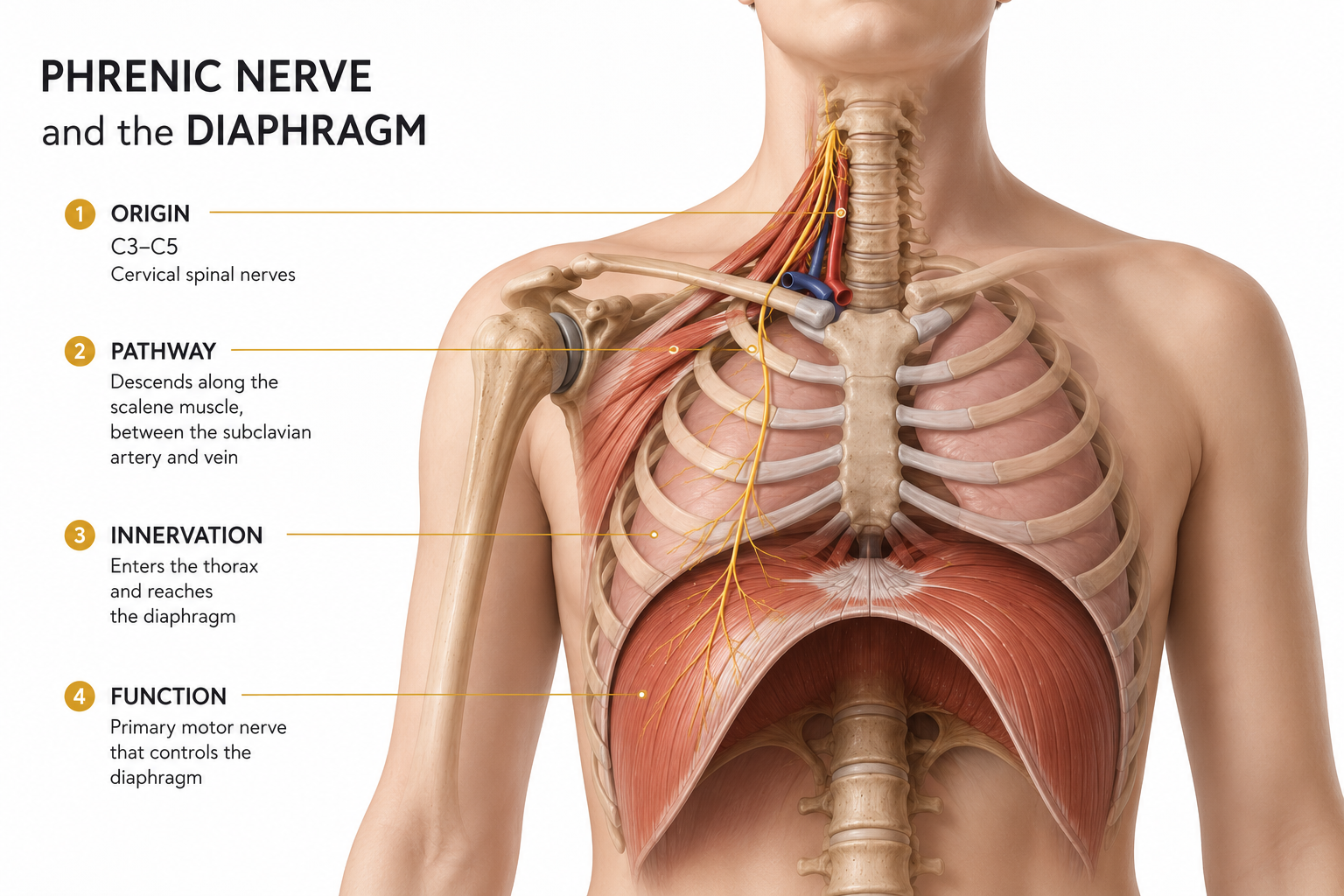
    diaphragm and shoulder pain anatomical connection
    The phrenic nerve connects the diaphragm and shoulder — the hidden cause of chronic shoulder pain.

    She walked into my center gripping her right shoulder, convinced it was frozen. Three clinics, two rounds of physical therapy, and still no relief. But the moment I watched her breathe, I understood the real problem had nothing to do with her shoulder at all. This is the story I see repeated every single week — and it is why diaphragm and shoulder pain remains one of the most misunderstood connections in the human body.

    Most people treat shoulder pain as a local problem. They stretch the rotator cuff, apply heat, visit massage therapists, and wonder why the tension always returns. What they do not realize is that diaphragm and shoulder pain share a neurological and mechanical relationship that runs far deeper than surface-level muscle tension. Until that root connection is addressed, no amount of shoulder-focused treatment will produce lasting relief.

    The diaphragm is your primary breathing muscle — a dome-shaped structure separating your chest cavity from your abdomen. What most people never learn is that the phrenic nerve, which controls the diaphragm, originates from the cervical spine at levels C3, C4, and C5. These are the exact same spinal levels that supply nerve signals to your shoulders and arms.

    This shared neurological pathway is the anatomical reason why diaphragm and shoulder pain so frequently occur together. When the diaphragm is not functioning efficiently, the brain can misinterpret the neurological signals and register the discomfort as referred pain in the shoulder region. Countless people have undergone shoulder surgery or years of physical therapy without improvement — simply because no one investigated the diaphragm.

    Understanding diaphragm and shoulder pain from this anatomical perspective completely changes how we approach treatment. The shoulder is not the source. It is the messenger.

    How Diaphragmatic Dysfunction Creates Chronic Shoulder Tension

    When the diaphragm weakens or loses its proper movement pattern, the body does not stop breathing. Instead, it recruits secondary muscles to compensate — specifically the scalenes, the sternocleidomastoid, and the upper trapezius. These are muscles located in your neck and upper shoulder region.

    Every single breath then becomes a micro-contraction of your shoulder muscles. Multiply that by 20,000 breaths per day, and you begin to understand why diaphragm and shoulder pain creates such persistent, treatment-resistant tension. The shoulder muscles are being overworked not from exercise or injury — but from the simple act of breathing incorrectly around the clock.

    I see this pattern clearly in desk workers, drivers, teachers, and caregivers — anyone who holds a fixed posture for long hours. Chronic stress compounds the problem significantly. Under stress, breathing becomes shallower and faster, accelerating the recruitment of shoulder muscles and deepening the diaphragm and shoulder pain cycle.

    What I Observe Before I Touch the Shoulder

    In my 12 years of clinical experience at Haim Body Balance Center, I have developed a specific observation protocol before I address any shoulder complaint. I watch the breath first.

    Does the chest rise while the abdomen remains flat? That is an immediate red flag for diaphragm and shoulder pain. Does the client sigh frequently, hold their breath under mild stress, or struggle to breathe deeply on command? Each of these patterns tells me the diaphragm is not functioning as the primary breathing muscle.

    One client — a 52-year-old teacher — had lived with left shoulder stiffness for two full years. X-rays were clear. MRI results showed minimal findings. Three separate clinics had treated her shoulder directly with zero lasting improvement. When I observed her breathing pattern, the answer became obvious immediately. She was breathing in a shallow, chest-dominant pattern that had been recruiting her left upper trapezius with every single breath for years.

    client experiencing diaphragm and shoulder pain at wellness center
    Many clients arrive after years of failed shoulder treatments — the real answer lies in the breath.

    This is the hidden reality of diaphragm and shoulder pain that conventional treatment consistently misses.

    The Unconscious Nerve Brake: Why the Body Gets Stuck

    Here is what makes diaphragm and shoulder pain particularly difficult to resolve with standard treatment. The problem is not simply muscular. Over time, as the body adapts to dysfunctional breathing patterns, the unconscious nervous system begins to lock the tension in place.

    I apply the Kim Se-yeon Sbonsdo Unconscious Nerve Management method — a specialized technique that uses a 0.3-second stimulus to release the unconscious nerve brake. This is the key distinction between temporary relief and genuine recovery. When the unconscious nervous system has been holding a tension pattern for months or years, no amount of conscious stretching or exercise can fully override it. The brake must be released at the neurological level first.

    With the 52-year-old teacher I mentioned, I applied this unconscious nerve brake release before addressing her breathing or her shoulder directly. Within three sessions, the shoulder stiffness she had carried for two years began to dissolve. She told me it was the first time any treatment had produced a result that actually held.

    This neurological release is the foundation of how I approach diaphragm and shoulder pain — not from the outside in, but from the nervous system outward.

    The Recovery Sequence That Produces Lasting Results

    Once the unconscious nerve brake has been released, the body becomes ready to receive the following recovery steps. Attempting these without the neurological preparation produces only partial results.

    Step 1: Unconscious Nerve Brake Release

    This is the non-negotiable first step in resolving diaphragm and shoulder pain at the root level. The 0.3-second stimulus of the Sbonsdo method signals the unconscious nervous system to release its protective tension lock. Without this step, the muscles will return to their habitual holding pattern regardless of what other interventions are applied.

    Step 2: Diaphragmatic Breathing Retraining

    Ten minutes of diaphragmatic breathing daily can break the diaphragm and shoulder
    🎵 For deep relaxation while practicing,
    listen to our 432Hz healing music:

    Lie flat on your back. Place one hand on your chest and one hand on your abdomen. Focus on breathing so that only the lower hand rises. The chest should remain relatively still. Practice this for ten minutes daily. This simple exercise begins to break the diaphragm and shoulder pain feedback loop by restoring the diaphragm to its role as the primary breathing muscle.

    For more information on diaphragmatic breathing,
    visit Mayo Clinic.

    Step 3: Crocodile Breath Training

    Lie face down on the floor. With each inhale, focus on feeling your lower back and ribs expand outward. This position trains the diaphragm to work against gravity, building endurance and depth that most people have never developed. Clients who practice this consistently report significant reduction in upper shoulder tension within two to three weeks.

    Step 4: Thoracic Spine Mobility

    A stiff thoracic spine mechanically restricts diaphragm movement. When the upper back cannot move freely, the diaphragm cannot fully descend during inhalation. Opening thoracic mobility gives the diaphragm the space it needs — and when the diaphragm moves freely, the shoulders no longer need to compensate. This is one of the most direct ways to interrupt the diaphragm and shoulder pain cycle structurally.

    Step 5: Psoas Release

    The diaphragm and the psoas muscle share fascial connections through the anterior spine. Releasing the psoas consistently produces immediate relief in both the core and the shoulder girdle — a result that surprises almost every client the first time they experience it. Addressing the psoas is an essential but frequently overlooked component of resolving diaphragm and shoulder pain comprehensively.

    Identifying Your Own Risk Pattern

    Not everyone experiences diaphragm and shoulder pain the same way. Here are the self-assessment signs I ask every new client to reflect on before their first session.

    Do you breathe primarily from your chest rather than your belly? Do you find yourself holding your breath during concentration, stress, or physical effort? Do you sigh frequently throughout the day? Does your shoulder tension return rapidly after massage or stretching? Have you received multiple rounds of shoulder treatment without sustained improvement?

    If you answered yes to two or more of these questions, there is a significant probability that diaphragm and shoulder pain is the underlying pattern driving your symptoms. The shoulder is not the origin. The breath is.

    Long-Term Prevention: What Every Client Needs to Hear

    Resolving diaphragm and shoulder pain is not achieved through a single treatment or a short course of exercises. It requires a fundamental shift in body awareness — specifically, the habit of monitoring your breathing during ordinary daily activities.

    Not at the gym. Not during yoga class. At your desk, in your car, while preparing a meal, while talking on the phone. These are the moments when dysfunctional breathing patterns operate without your awareness. These are the moments that determine whether your shoulder tension will return or remain resolved.

    When the diaphragm moves freely and the unconscious nerve brake has been released, the shoulders follow naturally. The body does not need to be forced into alignment. It finds its own balance when the root cause has been genuinely addressed.

    After 12 years of working with clients whose diaphragm and shoulder pain had been misdiagnosed, undertreated, or dismissed entirely, the most consistent finding I can share is this: the breath is always involved. Always.

    Start there. Everything else follows.

    Disclaimer: This article is intended for general informational purposes regarding diaphragm and shoulder pain. If you are experiencing severe or persistent shoulder pain, please consult a qualified healthcare professional for personalized evaluation and treatment.

    If you are also experiencing chronic pain beyond
    the shoulder, read our guide on
    How to Fix Chronic Pain: 5 Hidden Signs in Your Body to understand how foot alignment and body
    imbalance connect to your daily pain patterns.

    How to Stop Plantar Fasciitis in 4 SessionsHow to Stop Plantar Fasciitis in 4 Sessions

  • How to Heal Your Body’s Jenga Tower: 5 Shocking Secrets of Instant Balance

    How to Heal Your Body’s Jenga Tower: 5 Shocking Secrets of Instant Balance

    ​Do you know that your body behaves exactly like a giant Jenga Tower? Imagine you are piloting a giant, state-of-the-art robot suit. It’s sleek, fast, and incredibly powerful.

    ​Suddenly, BAM! A red warning light flashes on the control panel: KNEE JOINT FAILURE!

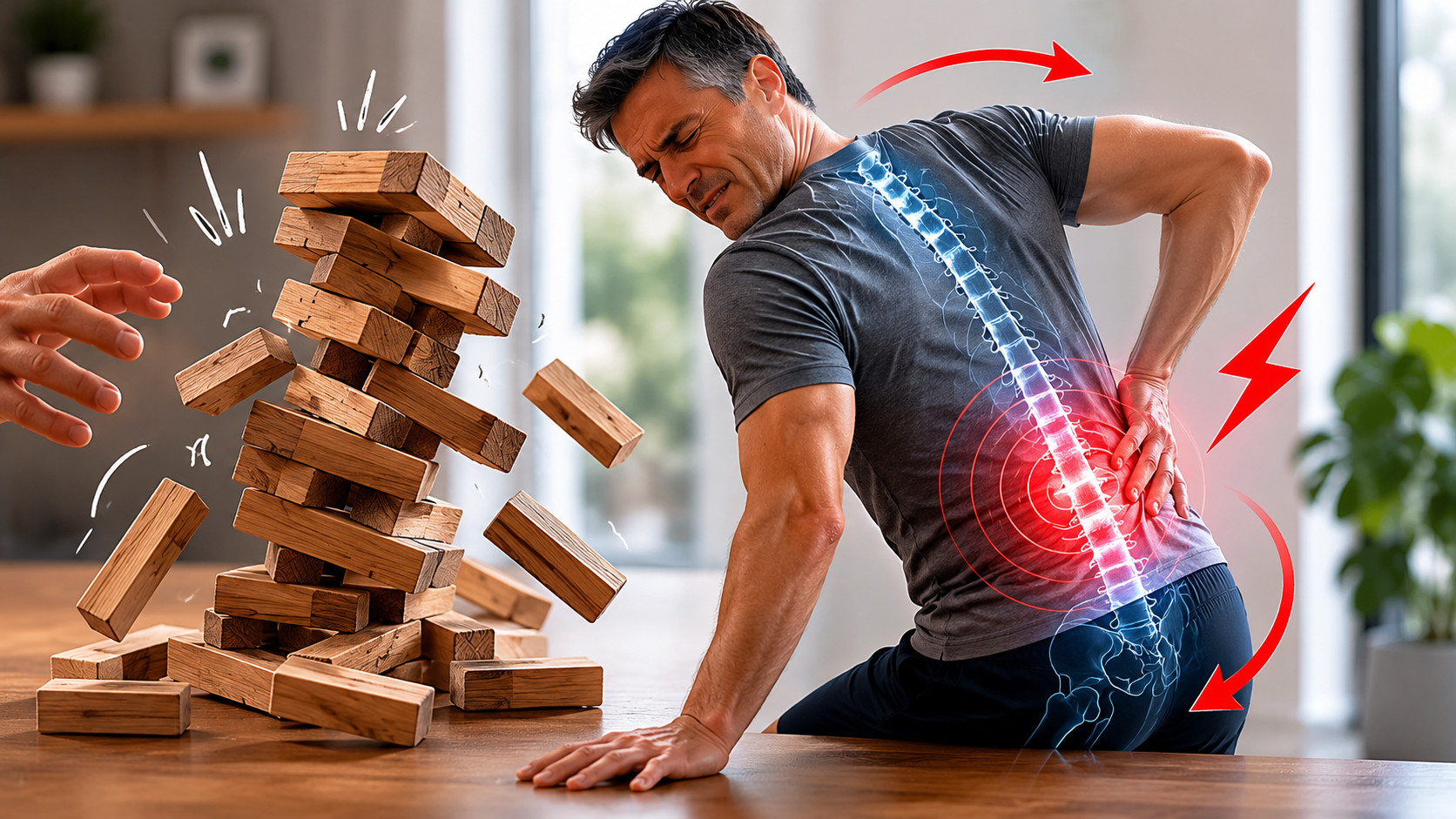
    A stacked wooden Jenga tower being carefully adjusted by hands, illustrating body balance and alignment.
    Your body behaves exactly like a giant Jenga Tower.

    ​What do you do?

    • ​Option A: Spray paint over the warning light so you don’t have to look at it.
    • ​Option B: Slap a piece of duct tape on the outside of the robot’s knee and keep running.
    • ​Option C: Open the blueprint, find the actual electrical glitch, and fix it from the roots.

    ​If you chose Option A or B, congratulations—you are doing exactly what most people do when they feel pain!

    ​Whenever we get a headache, we pop a pill. When our knee feels stiff, we slide on a tight brace. But what if your pain is actually a giant liar? What if the real culprit is hiding somewhere else entirely, quietly stabilizing your body’s Jenga Tower?

    ​Let’s dive into the ultimate body detective story to find out why your pain isn’t healing, and how a secret superhero inside you holds the key to saving the day!

    ​1. Stop Chasing the Alarm: Why Your Pain is a Big Liar

    ​We’ve all been there. You play a match of soccer, scroll on your phone for three hours, or sit at your school desk, and suddenly… Ouch! Your shoulder hurts.

    ​Naturally, we react with our Mindless Habits:

    • ​The Pill Pop: Swallowing painkillers to mute the alarm.
    • ​The Patch Slap: Sticking icy-hot patches on our skin like stickers.
    • ​The Compression Squeeze: Wearing braces to force the joint to stay still.

    ​These might make you feel better for an hour or two. But here is the shocking truth: the pain always comes back. Treating only where it hurts is like trying to fix a sinking ship by scooping out water with a teacup. You aren’t plugging the actual hole!

    ​2. The Jenga Tower Effect: How Your Foot Controls Your Jaw

    ​Your body is not a collection of random, separate Lego bricks. It is a highly connected chain—just like a giant Jenga Tower.

    ​If you pull out a block from the very bottom of a Jenga Tower, what happens? The top of the tower starts to wobble, tilt, and eventually… CRASH!

    ​In your body, the bottom of your Jenga Tower is your feet.

    ​[ Your Jaw & Neck ]  <– Complains and hurts!

    [ Your Shoulders ]   <– Tilts to compensate

    [ Your Spine ]     <– Curves under pressure

    [ Your Hips ]     <– Shifts out of alignment

    [ Your Knees ]     <– Absorbs the weird angles

    [ Your Feet ]     <– THE FOUNDATION (The Glitch starts here!)

    ​If your left foot is slightly tilted or weak, your knee has to bend weirdly to keep you upright. Because your knee is bending weirdly, your hip rotates. To make up for the crooked hip, your spine curves, your shoulder drops, and suddenly… you have a massive headache!

    ​So, when your neck hurts, the actual “criminal” might be your left pinky toe. This bottom-up connection is what we call the Jenga Tower effect.

    ​3. Wake Up Your Autopilot: The Unconscious Nervous System

    Watch how activating the foot’s reflexive nerves restores the body’s natural balance mechanism.

    ​If you had to consciously tell your heart to beat, your lungs to breathe, and every single muscle in your leg to contract just to take one step, your brain would literally explode from overload.

    ​Thanks to our body’s built-in wisdom, we have a superhero: The Unconscious Nervous System. Think of this as your body’s Autopilot.

    A person adjusting a wooden block in a tall Jenga tower, focusing on delicate nerve and structural balance.
    Your body’s autopilot relies on perfect nerve alignment to stay balanced.

    ​When you step on a sharp pebble, you don’t think: “Hmm, a sharp object. I should lift my foot.” No! Your Autopilot yanks your foot away before you even realize what happened. This is an automatic reflex controlled by your nervous system.

    ​Check out this scientific guide on Proprioception and Reflexes to learn more about how your body senses balance and movement.

    ​When this Autopilot glitches, it stops realigning the Jenga Tower automatically, leading to chronic muscle tightness.

    ​4. Calibrate Your Left-Right Balance (The 50/50 Rule)

    ​For your Autopilot to run smoothly, your left side and right side must be perfectly balanced. They need to share the load 50/50.

    ​But what if your Autopilot gets a “glitch” due to an uneven foundation?

    If one side of your nervous system becomes lazy or unresponsive, your other side has to work twice as hard to keep you from falling over. Over time, this constant, unconscious muscle tension accumulates.

    ​If you don’t reboot this nervous system Autopilot, your body’s Jenga Tower will remain crooked, and no massage or stretching will ever cure the pain permanently.

    ​5. Rebuilding the Jenga Tower: The Haim Method Audit

    ​At Haim Body Balance Center, we don’t play the guessing game. We don’t just put a hot pack where you point. Instead, we put on our detective hats and examine your body from the ground up, rebuilding your Jenga Tower from the foundation!

    ​Through specialized neural response patterns (the KSNS method), we investigate:

    • ​The Foot Blueprint: Finding why your foundation is tilted.
    • ​The Postural Alignment: Checking how the wobble travels up to your neck.
    • ​The Autopilot Reflex: Verifying if your nerves are reacting at lightning speed.

    ​By waking up those sleepy, unconscious nerves, we help your body heal itself and restore the Jenga Tower to its upright alignment.

    ​Conclusion: Start Listening to Your Body’s True Language!

    ​Pain is not your enemy. Pain is just your body’s way of waving a flag and saying, “Hey! My Jenga Tower is falling!”

    ​The next time you feel a pinch or a stiff joint, don’t just try to silence it with mindless habits. Stop, look down at your feet, and realize that your body is a beautiful, connected masterpiece.

    ​Are you ready to stop treating the symptoms and finally fix the root cause?

    ​Read more on our About page to see how we help you achieve instant, lasting balance.

    ​Let’s get your Jenga Tower perfectly stacked again!

    ​Let’s get your Jenga Tower perfectly stacked again!

    A perfectly stacked and stable wooden Jenga tower on a table, representing ideal body posture and spinal alignment.
    Let’s get your Jenga Tower perfectly stacked again!
    A body balance expert adjusting a patient's posture next to a medical chart, and a man stretching on a mat.
    Professional alignment and active calibration restore your body’s natural balance.
  • How to Fix Chronic Pain: 5 Hidden Signs in Your

    If you’ve been dealing with recurring knee, back, or shoulder chronic pain for months—or even years—this article may explain something your doctors haven’t mentioned yet. (1)

    ​Have you ever met someone who says: “I’ve had injections, medicine, physical therapy, and endless exercises… but the chronic pain always comes back.” (2) At first, it sounds strange. If the treatment was successful, why does the body continue to struggle with this persistent chronic pain? (3)

    ​Over 12 years of working with clients, I have observed this exact pattern repeatedly. It is the defining hallmark of chronic pain sufferers who have already tried every conventional treatment available. (4) When we looked closer, almost all of them shared a common, overlooked physical foundation in their feet.

     chronic pain.
    How big toe range of motion affects your body’s center of gravity and triggers chronic pain.

    ​Many of these individuals showed specific signs in their feet:

    • ​Weak big toe grip strength
    • ​Toes that could not bend or splay properly
    • ​Stiff, unstable ankles and weak foundation
    • ​Difficulty balancing their weight while walking
    • ​Muscles that fatigued quickly and caused tension up the body

    ​Surprisingly, most of these individuals could not bend their toes anywhere close to the angle required for a healthy walking stride, which directly triggers chronic pain. (5)

    ​The Problem Most People Never Notice: The “Invisible Brake”

    Most people assume that chronic pain begins exactly where it hurts.

    • ​Knee pain? It must be a knee problem.
    • ​Back pain? It must be a spine issue and not related to the feet.
    • ​Shoulder pain? It must be a joint issue.

    ​But the human body does not work in isolated pieces; it operates as a continuous kinetic chain from your feet to your head. Your feet are the literal foundation of your entire body. When your toes lose their natural strength, your body doesn’t just stop moving—it begins compensating silently, which eventually leads to severe chronic pain.

    ​This compensation acts like an invisible brake system inside your body. When your brain no longer trusts the stability of your feet and ankles, your nervous system automatically triggers muscle tightness as a protective mechanism. This protective tension travels upward from the base, radiating through your calves, knees, hips, and lower back, creating systemic chronic pain.

    ​Over time, this compensation becomes your body’s default movement pattern. You treat the symptoms upward, while the real root of the chronic pain—your dysfunctional feet—remains completely unaddressed.

    ​Why Temporary Relief From Chronic Pain Fades

    ​Many people feel genuinely better after getting a massage or taking medication for chronic pain. (9) These treatments are excellent for reducing localized inflammation in the short term. However, if your underlying movement mechanics in your feet remain unchanged, the mechanical stress will keep returning to the same spots, causing the same chronic pain. (10)

    ​Think of it like driving a car with the parking brake slightly engaged. No matter how often you treat the car, the strain will eventually cause a breakdown. When your muscles stop functioning naturally, your nervous system keeps holding onto tension patterns. This is why so many people experience the frustrating cycle of: “It gets better for a few days… and then the soreness returns.”

    ​5 Chronic Pain Signs Found in Your Feet (11)

    Clinical analysis of a 60-year-old patient overcoming severe jaw pain and autonomic imbalance by restoring big toe nerve circulation.

    ​How do you know if your body’s stiffness is secretly originating from the ground up? People with this pattern almost always display these five warning signs in their feet:

    ​1. Weak Toe Grip Strength in Your Feet

    ​If you try to grip the floor with your bare toes, it feels difficult. Your toes might feel “numb” to the ground or lack the strength to actively stabilize you against postural stress.

    ​2. Locked or Unstable Ankles

    ​Your ankles feel stiff, restricted, or click constantly. Without strong alignment, your ankles lose stability, and this instability travels upward to cause muscle strain.

    ​3. Uneven Weight Distribution on Your Feet

    ​When standing still, you naturally shift almost all of your body weight to one side. If you look at the soles of your old shoes, you will notice highly uneven wear patterns caused by unbalanced steps.

    ​4. Chronic Calf Tightness Connected to Posture

    ​Your calf muscles feel like tight bands of steel. No matter how much you stretch them, they tighten right back up because your lower posture is not supporting your weight properly.

    ​5. Rapid Fatigue While Standing on Your Feet

    ​Standing in one place for more than 10 minutes feels exhausting. Your lower back begins to ache, and your body feels heavy because your alignment has lost its natural shock absorption.

    ​Interactive: The 3-Second “Big Toe” Test

    How improper big toe movement triggers chronic pain
    Why proper big toe movement is critical to preventing compensatory chronic pain in your knees, hips, and lower back.

    ​Want to test your foundation right now? Try this simple test while sitting or standing barefoot:

    1. ​Keep your feet flat on the floor.
    2. ​Try to lift only your big toe while keeping the other four toes pressed firmly into the ground.
    3. ​Now, try the reverse: press your big toe down and lift the other four toes.

    ​If your toes refused to move independently, your brain has lost proper connection to your lower muscles. This is a classic sign of compensatory tension traveling up your body to create long-term strain.

    ​Rebuilding the Foundation: 3 Simple Steps for Better Feet

    ​True recovery is not just about silencing discomfort temporarily; it’s about making your nervous system feel safe again by restoring basic function to your lower body. To break the cycle of compensation, you must restore your foundation.

    ​Here are three simple exercises to start waking up your lower body:

    ​1. Toe Splitting & Splaying

    ​Spend 2 minutes daily manually spreading your toes apart with your fingers to restore the natural width of your stride. This gives you a wider, more stable base to prevent posture issues.

    ​2. The Towel Curl (Strengthening the Foundation)

    ​Place a small towel flat on the floor. Using only your toes, slowly scrunch and pull the towel toward you. This rebuilds the intrinsic arch muscles and reduces mechanical stress.

    ​3. Slow Ankle Circles

    ​Sit with your leg crossed and slowly rotate your ankle in the largest circle possible. This improves mobility from the ground upward, relieving the tension that causes back tightness.

    ​Final Thoughts: Look to Your Feet

    ​Persistent discomfort is a messenger, but it doesn’t always tell you where the crime was committed. Sometimes, your aching lower back is simply tired of working overtime to compensate for a foundation that went offline years ago.

    ​By restoring natural movement to your feet and toes, you allow your entire kinetic chain to relax. You might just find that when your foundation finally learns to support you, the rest of your body can finally let go of the chronic pain. (12)

    Bible Meditation RAIN & 528Hz THE TRUE LIGHT

    Want to learn more about body balance and posture? Visit our Home for more insights.

  • 3 Hidden Secrets to Instantly Regrow Your Shrinking Thigh Muscle

    3 Hidden Secrets to Instantly Regrow Your Shrinking Thigh Muscle

    The Day the Strength Disappeared

    Imagine waking up, stepping out of bed, and realizing your shrinking thigh muscle feels weaker than ever.

    For years, my client—a passionate tennis player who spent his weekends sprinting across courts—noticed a strange, subtle shift. His left knee felt slightly unstable. Then, his lower back began to ache. He did what anyone would do: he ignored it, pushed through the pain, and trained harder.

    But the human body has a quiet, non-negotiable way of forcing us to listen.

    One afternoon, while changing into his sports gear, he looked down. His left quadricep—the massive muscle above the knee—was flattening out. It was losing its shape, its density, and its power. He spent the next twelve months on a relentless quest. He did heavy leg extensions, swallowed massive amounts of protein, received deep tissue massages, and underwent multiple cortisone injections. The result? Nothing. The left thigh kept shrinking.

    A shrinking thigh muscle that refuses to respond to exercise is more common than you think — and the cause is often hidden deep in the nervous system.

    ​shrinking thigh muscle
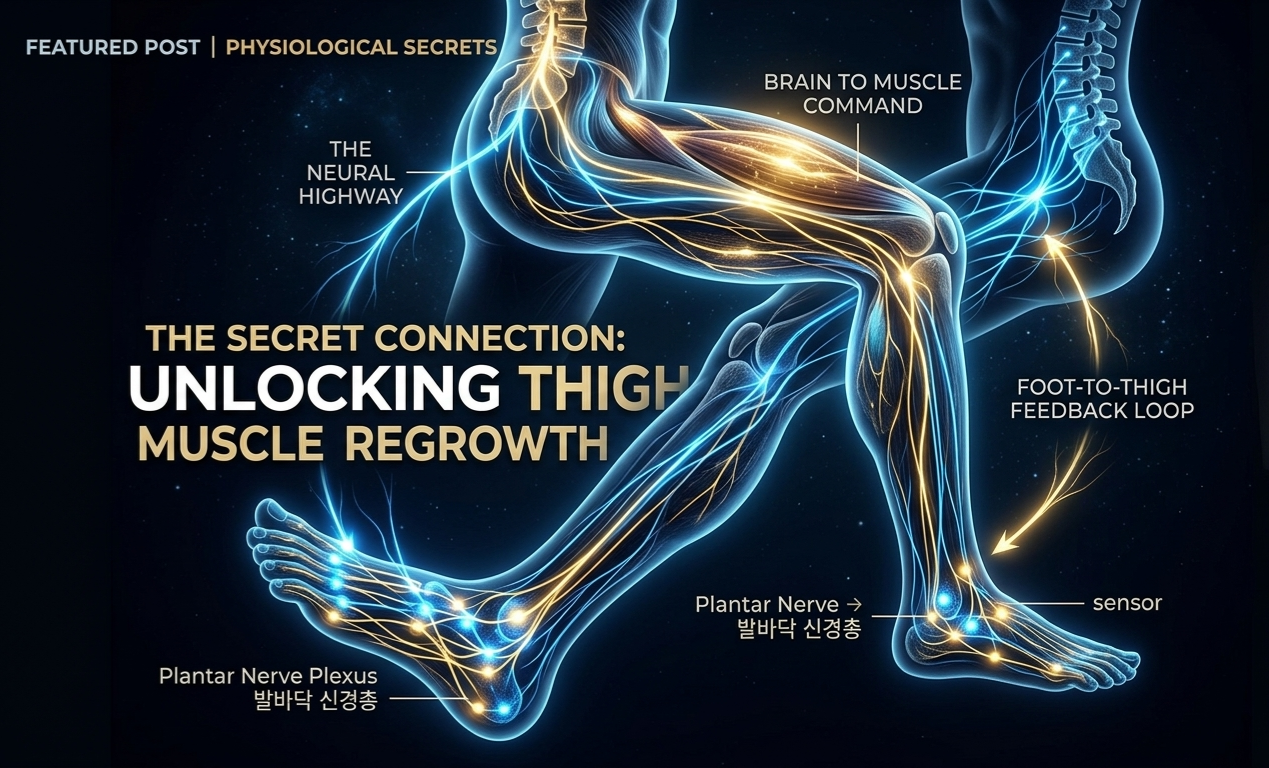
    Neural distribution map illustrating the hidden connection between foot sensors and thigh muscle regrowth.

    Secret 1: Your Brain is Halting the Signal (The Survival Lock)

    The first hidden secret to recovering lost muscle mass is understanding that a shrinking thigh muscle is rarely a muscle problem; it is a neurological command.

    When you exercise a weak muscle and it refuses to grow, you are trying to force electricity through a cut wire. In my clinical experience with body alignment, I often see the nervous system act as a protective governor.

    When a joint, a ligament, or a nerve pathway is chronically overloaded, the brain makes an unconscious decision: To protect this person from a catastrophic injury, I must cut the power to the shirnking thing muscle.

    This is not a malfunction. It is a brilliant survival mechanism. Your brain quietly dampens the motor unit activation to your thigh. No matter how many squats you perform, if the brain has locked the gate from the source, the muscle fibers will never receive the signal to contract and grow.

    shrinking thigh muscle
    ​Restoring foot sensors using nerve management to unlock a shrinking thigh muscle.

    Secret 2: The Source is in Your Shoes (The Forgotten Foundation)

    The second secret is the one that conventional treatments miss entirely: The neurological brake holding back your shrinking thigh muscle is almost always located in your foot.

    When this client came to our center, we didn’t look at his thigh first. We looked at how his feet interacted with the earth.

    Underneath the human foot lies a complex web of unconscious nerves—what the Sbonsdo (KSNS) framework recognizes as the body’s primary balance and safety sensors. Over years of wearing tight, rigid shoes and sustaining micro-injuries on the tennis court, this client’s big toe and lateral foot arch had lost their natural reflex responses.

    Because the foot was no longer properly sensing the ground, the ankle became unstable. To prevent the knee and hip from collapsing, the nervous system locked down the calf and threw the “emergency brake” directly onto the left thigh. You cannot fix a roof by staring at the ceiling while the foundation is sinking. To unlock the thigh, we had to fix the ground contact patterns first.

    ​Demonstration of KSNS (Sbonsdo) reflex testing and nerve management for structural balance.

    Recommended Reading: How Chronic Pain Instantly Shuts Down Your Nervous System

    Secret 3: Release Precedes Growth (Take Your Foot Off the Brake)

    The third and final secret is a paradigm shift in physical recovery: The body does not need more force; it needs safety. Traditional rehabilitation tells you to fight the weakness—to push, lift, and strain. But if the nervous system is in a state of chronic guarding, adding more force only triggers a deeper protective lockdown.

    Our work at the center was not about building strength through effort. It was about using precise, non-invasive nerve management to restore the unconscious reflex signals in his feet and ankles. We were not stepping on the gas pedal; we were simply taking the foot off the brake.

    The shift happened with shocking speed. Once the safety sensors in his foot felt stable, the brain realized the threat was gone. The unconscious protective guard lowered.

    For the first time in years, during a simple standing assessment, he gasped. “I can feel the bottom of my foot, and my thigh suddenly feels warm.” That warmth was blood flow, neurological connection, and life returning to a dormant muscle chain. Within weeks of restoring this balance, his left thigh finally began to fill out and grow again.

    Is Your Nervous System Guarding Your Body?

    If you are trapped in a cycle of chronic pain, structural asymmetry, or muscle loss that defies all training, stop fighting your body.

    The human body is an beautifully interconnected chain. An imbalance in the toe shifts the ankle; a frozen ankle disrupts the knee; a guarded knee shuts down the shrinking thigh muscle.

    Recovery doesn’t begin with heavier weights. It begins from the ground up, by listening to the quiet, unconscious signals of the nervous system and giving the body the balance it needs to feel safe again.

    • Learn more about the physiological mechanisms of muscle atrophy on Wikipedia.
    ​432Hz therapeutic soundscape designed to release bodily tension and support physical alignment.

    What Happens Inside the Nervous System When a Muscle Stops Growing

    Most people assume that a shrinking thigh muscle means the muscle itself is damaged or diseased.
    But in many cases, the muscle tissue is completely intact.
    The real problem is the signal — or rather, the absence of it.
    Think of your nervous system like an electrical grid.
    Every muscle in your body needs a clear, uninterrupted signal from the brain to contract, grow, and stay strong.
    When that signal is blocked, the muscle simply waits.
    It does not atrophy because it is broken.
    It atrophies because it is not receiving the command to stay active.
    This is called neurological inhibition — and it is far more common than most people realize.
    In cases of chronic pain, overuse injury, or long-term postural imbalance, the brain can begin to “mute” certain muscles as a protective strategy.
    The body is not giving up.
    It is trying to protect itself from further damage.
    The problem is that this protective response can last long after the original injury has healed.
    The nervous system stays in defense mode.
    The muscle stays silent.
    And no amount of exercise can override a signal that is not being sent.
    Why the Foot Is the Starting Point
    One of the most overlooked connections in the human body is the relationship between the foot and the thigh.
    When the foot loses proper ground contact — due to flat arches, overpronation, or years of improper footwear — the entire movement chain above it begins to compensate.
    The ankle stiffens.
    The calf tightens.
    The knee shifts.
    The hip rotates.
    And the thigh muscle, caught in the middle of this chain reaction, slowly loses its normal activation pattern.
    This is why treating only the thigh rarely works.
    The shrinking thigh muscle is often the last symptom in a long chain of imbalance that started much lower — sometimes as low as the sole of the foot.
    Restoring foot balance is not just about comfort.
    It is about re-establishing the neurological foundation that allows the entire leg to function naturally again.

    How to Rebuild a Shrinking Thigh Muscle

    Recovery is not always about exercising harder.
    In many cases, restoring balance, improving walking mechanics, and increasing normal muscle activation can help the body move more efficiently.
    As movement quality improves, the thigh muscle often becomes more active during everyday activities.
    This process may help support better strength, stability, and confidence over time.

  • How to Stop Plantar Fasciitis in 4 Sessions

    How to Stop Plantar Fasciitis in 4 Sessions

    “I Just Want to Walk Without Fear” — One Woman’s Journey Back from Chronic Plantar Fasciitis

    By Haim Body Balance Center | Body Alignment & Foot Health


    If you’ve ever woken up in the morning and dreaded the moment your feet touch the floor — you already understand more than most doctors do about what plantar fasciitis really feels like.

    It’s not just pain. It’s that creeping fear before you even stand up. The way you test the floor with one foot, bracing for the sharp stab in your heel. The way it makes you feel like your own body has become the enemy.

    If this sounds familiar, this story is for you.


    She Had Tried Everything — and Nothing Worked

    Detailed medical-style infographic showing toe nerve lines, plantar nerve pathways, and foot balance connections with colorful nerve mapping from toes to lower body. The image explains how toe movement, footwear, posture, and walking patterns affect balance, circulation, nerve function, and plantar fasciitis-related pain.
    Toe Nerve Lines and Foot Balance Pathways — Understanding how toe pressure, walking posture, and nerve flow influence whole-body stability and plantar fasciitis recovery
    Professional Plantar Fasciitis Treatment using Sbonsdo Method at Haim Center
    Applying the Sbonsdo Method to restore natural foot alignment and relieve pain.

    A woman in her early 60s came to our center after years of struggling with severe heel and foot pain.

    She wasn’t someone who had ignored her body. Quite the opposite.

    Many people are discovering the power of plantar fasciitis natural recovery through proper body alignment.

    She had already visited orthopedic clinics. She had tried Korean medicine hospitals. She had gone to alternative medicine centers. At one hospital, she was formally diagnosed with plantar fasciitis and advised to invest in custom orthotic insoles — nearly ₩350,000.

    She wore them faithfully. She followed every recommendation.

    But something strange kept happening.

    Instead of feeling lighter, her body felt more uncomfortable. More unstable. More exhausted.

    She wasn’t getting better — and she couldn’t understand why.

    When I asked her what she wanted most, she didn’t say “I want to run again” or “I want to hike.”

    She said something quietly that has stayed with me:

    “I just want to go shopping comfortably with my older sister again.”

    Such a simple wish. And yet it felt completely out of reach.

    Plantar Fasciitis Natural Recovery: The Real Problem Wasn’t Just in Her Heel


    During our consultation, one pattern became clear almost immediately.

    Because she was petite in height, she had worn tight, narrow high heels for most of her adult life — well into her early 50s. Decades of her toes being compressed. Decades of her body quietly adapting to an unnatural position.

    What happens to the body after years of this?

    • The toes lose their natural freedom of movement
    • The foot’s natural arch mechanics begin to collapse
    • Pressure distribution across the foot shifts — and stays shifted
    • The calves, pelvis, and lower body begin unconsciously compensating
    • The nervous system starts running in a chronic protective tension mode

    This is the part that most treatments miss.

    Plantar fasciitis is rarely just about the heel.

    In many chronic cases, the inflamed tissue is almost like a symptom of a deeper story — a story of collapsed foot mechanics, restricted movement, unstable walking patterns, and a nervous system that has been quietly guarding the body for years without anyone noticing.

    At Haim Body Balance Center, we work with an approach called KSNS-based Sbonsdo management — a method focused on restoring unconscious nerve balance and overall body alignment, not just treating the painful spot.


    📺 Watch: How the Sbonsdo Method Works for Foot Pain Recovery

    A fundamental look at Plantar Fasciitis through
    https://www.google.com/search?q=KSNS+Sbonsdo+Kim+Se-yeonthe KSNS/Sbonsdo Method, focusing on nerve response and natural alignment.

    👉 Tip for WordPress: Paste the YouTube video URL directly into the block editor on a new line, and WordPress will automatically embed it. Or use the YouTube block and enter the URL there.


    Four Sessions. One Remarkable Change.

    Rather than aggressive stimulation or forceful manipulation, we focused on four key areas over her sessions:

    1. Unconscious nerve balance care for the lower body — calming the protective tension patterns that had built up over decades
    2. Foot pressure restoration and toe mobility work — giving her toes back the movement they had lost
    3. Gentle gait correction — retraining how her feet made contact with the ground
    4. Natural weight distribution while walking — helping her body find its own balance again

    At the same time, we made two important lifestyle recommendations:

    ✅ Wide Toe-Box Shoes

    Shoes that allow the toes to spread naturally — not compress. This sounds simple, but it’s one of the most powerful changes you can make.

    ✅ Soft, Flexible Soles

    Reducing excessive impact while supporting natural foot movement — not locking the foot into a rigid structure.

    And perhaps most importantly — we worked on how she walked. The posture, the heel strike, the way weight transferred from one foot to the other.

    After just four sessions, she was walking nearly 8,000 steps comfortably.

    Her heel pain had decreased significantly. But more than that — the fear was gone. That cautious, bracing, morning-dread feeling had eased.

    And she came back to tell us:

    “Now I think I can finally go shopping with my sister again.”


    Why Does This Keep Happening to So Many People?

    If you’ve been dealing with plantar fasciitis for months or years, there’s something important to understand:

    Chronic foot pain is often a whole-body balance problem — not just a local inflammation problem.

    The standard treatment path — rest, orthotics, anti-inflammatories, cortisone injections — focuses on managing the pain signal. And sometimes that helps, short-term.

    But if the underlying patterns aren’t addressed:

    • The collapsed foot mechanics continue
    • The unconscious nerve guarding continues
    • The compensations traveling up through the knees, hips, and lower back continue
    • The pain returns — sometimes in different places

    This is why so many people cycle through treatments, feel temporary relief, and then find themselves back where they started.

    Recovery isn’t about forcing the heel to stop hurting. It’s about restoring the conditions where the body no longer needs to hurt.


    Your Feet Are the Foundation of Everything

    When balance collapses at the feet, the effects don’t stay at the feet.

    Tension travels upward. The knees compensate. The hips tilt. The lower back tightens. The shoulders follow. Even the nervous system shifts into a subtly elevated stress state — always bracing, always guarding.

    Sometimes what looks like a foot problem is actually the body’s way of saying: something in the whole system has been off for a long time, and it finally reached a breaking point.

    And sometimes, recovery begins not with harder treatment — but with gentler, smarter restoration.

    Natural movement. Balanced walking. Healthy foot function. A nervous system that finally feels safe enough to let go.


    Could This Be Your Story Too?

    If you recognize yourself in any part of this — the morning heel pain, the years of tight shoes, the treatments that helped a little but never quite resolved it — you’re not alone, and you’re not imagining it.

    The body has a remarkable capacity to recover when it’s given the right conditions.

    Your goal doesn’t have to be running a marathon.

    Maybe it’s walking through a market without wincing. Maybe it’s standing comfortably at a family gathering. Maybe it’s going shopping with someone you love.

    Those goals are worth taking seriously. And they are absolutely achievable.


    Experience deep relaxation and mind-body balance with this 432Hz healing music by LumiGenesis. Perfect to listen to while focusing on your recovery journey.

    📍 Haim Body Balance Center

    Location: Yangsan, Gyeongnam, South Korea
    Specialization: Body alignment, foot health, reflexology, KSNS-based unconscious nerve management
    Experience: 12 years of clinical practice

    Appointments available — contact us for consultation.

    • How Foot Imbalance Leads to Chronic Pain Throughout the Body
    • What Are Wide Toe-Box Shoes — And Do They Really Help?
    • Understanding the Unconscious Nervous System and Chronic Pain

    Tags: plantar fasciitis, heel pain, foot pain relief, body alignment, toe box shoes, chronic foot pain, natural recovery, KSNS, Sbonsdo, foot health, Yangsan, Haim Body Balance

    Starting your journey toward plantar fasciitis natural recovery is the first step to pain-free walking.

    Healthline: Guide to Foot Pain and Recovery

    Haim Body Balance Center Insights

  • 3 Reasons You Still Feel Weak After Rehabilitation: The Hidden

    3 Reasons You Still Feel Weak After Rehabilitation: The Hidden

    The hidden link between foot tension, nervous system “protection mode,” and recovery that never quite feels complete.

    ​There is a moment many people reach after long rehabilitation — when the doctors say the hard part is over, when the charts show improvement, and when you are officially “recovered.”

    ​And yet, something still doesn’t feel right.

    ​Your legs tire too quickly. Your balance never feels quite trustworthy. Standing for too long feels like a negotiation. You reach for the wall, a cane, or a chair — not because you have to, but because your body quietly insists.

    ​This is not a failure. This is not a weakness of character or a lack of effort.

    This is what happens when the nervous system never fully received the message that the danger is gone.

    ​A Client I Won’t Forget

    rehabilitation
    Professional rehabilitation and body alignment clinical case at Haim Center.
    **Rehabilitation**
    A client recovering balance and stability at Haim Body Balance Center after long-term rehabilitation.

    ​Several months ago, a client came to our center with a story that stayed with me.

    ​Years earlier, he had survived a thoracic aortic rupture — one of the most serious cardiovascular emergencies a person can endure. After emergency surgery and intensive care, he spent years in structured rehabilitation at a major university hospital.

    ​Related Post: [How Aortic Rupture Recovery Improved]

    ​By any objective measure, he had achieved something remarkable: he could walk again.

    ​But he walked with two canes. His lower body fatigued within minutes. His balance never felt stable. Beneath the surface, his calves, ankles, and the soles of his feet held a kind of chronic tension — dense, accumulated, and guarded — that no amount of strengthening exercise had been able to reach.

    1. When the Body Stays in “Protection Mode”

    ​What struck me was not how far he still had to go, but how much his body was still working — holding itself together through sheer effort rather than natural ease.

    ​After major trauma, surgery, or prolonged physical stress, the nervous system does something intelligent: it enters Protection Mode.

    ​It braces. It guards. It keeps the muscles slightly activated and the posture stiffened. This is survival. This is the nervous system doing exactly what it was designed to do.

    ​The problem is that the nervous system doesn’t always receive the signal to stop.

    ​Even after formal rehabilitation ends, the body can continue running on that same protective setting. Not because something is wrong with the person, but because the nervous system is still waiting for confirmation that the threat has passed.

    ​This shows up in ways that are often misread:

    • Chronic Calf Stiffness: Regardless of how much you stretch.
    • Ankle Restriction: Joints that feel slow or “locked.”
    • Effortful Movement: Walking feels like a conscious task rather than a reflex.
    • Low Balance Confidence: Especially on uneven surfaces.
    • Disconnection: A general sense of heaviness or “numbness” in the lower body.

    ​Most people assume this is purely muscular — that they just need more strength. While strength matters, it cannot switch off a nervous system that is quietly convinced the body is still in danger.

    ​The Missing Piece of Recovery: The Soles of Your Feet

    ​Here is something that often surprises people: The soles of your feet are among your body’s most vital sensory organs.

    ​Every time you stand or walk, your feet send a continuous stream of data upward to your brain. This information tells your nervous system whether the ground is trustworthy, whether the body is balanced, and — most importantly — whether movement is safe.

    ​When feet and ankles become chronically tense due to injury or compensation, this sensory signal becomes distorted. The brain receives feedback that says: Unstable. Uncertain. Not safe yet.

    The missing piece of rehabilitation: Restoring the sensory data from the soles of the feet through KSNS principles.

    ​In response, the nervous system does what it always does when it perceives instability: it protects. It tightens the calves, stiffens the hips, and increases guarding throughout the body.

    ​The result is a cycle that can persist for years:

    Foot Tension → Distorted Sensory Signal → Nervous System Guarding → Fatigue & Instability → More Foot Tension.

    ​Beyond Strength: Restoring the Sense of Safety

    ​Rehabilitation programs are extraordinarily effective at restoring movement and rebuilding strength. But there is a dimension of recovery that often goes unaddressed: the body’s sense of safety.

    ​True physical ease — where movement feels natural and balance feels trustworthy — depends on the nervous system feeling settled, not just the muscles feeling strong.

    ​At our center, we focus on this transition: from a body that is “managing” to a body that feels “safe.”

    ​Our approach involves:

    1. Releasing deep-seated tension in the calves, ankles, and soles.
    2. Restoring sensory clarity so the feet can send accurate signals to the brain.
    3. Supporting circulation to aid tissue recovery and neurological health.
    4. Calming the nervous system to shift it out of chronic protective patterns.

    ​The goal is never to force the body. The goal is to help it feel grounded enough to move naturally again.

    ​”My Body Notices Immediately”

    ​One thing my client said has stayed with me. After several months of consistent care, he told me: “Now my body notices immediately when I skip a session.”

    ​He didn’t say it with fear, but with awareness. It is the kind of awareness that comes when the body finally remembers what it feels like to move without guarding.

    ​That quality of awareness is the true marker of deeper recovery. It means the body is no longer simply enduring; it is participating.

    ​Signs Your Body is Still “On Alert”

    ​You may recognize this in your own experience — not necessarily after major trauma, but after any period of physical stress or illness:

    • ​You feel like you have to “think” about your balance.
    • ​Your legs feel heavy or disconnected.
    • ​You tire easily during simple standing or walking.
    • ​Stretching provides only temporary relief from stiffness.

    True recovery and physical balance require specialized focus even after your formal **rehabilitation** is complete.

    ​Sometimes the most useful question isn’t “What is still weak?” but rather, “What is my body still trying to protect?”

    ​Haim Body Balance Center — Yangsan, Korea

    “Haim Body Balance Center offers a new perspective on rehabilitation.”

    Foot-centered balance support and nervous system relaxation care.

    Specializing in chronic tension, post-rehab recovery, and long-term body alignment.

    Our goal is to provide a **rehabilitation** experience that focuses on both physical alignment and nervous system stability.

    Haim Body Balance Center is your partner in successful **rehabilitation**

    Our goal is to provide a **rehabilitation** experience that focuses on both physical alignment and nervous system stability.