Tag: Posture Correction

  • How to Stop Plantar Fasciitis in 4 Sessions

    How to Stop Plantar Fasciitis in 4 Sessions

    “I Just Want to Walk Without Fear” — One Woman’s Journey Back from Chronic Plantar Fasciitis

    By Haim Body Balance Center | Body Alignment & Foot Health


    If you’ve ever woken up in the morning and dreaded the moment your feet touch the floor — you already understand more than most doctors do about what plantar fasciitis really feels like.

    It’s not just pain. It’s that creeping fear before you even stand up. The way you test the floor with one foot, bracing for the sharp stab in your heel. The way it makes you feel like your own body has become the enemy.

    If this sounds familiar, this story is for you.


    She Had Tried Everything — and Nothing Worked

    Detailed medical-style infographic showing toe nerve lines, plantar nerve pathways, and foot balance connections with colorful nerve mapping from toes to lower body. The image explains how toe movement, footwear, posture, and walking patterns affect balance, circulation, nerve function, and plantar fasciitis-related pain.
    Toe Nerve Lines and Foot Balance Pathways — Understanding how toe pressure, walking posture, and nerve flow influence whole-body stability and plantar fasciitis recovery
    Professional Plantar Fasciitis Treatment using Sbonsdo Method at Haim Center
    Applying the Sbonsdo Method to restore natural foot alignment and relieve pain.

    A woman in her early 60s came to our center after years of struggling with severe heel and foot pain.

    She wasn’t someone who had ignored her body. Quite the opposite.

    Many people are discovering the power of plantar fasciitis natural recovery through proper body alignment.

    She had already visited orthopedic clinics. She had tried Korean medicine hospitals. She had gone to alternative medicine centers. At one hospital, she was formally diagnosed with plantar fasciitis and advised to invest in custom orthotic insoles — nearly ₩350,000.

    She wore them faithfully. She followed every recommendation.

    But something strange kept happening.

    Instead of feeling lighter, her body felt more uncomfortable. More unstable. More exhausted.

    She wasn’t getting better — and she couldn’t understand why.

    When I asked her what she wanted most, she didn’t say “I want to run again” or “I want to hike.”

    She said something quietly that has stayed with me:

    “I just want to go shopping comfortably with my older sister again.”

    Such a simple wish. And yet it felt completely out of reach.

    Plantar Fasciitis Natural Recovery: The Real Problem Wasn’t Just in Her Heel


    During our consultation, one pattern became clear almost immediately.

    Because she was petite in height, she had worn tight, narrow high heels for most of her adult life — well into her early 50s. Decades of her toes being compressed. Decades of her body quietly adapting to an unnatural position.

    What happens to the body after years of this?

    • The toes lose their natural freedom of movement
    • The foot’s natural arch mechanics begin to collapse
    • Pressure distribution across the foot shifts — and stays shifted
    • The calves, pelvis, and lower body begin unconsciously compensating
    • The nervous system starts running in a chronic protective tension mode

    This is the part that most treatments miss.

    Plantar fasciitis is rarely just about the heel.

    In many chronic cases, the inflamed tissue is almost like a symptom of a deeper story — a story of collapsed foot mechanics, restricted movement, unstable walking patterns, and a nervous system that has been quietly guarding the body for years without anyone noticing.

    At Haim Body Balance Center, we work with an approach called KSNS-based Sbonsdo management — a method focused on restoring unconscious nerve balance and overall body alignment, not just treating the painful spot.


    📺 Watch: How the Sbonsdo Method Works for Foot Pain Recovery

    A fundamental look at Plantar Fasciitis through
    https://www.google.com/search?q=KSNS+Sbonsdo+Kim+Se-yeonthe KSNS/Sbonsdo Method, focusing on nerve response and natural alignment.

    👉 Tip for WordPress: Paste the YouTube video URL directly into the block editor on a new line, and WordPress will automatically embed it. Or use the YouTube block and enter the URL there.


    Four Sessions. One Remarkable Change.

    Rather than aggressive stimulation or forceful manipulation, we focused on four key areas over her sessions:

    1. Unconscious nerve balance care for the lower body — calming the protective tension patterns that had built up over decades
    2. Foot pressure restoration and toe mobility work — giving her toes back the movement they had lost
    3. Gentle gait correction — retraining how her feet made contact with the ground
    4. Natural weight distribution while walking — helping her body find its own balance again

    At the same time, we made two important lifestyle recommendations:

    ✅ Wide Toe-Box Shoes

    Shoes that allow the toes to spread naturally — not compress. This sounds simple, but it’s one of the most powerful changes you can make.

    ✅ Soft, Flexible Soles

    Reducing excessive impact while supporting natural foot movement — not locking the foot into a rigid structure.

    And perhaps most importantly — we worked on how she walked. The posture, the heel strike, the way weight transferred from one foot to the other.

    After just four sessions, she was walking nearly 8,000 steps comfortably.

    Her heel pain had decreased significantly. But more than that — the fear was gone. That cautious, bracing, morning-dread feeling had eased.

    And she came back to tell us:

    “Now I think I can finally go shopping with my sister again.”


    Why Does This Keep Happening to So Many People?

    If you’ve been dealing with plantar fasciitis for months or years, there’s something important to understand:

    Chronic foot pain is often a whole-body balance problem — not just a local inflammation problem.

    The standard treatment path — rest, orthotics, anti-inflammatories, cortisone injections — focuses on managing the pain signal. And sometimes that helps, short-term.

    But if the underlying patterns aren’t addressed:

    • The collapsed foot mechanics continue
    • The unconscious nerve guarding continues
    • The compensations traveling up through the knees, hips, and lower back continue
    • The pain returns — sometimes in different places

    This is why so many people cycle through treatments, feel temporary relief, and then find themselves back where they started.

    Recovery isn’t about forcing the heel to stop hurting. It’s about restoring the conditions where the body no longer needs to hurt.


    Your Feet Are the Foundation of Everything

    When balance collapses at the feet, the effects don’t stay at the feet.

    Tension travels upward. The knees compensate. The hips tilt. The lower back tightens. The shoulders follow. Even the nervous system shifts into a subtly elevated stress state — always bracing, always guarding.

    Sometimes what looks like a foot problem is actually the body’s way of saying: something in the whole system has been off for a long time, and it finally reached a breaking point.

    And sometimes, recovery begins not with harder treatment — but with gentler, smarter restoration.

    Natural movement. Balanced walking. Healthy foot function. A nervous system that finally feels safe enough to let go.


    Could This Be Your Story Too?

    If you recognize yourself in any part of this — the morning heel pain, the years of tight shoes, the treatments that helped a little but never quite resolved it — you’re not alone, and you’re not imagining it.

    The body has a remarkable capacity to recover when it’s given the right conditions.

    Your goal doesn’t have to be running a marathon.

    Maybe it’s walking through a market without wincing. Maybe it’s standing comfortably at a family gathering. Maybe it’s going shopping with someone you love.

    Those goals are worth taking seriously. And they are absolutely achievable.


    Experience deep relaxation and mind-body balance with this 432Hz healing music by LumiGenesis. Perfect to listen to while focusing on your recovery journey.

    📍 Haim Body Balance Center

    Location: Yangsan, Gyeongnam, South Korea
    Specialization: Body alignment, foot health, reflexology, KSNS-based unconscious nerve management
    Experience: 12 years of clinical practice

    Appointments available — contact us for consultation.


    • How Foot Imbalance Leads to Chronic Pain Throughout the Body
    • What Are Wide Toe-Box Shoes — And Do They Really Help?
    • Understanding the Unconscious Nervous System and Chronic Pain

    Tags: plantar fasciitis, heel pain, foot pain relief, body alignment, toe box shoes, chronic foot pain, natural recovery, KSNS, Sbonsdo, foot health, Yangsan, Haim Body Balance

    Starting your journey toward plantar fasciitis natural recovery is the first step to pain-free walking.

    Healthline: Guide to Foot Pain and Recovery
    Haim Body Balance Center Insights

  • 3 Reasons You Still Feel Weak After Rehabilitation: The Hidden

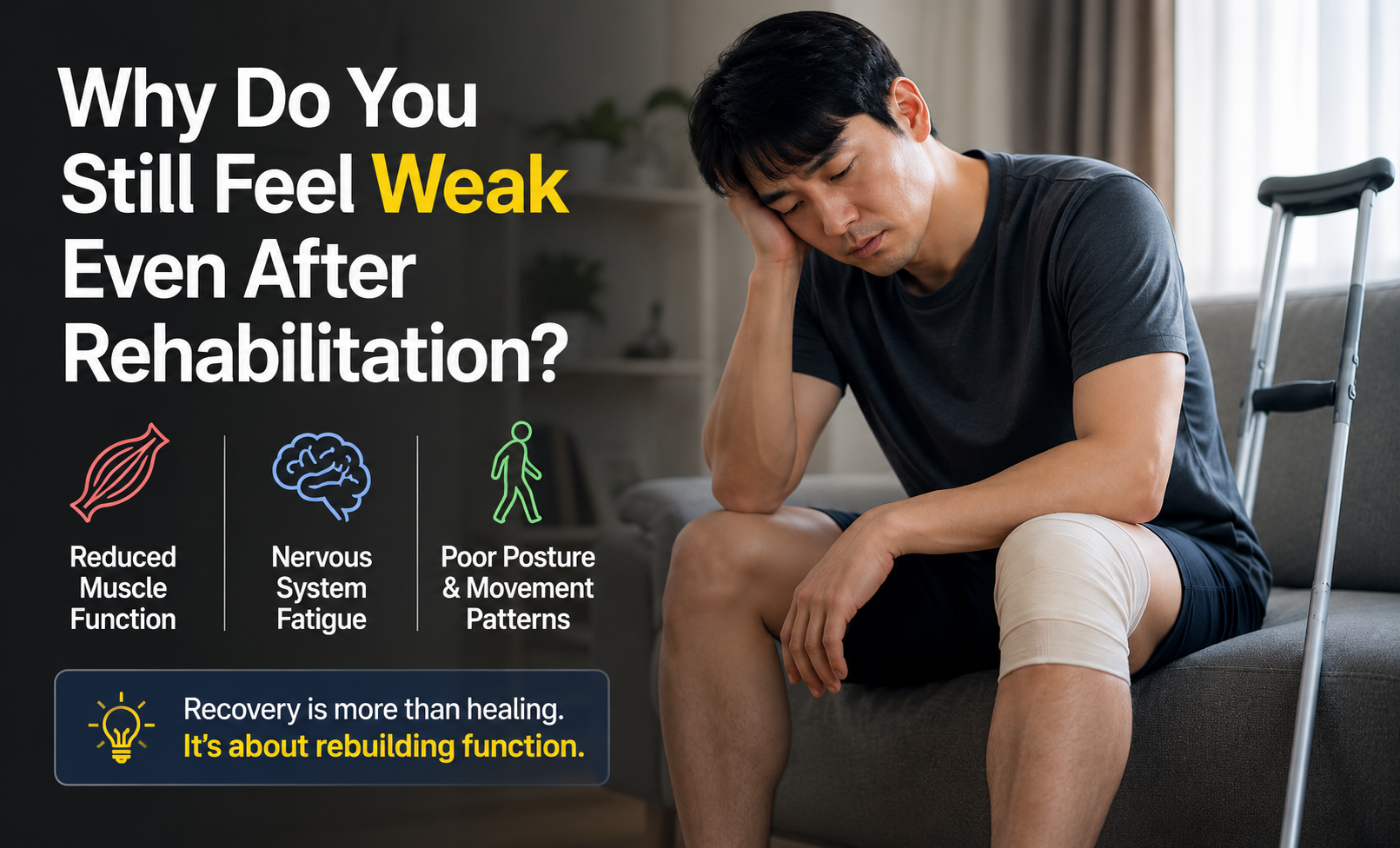
    3 Reasons You Still Feel Weak After Rehabilitation: The Hidden

    The hidden link between foot tension, nervous system “protection mode,” and recovery that never quite feels complete.

    ​There is a moment many people reach after long rehabilitation — when the doctors say the hard part is over, when the charts show improvement, and when you are officially “recovered.”

    ​And yet, something still doesn’t feel right.

    ​Your legs tire too quickly. Your balance never feels quite trustworthy. Standing for too long feels like a negotiation. You reach for the wall, a cane, or a chair — not because you have to, but because your body quietly insists.

    ​This is not a failure. This is not a weakness of character or a lack of effort.

    This is what happens when the nervous system never fully received the message that the danger is gone.

    ​A Client I Won’t Forget

    rehabilitation
    Professional rehabilitation and body alignment clinical case at Haim Center.
    **Rehabilitation**
    A client recovering balance and stability at Haim Body Balance Center after long-term rehabilitation.

    ​Several months ago, a client came to our center with a story that stayed with me.

    ​Years earlier, he had survived a thoracic aortic rupture — one of the most serious cardiovascular emergencies a person can endure. After emergency surgery and intensive care, he spent years in structured rehabilitation at a major university hospital.

    ​Related Post: [How Aortic Rupture Recovery Improved]

    ​By any objective measure, he had achieved something remarkable: he could walk again.

    ​But he walked with two canes. His lower body fatigued within minutes. His balance never felt stable. Beneath the surface, his calves, ankles, and the soles of his feet held a kind of chronic tension — dense, accumulated, and guarded — that no amount of strengthening exercise had been able to reach.

    1. When the Body Stays in “Protection Mode”

    ​What struck me was not how far he still had to go, but how much his body was still working — holding itself together through sheer effort rather than natural ease.

    ​After major trauma, surgery, or prolonged physical stress, the nervous system does something intelligent: it enters Protection Mode.

    ​It braces. It guards. It keeps the muscles slightly activated and the posture stiffened. This is survival. This is the nervous system doing exactly what it was designed to do.

    ​The problem is that the nervous system doesn’t always receive the signal to stop.

    ​Even after formal rehabilitation ends, the body can continue running on that same protective setting. Not because something is wrong with the person, but because the nervous system is still waiting for confirmation that the threat has passed.

    ​This shows up in ways that are often misread:

    • Chronic Calf Stiffness: Regardless of how much you stretch.
    • Ankle Restriction: Joints that feel slow or “locked.”
    • Effortful Movement: Walking feels like a conscious task rather than a reflex.
    • Low Balance Confidence: Especially on uneven surfaces.
    • Disconnection: A general sense of heaviness or “numbness” in the lower body.

    ​Most people assume this is purely muscular — that they just need more strength. While strength matters, it cannot switch off a nervous system that is quietly convinced the body is still in danger.

    ​The Missing Piece of Recovery: The Soles of Your Feet

    ​Here is something that often surprises people: The soles of your feet are among your body’s most vital sensory organs.

    ​Every time you stand or walk, your feet send a continuous stream of data upward to your brain. This information tells your nervous system whether the ground is trustworthy, whether the body is balanced, and — most importantly — whether movement is safe.

    ​When feet and ankles become chronically tense due to injury or compensation, this sensory signal becomes distorted. The brain receives feedback that says: Unstable. Uncertain. Not safe yet.

    The missing piece of rehabilitation: Restoring the sensory data from the soles of the feet through KSNS principles.

    ​In response, the nervous system does what it always does when it perceives instability: it protects. It tightens the calves, stiffens the hips, and increases guarding throughout the body.

    ​The result is a cycle that can persist for years:

    Foot Tension → Distorted Sensory Signal → Nervous System Guarding → Fatigue & Instability → More Foot Tension.

    ​Beyond Strength: Restoring the Sense of Safety

    ​Rehabilitation programs are extraordinarily effective at restoring movement and rebuilding strength. But there is a dimension of recovery that often goes unaddressed: the body’s sense of safety.

    ​True physical ease — where movement feels natural and balance feels trustworthy — depends on the nervous system feeling settled, not just the muscles feeling strong.

    ​At our center, we focus on this transition: from a body that is “managing” to a body that feels “safe.”

    ​Our approach involves:

    1. Releasing deep-seated tension in the calves, ankles, and soles.
    2. Restoring sensory clarity so the feet can send accurate signals to the brain.
    3. Supporting circulation to aid tissue recovery and neurological health.
    4. Calming the nervous system to shift it out of chronic protective patterns.

    ​The goal is never to force the body. The goal is to help it feel grounded enough to move naturally again.

    ​”My Body Notices Immediately”

    ​One thing my client said has stayed with me. After several months of consistent care, he told me: “Now my body notices immediately when I skip a session.”

    ​He didn’t say it with fear, but with awareness. It is the kind of awareness that comes when the body finally remembers what it feels like to move without guarding.

    ​That quality of awareness is the true marker of deeper recovery. It means the body is no longer simply enduring; it is participating.

    ​Signs Your Body is Still “On Alert”

    ​You may recognize this in your own experience — not necessarily after major trauma, but after any period of physical stress or illness:

    • ​You feel like you have to “think” about your balance.
    • ​Your legs feel heavy or disconnected.
    • ​You tire easily during simple standing or walking.
    • ​Stretching provides only temporary relief from stiffness.

    True recovery and physical balance require specialized focus even after your formal **rehabilitation** is complete.

    ​Sometimes the most useful question isn’t “What is still weak?” but rather, “What is my body still trying to protect?”

    ​Haim Body Balance Center — Yangsan, Korea

    “Haim Body Balance Center offers a new perspective on rehabilitation.”

    Foot-centered balance support and nervous system relaxation care.

    Specializing in chronic tension, post-rehab recovery, and long-term body alignment.

    Our goal is to provide a **rehabilitation** experience that focuses on both physical alignment and nervous system stability.

    Haim Body Balance Center is your partner in successful **rehabilitation**

    Our goal is to provide a **rehabilitation** experience that focuses on both physical alignment and nervous system stability.

  • How to Stop Bone Loss: 9 Shocking Secrets for 12,000-Step Walkers

    How to Stop Bone Loss: 9 Shocking Secrets for 12,000-Step Walkers

    How to Stop Bone Loss is a critical question we often face in our journey toward lifelong vitality. In my 12 years of clinical experience, I have often seen that the real secret of how to stop bone loss lies in understanding our body’s internal balance. Recently, a long-time member of our wellness center walked into my office with a look of utter disbelief. Let’s call her Sarah.

    ​For years, Sarah had been the “model student” of health. She exercised consistently, maintained a healthy weight, and was proud of her daily habit: walking nearly 12,000 steps every single day. She felt active, vibrant, and confident that her body was as strong as her resolve.

    ​Then came the phone call from her doctor.

    ​Her recent bone density test revealed a shock: her T-score had plummeted to nearly -3.0, a level indicative of severe osteoporosis.

    ​With tears in her eyes, she asked the question that many of us would ask:

    “How can this happen? I’ve done everything right. I move more than almost anyone I know. Why aren’t my bones listening?”

    How to Stop Bone Loss
    Understanding the structure of our skeleton: A key step in learning How to Stop Bone Loss.

    ​If you’ve been relying solely on your step count to protect your skeleton, Sarah’s story is a vital wake-up call. It’s time to talk about How to Stop Bone Loss effectively, because quantity of movement does not always equal quality of bone health.

    ​How to Stop Bone Loss: The Walking Paradox

    Professional illustration of human skeletal system and circulation for bone health and how to stop bone loss.
    Beyond walking: Understanding the complex ‘ecosystem’ of our bones and nervous system to effectively prevent bone density depletion.

    Many people believe that walking alone is enough, but effectively learning how to stop bone loss requires a deeper look at our internal circulation and the unconscious tension in our bodies.

    ​Walking is spectacular for your heart, your mood, and your metabolic health. But bone is a living, breathing tissue that requires a complex “ecosystem” to thrive. When we focus only on the number of steps, we often overlook the biological environment those bones live in.

    ​Bone health isn’t just a mechanical “loading” issue; it’s a systemic one. Even if you are putting in the miles, several factors can prevent your body from actually building or maintaining bone density:

    • Nervous System “Noise”: If your body is in a state of chronic “fight or flight,” your cortisol levels remain high. High cortisol is a known enemy of bone-building cells (osteoblasts).
    • The Circulation Bottleneck: You can eat all the calcium in the world, but if your circulation is poor due to chronic muscle tension, those nutrients never reach the deep architecture of your bones.
    • Postural Misalignment: If you walk 12,000 steps with poor alignment, you aren’t loading your bones correctly. You might be stressing your joints while leaving your bone density untouched.
    • The Recovery Gap: Bone is built during rest, not during the walk itself. If your sleep quality is poor or your body is too tense to truly relax, the “remodeling” process never completes.

    ​A Tale of Two Outcomes: The Power of Balance

    ​While Sarah’s story is a cautionary tale, we recently saw the opposite result with another client. This individual had been diagnosed with osteopenia (the precursor to osteoporosis) and was deeply worried.

    ​Instead of just “walking more,” she shifted her focus. She engaged in regular wellness care focused on body balance, nervous system regulation, and circulation. A year later, her hospital results left her doctor speechless. Not only had her bone loss stopped, but her density had actually improved. She moved from the “danger zone” back into a much safer range.

    The Difference? She didn’t just move her body; she fixed the environment in which her body moved. She reduced chronic muscle tension, improved her posture, and ensured her blood flow was efficient enough to deliver life-giving nutrients to her skeletal system.

    ​The “Calcium Traffic Controllers”: Vitamin D3 and K2 MK7

    ​In the wellness world, we often say that “Calcium is the bricks, but you need a crane and a foreman to build the house.”

    ​This is where the combination of Vitamin D3 and Vitamin K2 (MK7) comes in. This duo has become the gold standard in nutritional bone support:

    1. Vitamin D3 (The Gatekeeper): It ensures that calcium is absorbed from your diet into your bloodstream. Without it, most of your calcium simply passes through you.
    2. Vitamin K2 MK7 (The Traffic Controller): This is the missing link. K2 activates proteins that move calcium out of your arteries and soft tissues and into your bones and teeth.

    ​Walking 12,000 steps without Vitamin K2 is like having a delivery truck full of supplies but no driver to take them to the construction site.

    ​The Body as a Connected System

    ​At our wellness center, we’ve observed a consistent pattern. People with declining bone health often suffer from a “cascade” of other issues:

    • ​Chronic foot or ankle instability.
    • ​Persistent shoulder tightness.
    • ​Lower back discomfort that never quite goes away.
    • ​Higher sensitivity to stress and fatigue.

    ​This isn’t a coincidence. Your bones, muscles, and nerves are one single, integrated system. When your posture is balanced and your circulation is fluid, every step you take actually works for your bones. When you are tight and misaligned, every step is just “wear and tear.”

    ​Final Thoughts: Move Better, Not Just More

    ​If you are walking 12,000 steps a day—don’t stop. It is a wonderful habit. But don’t let the pedometer give you a false sense of security.

    ​True bone protection requires a holistic strategy:

    1. Prioritize Circulation: Use massage, stretching, or wellness care to keep tissues soft and blood flowing.
    2. Focus on Posture: Ensure your walking form is balanced and your weight is distributed correctly.
    3. Support Nutritionally: Look into the D3 + K2 MK7 combination to ensure your calcium is going where it belongs.
    4. Embrace Recovery: Remember that “rest” is an active part of bone building.

    ​Bone health isn’t just about the quantity of your activity; it’s about the quality of your internal environment. Is your body a place where bones can grow?

    Let’s move beyond the step count and start building health from the inside out.

    Final Thoughts

    Ultimately, discovering how to stop bone loss is about more than just bone health; it is about reclaiming your overall physical vitality through 12 years of clinical insights and proper balance.

    Conclusion

    ​Ultimately, discovering how to stop bone loss is about more than just bone health; it is about reclaiming your overall physical vitality through 12 years of clinical insights and proper body balance. Understanding the connection between your movement and your nervous system is the real secret to lifelong strength

    Check out our previous post on [Body Balance Tips] for more health insights.

    Watch this video to learn more about effective body balance and healing therapy.

    Healing meditation for mental and physical balance through deep relaxation.

  • Ankle Sprain Recovery: How to Heal in 24 Hours

    Yesterday, I experienced a sudden and painful injury: I severely twisted my right ankle. In an instant, what started as a localized joint issue transformed into a systemic event. I felt a wave of intense muscle contractions traveling upward—from my ankle, through my hip, and all the way to the rhomboid muscles near my right scapula.

    ​For most people, ankle sprain recovery is a long, arduous process involving weeks of limping. However, by understanding the relationship between the unconscious nervous system and the Golgi Tendon Organ (GTO), I managed to reset my body and return to my normal routine—including climbing stairs—in less than 24 hours. This comprehensive guide explains exactly how you can accelerate your own ankle sprain recovery through neurological biohacking and proper muscle management.

    ​1. The Science of “Protective Guarding” in Ankle Sprains

    ​The moment an injury occurs, your brain enters a state of Protective Guarding. This is an involuntary survival mechanism where the nervous system “locks” the surrounding muscles to prevent further movement. While this is meant to protect you from further damage, it often leads to excessive stiffness and secondary pain that actually hinders the initial ankle sprain recovery process.

    ​In my case, the “lockdown” followed the kinetic chain. My right ankle sent a distress signal, and my glutes and rhomboids tightened in sympathy to stabilize the “perceived” damage. To achieve a fast ankle sprain recovery, you must address this neurological shock, not just the physical site of the sprain. If you only treat the ankle, the rest of your body remains in a “frightened” state, which slows down healing.

    Ankle Sprain Recovery Anatomy and Pain Referral)
    Anatomy of the lateral leg: How an ankle sprain triggers protective guarding in the peroneus muscles and kinetic chain.”

    ​2. Neurological Biohacking: The GTO Reset Secret

    ​The secret to my rapid ankle sprain recovery lay in the Golgi Tendon Organs (GTO). These are sensory receptors located at the junction of muscles and tendons. Their primary job is to monitor muscle tension and protect the joint from over-stretching. During a traumatic event like a sprain, these receptors can get “stuck” in a high-tension loop, keeping your muscles in a permanent state of spasm long after the initial danger has passed.

    ​I focused on conscious neurological release. By recognizing that the intense contraction was a “startle response” rather than permanent structural damage, I was able to communicate with my brain. Mindful relaxation, deep breathing, and conscious release are the first steps to signaling the GTOs to reset their tension threshold. Without this neurological reset, physical ankle sprain recovery often takes twice as long because you are fighting against your own body’s defense mechanisms.

    ​3. My Comprehensive Ankle Sprain Recovery Protocol

    Expert demonstration of the KSNS method..

    ​To reach 100% mobility in a single day, I followed these precise steps. If you are looking for an effective ankle sprain recovery plan, consider this holistic approach:

    ​Step 1: Targeted Percussive Therapy along the Kinetic Chain

    ​Instead of focusing only on the swollen ankle, I used a percussive massage device on the “upstream” muscles. I targeted the pressure points in my glutes and the rhomboids near my scapula. By releasing the tension in these larger muscle groups, I allowed the nervous system to relax its grip on my lower leg, facilitating a much faster ankle sprain recovery. This prevents the “domino effect” of pain from spreading further up your back.

    ​Step 2: Creating the Optimal Healing Environment

    Ankle sprain recovery happens fastest when the body is in a parasympathetic (rest and digest) state.

    • Controlled Warmth: I spent the night in a pre-warmed bed. Unlike ice, which can sometimes cause muscles to contract further due to cold shock, warmth promotes vasodilation and keeps nutrient-rich blood flowing to the injured tissues.
    • Strategic Elevation: I kept my leg elevated slightly during the first few hours to prevent excessive fluid buildup (edema), while keeping the rest of my body warm and relaxed. This balance is key for efficient ankle sprain recovery.

    ​Step 3: The Morning Mobility Reset

    ​This morning, I finished with a light, “finishing massage.” The goal was not deep tissue work but a sensory flush to “wake up” the nerves in a non-threatening way. This signals to the brain that the “emergency state” is over and it is safe to resume normal movement, effectively concluding the acute phase of ankle sprain recovery.

    ​4. Why Traditional Methods Might Slow You Down

    ​Many people rely solely on the R.I.C.E. (Rest, Ice, Compression, Elevation) method. While these have their place, relying too much on “Rest” can lead to joint stagnation. For a truly rapid ankle sprain recovery, you need “Active Recovery” that focuses on the nervous system. By staying immobile for too long, you allow the brain to solidify the “pain map” of that injury. My method breaks that map before it becomes permanent.

    If you want to learn more about maintaining overall physical health, visit our Body Balance and Care homepage for more tips.

    ​5. Preventing Future Injuries

    Ankle Sprain Recovery Exercises and Rehabilitation Guide
    Comprehensive ankle rehabilitation exercises: From range of motion to functional strength and proprioception training.

    ​Once you have achieved successful ankle sprain recovery, it is vital to strengthen the stabilizers. Proprioception exercises—like standing on one leg while brushing your teeth—help retrain those GTOs to handle sudden shifts in balance. This proactive approach ensures that your next ankle sprain recovery (if it ever happens again) will be even faster because your nervous system is better trained.

    ​6. The Result: Back on the Stairs

    ​The ultimate test of any ankle sprain recovery is vertical movement. Less than 24 hours after the incident, I was able to climb stairs with full stability and zero pain. My muscles were no longer “frightened” or “locked.” By addressing the unconscious shock first and the physical symptoms second, I bypassed the standard recovery timeline completely.

    ​FAQ: Frequently Asked Questions on Ankle Sprain Recovery

    Q: When should I see a doctor for a sprained ankle?

    A: If you cannot put any weight on it at all after the initial hour, see significant deformity, or hear a loud “pop,” seek professional help immediately. This guide is for managing the neurological aspect of standard grade 1 and 2 sprains.

    Q: Can I use a massage gun directly on the swollen area?

    A: No, avoid the direct site of inflammation. Instead, use the massage device on the muscles around and above the injury (like the calf, thigh, and glutes) to support your ankle sprain recovery.

    Q: How often should I perform the GTO reset?

    A: You can practice conscious relaxation and light breathing every hour during the first day of your ankle sprain recovery to keep the nervous system calm.

    ​Final Thoughts on Effective Healing

    ​Our bodies are incredibly intelligent but highly reactive. When you experience a sprain, remember that your nervous system is likely overreacting. By using tools like warmth, percussive therapy, and GTO awareness, you can take control of your ankle sprain recovery and get back to your life faster than you ever thought possible. Stay mindful, stay warm, and trust your body’s ability to heal.

    For more clinical details on how sensory receptors function, you can read this medical guide on proprioception and muscle spindles.”

    Don’t let your nervous system overreact to injury. By using KSNS principles and neurological awareness, you can take control of your ankle sprain recovery and get back to your life fast.

  • Menier Disease: 5 Hidden Causes of Dizziness You Need to Know

    Menier Disease: 5 Hidden Causes of Dizziness You Need to Know

    Living with Meniere’s disease often feels like living in a state of constant betrayal. One moment you are fine, and the next, the world is spinning, your ears are ringing, and you are left feeling physically and mentally shattered. Most medical advice focuses strictly on the inner ear—diuretics, low-salt diets, or injections. But for many, these treatments only scratch the surface because they ignore a fundamental truth: the ear does not exist in isolation from the rest of the body.

    ​After years of clinical observation in body alignment and unconscious nerve management, a clear pattern emerges. Meniere’s is often the “final alarm” of a body that has been struggling with imbalance and nervous system exhaustion for a very long time.

    ​The “Flu-Like” Weight of Chronic Dizziness

    Meniere disease causes
    Analyzing the link between foot balance and Meniere’s symptoms.

    ​If you suffer from Meniere’s, you likely recognize a specific set of symptoms that doctors rarely mention:

    • ​A body that feels heavy, as if you are coming down with the flu.
    • ​Waking up exhausted, no matter how many hours you slept.
    • ​A persistent “brain fog” that makes simple mental tasks feel draining.
    • ​A sense of anxiety that lingers even when you aren’t dizzy.

    ​These aren’t “side effects”—they are evidence that your Autonomic Nervous System is stuck in a defensive, high-stress state. When the brain feels that the body is physically unstable, it shifts into a “fight or flight” mode. Over time, this constant state of alert exhausts your lymphatic system and stagnates circulation, leading to that heavy, toxic feeling in your limbs.

    ​The Foundation: It Starts at Your Feet

    ​We often think of balance as something happening in the head, but balance actually begins at the soles of your feet. Your feet are the primary sensors sending data to your brain about where you are in space.

    Meniere disease foot balance
    Clinical observation of foot alignment in Meniere’s disease patients

    ​When the feet become tense or the arches collapse, the “data” sent to the brain becomes distorted. To compensate, the muscles in your calves, thighs, and eventually your neck and shoulders tighten up to “hold” you in place. This chronic tension restricts blood flow and lymphatic drainage. When the fluid in your body cannot circulate properly, the delicate pressure balance in the inner ear (which is central to Meniere’s) can become the ultimate casualty.

    ​The Unconscious Nervous System Reaction

    ​In many cases of chronic dizziness, the body has “remembered” stress. During evaluations, we often see that even light pressure on the toes or the base of the neck triggers a sharp, over-sensitive reaction. This is the unconscious nervous system protecting a body it perceives as being in danger.

    ​If your brain doesn’t feel “safe” on the ground, it will remain in a state of neurological static. This static manifests as the ringing in your ears (tinnitus), the pressure (aural fullness), and the eventual vertigo.

    ​A Path Toward True Stability

    Watch this clinical case demonstrating how restoring foot balance and neurological strength can eliminate chronic dizziness, even when it’s been persistent for years.”

    ​To truly address Meniere’s and chronic dizziness, we must look beyond the ear. True recovery involves recalibrating the body from the ground up:

    1. Restoring Foot Balance: Softening the tension in the soles allows the brain to receive “clear” signals of stability.
    2. Releasing Lower Body Stagnation: Clearing tension in the calves and pelvis encourages lymphatic flow, removing the “heavy” flu-like feeling.
    3. Calming the Nervous System: Through specialized body alignment, we signal to the unconscious mind that the body is supported and safe.
    4. Improving Circulation: When blood and lymph move freely, the body can naturally regulate the fluid pressures that affect the inner ear.

    ​Conclusion: Listen to Your Whole Body

    ​Meniere’s is not just a diagnosis; it is a message. It is your body’s way of saying that the system is overloaded and out of sync.

    ​If you are tired of just “managing” symptoms and want to understand why your body feels the way it does, it is time to look at your overall balance. When we stabilize the foundation and calm the nervous system, the world often stops spinning because the body finally feels like it is standing on solid ground again.

    True healing begins when we stop looking at the ear and start looking at the person.Meniere’s Disease: 5 Hidden Causes of Dizziness You Need to Know

    Learn More about Balance Health:

    For further professional resources on vestibular disorders and Meniere’s health, you can visit VEDA (Vestibular Disorders Association).

    https://soletobody.com/7-reasons-why-bppv-keeps-comi

    Relaxation therapy to calm the nervous system and find inner balance.

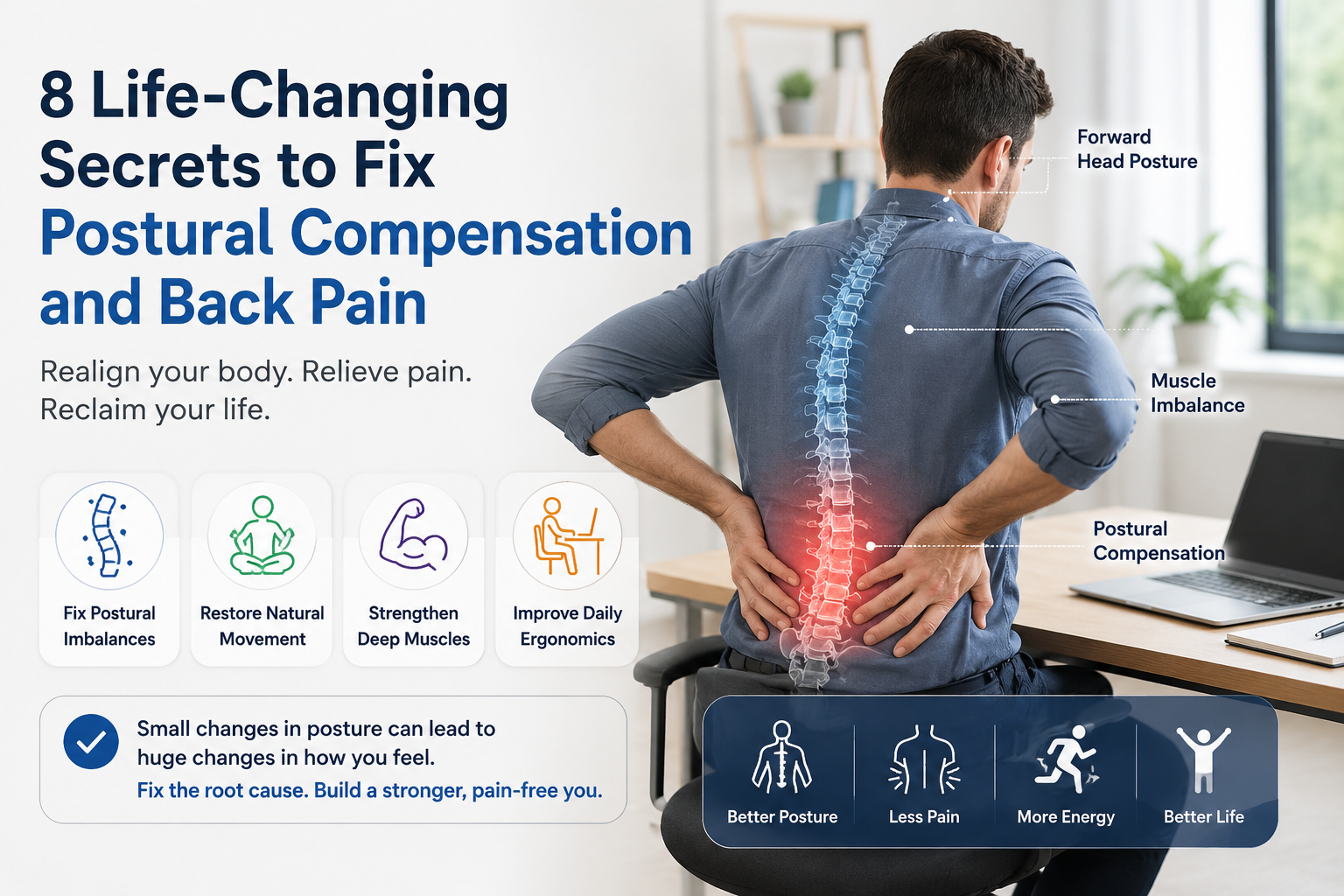
  • ​8 Life-Changing Secrets to Fix Postural Compensation and Back Pain

    ​8 Life-Changing Secrets to Fix Postural Compensation and Back Pain

    Postural Compensation and pelvic imbalance in older women
    Chronic posture imbalance affecting the back, pelvis, and lower body.

    8 Life-Changing Secrets to Fix Postural Compensation and Back Pain

    1. Introduction: The Invisible Burden of Decades

    Understanding body alignment is often the first step toward resolving chronic lower back pain that has lasted for years. In many real-life cases, persistent discomfort is not isolated to one muscle or joint. Instead, the body develops long-term compensation patterns that slowly affect posture, breathing, balance, and movement.

    Many women assume lower back pain or pelvic heaviness are simply part of aging. However, from a structural perspective, these symptoms may reflect years of forward weight shift, muscular guarding, and movement imbalance.

    Your body constantly tries to prevent you from falling. When the center of gravity changes, the nervous system automatically reorganizes muscle tension to keep you upright. Over time, this protective strategy can become deeply ingrained.

    Over time, these Postural Compensation patterns may affect the entire body.


    2. A Real-Life Perspective: The “Leaden Body” Feeling

    A woman in her 60s came seeking help for what she believed was ordinary lower back pain.

    “My legs feel heavy like lead,” she explained.

    After evaluation, it became clear that the lower back itself was not the primary issue. For decades after childbirth, her upper body weight distribution had gradually shifted forward. Her shoulders rounded inward, the rib cage became compressed, and her pelvis continuously tightened to stabilize the body.

    The tension pattern had become so familiar that her nervous system accepted it as normal.


    3. The Biomechanical Shift After Motherhood

    Pregnancy changes the body’s center of gravity dramatically. During this period, the spine, pelvis, and lower body adapt in order to maintain balance.

    For some women, those altered movement patterns never fully reset.

    Years later, they may continue walking, standing, and breathing with the same forward-dominant posture developed decades earlier. This can create excessive stress throughout the lower back, hips, knees, and feet.

    The Hidden Forward Pull

    Even a small forward shift in body weight can place enormous tension on the posterior chain muscles. The upper back stiffens, the pelvis braces, and the body gradually loses fluidity.

    Over time, many people begin experiencing:

    This type of Postural Compensation gradually increases muscular stress.

    • rounded upper back posture
    • shallow breathing
    • pelvic heaviness
    • foot pressure imbalance
    • chronic muscular tightness
    • fatigue while standing

    4. Why the Feet Matter More Than Most People Realize

    Calf tension and foot pressure patterns related to posture imbalance
    Chronic posture imbalance may gradually affect calf tension, foot pressure, and walking stability.

    The feet are often the final “shock absorbers” of long-term imbalance.

    Long-term Postural Compensation often changes foot pressure patterns and standing stability.

    This type of Postural Compensation gradually increases muscular stress.

    In this case, the tissue beneath the toes and forefoot had become stiff and dense, almost like the feet were constantly bracing against the ground.

    When pressure distribution changes for many years, the body loses its natural spring-like movement. Standing becomes exhausting, and even getting up from a chair may feel unusually difficult.

    Many people focus only on the painful area while ignoring the foundation underneath them.


    5. The Fascial Connection and Structural Bracing

    Muscles move the body, but fascia helps maintain long-term tension patterns.

    Under chronic stress, connective tissue can gradually harden and reinforce protective postures. This often creates the sensation of stiffness, heaviness, and restricted movement throughout the torso and pelvis.

    Hydration, breathing mechanics, circulation, and movement quality all influence how flexible these tissues remain over time.


    6. Breathing, Rib Cage Compression, and Stress

    One overlooked factor in chronic discomfort is breathing restriction.

    When the rib cage collapses forward, the diaphragm cannot move freely. This often leads to shallow chest breathing, increased stress signaling, and persistent muscular guarding.

    The body may remain in a low-level “protective mode” for years without the person fully realizing it.

    Restoring natural rib cage movement can significantly reduce overall tension patterns.


    7. Re-Educating Movement Patterns

    Long-standing movement habits do not disappear overnight.

    The nervous system must gradually relearn safer and more balanced movement strategies. Small changes in foot pressure, pelvic alignment, breathing, and walking mechanics can create meaningful improvements over time.

    Many people report:

    • lighter legs
    • easier standing
    • reduced pelvic pressure
    • improved breathing
    • less foot discomfort
    • better body awareness

    8. Moving Toward a Lighter Body

    True physical comfort is not simply the absence of pain.

    It is the feeling that the body no longer has to fight gravity every moment of the day.

    When balance improves and unnecessary muscular guarding decreases, people often describe their bodies as feeling “lighter” and less compressed.

    Especially for women who have spent decades compensating after pregnancy and childbirth, restoring body awareness and movement quality can be an important part of long-term well-being.

    https://youtu.be/5GBP9frJbW4?si=i5F4TXUMG319uGjm

    FAQ

    Can chronic posture imbalance improve after many years?

    According to Harvard Health, posture and movement patterns may influence chronic musculoskeletal discomfort.

    Harvard Health

    Yes. The nervous system can adapt throughout life when movement patterns, breathing, and body awareness are gradually retrained.

    Reducing Postural Compensation often begins with improving balance, breathing, and movement awareness.

    Why does my pelvis feel heavy when standing up?

    Pelvic heaviness is often connected to muscular bracing, altered weight distribution, restricted breathing mechanics, and long-term compensation strategies.

    Why do my feet feel stiff and pressured?

    The feet frequently absorb stress created higher up in the body. Chronic imbalance can change pressure patterns and reduce natural flexibility in the foot tissues.

    You can also explore more posture and body balance articles on our homepage.

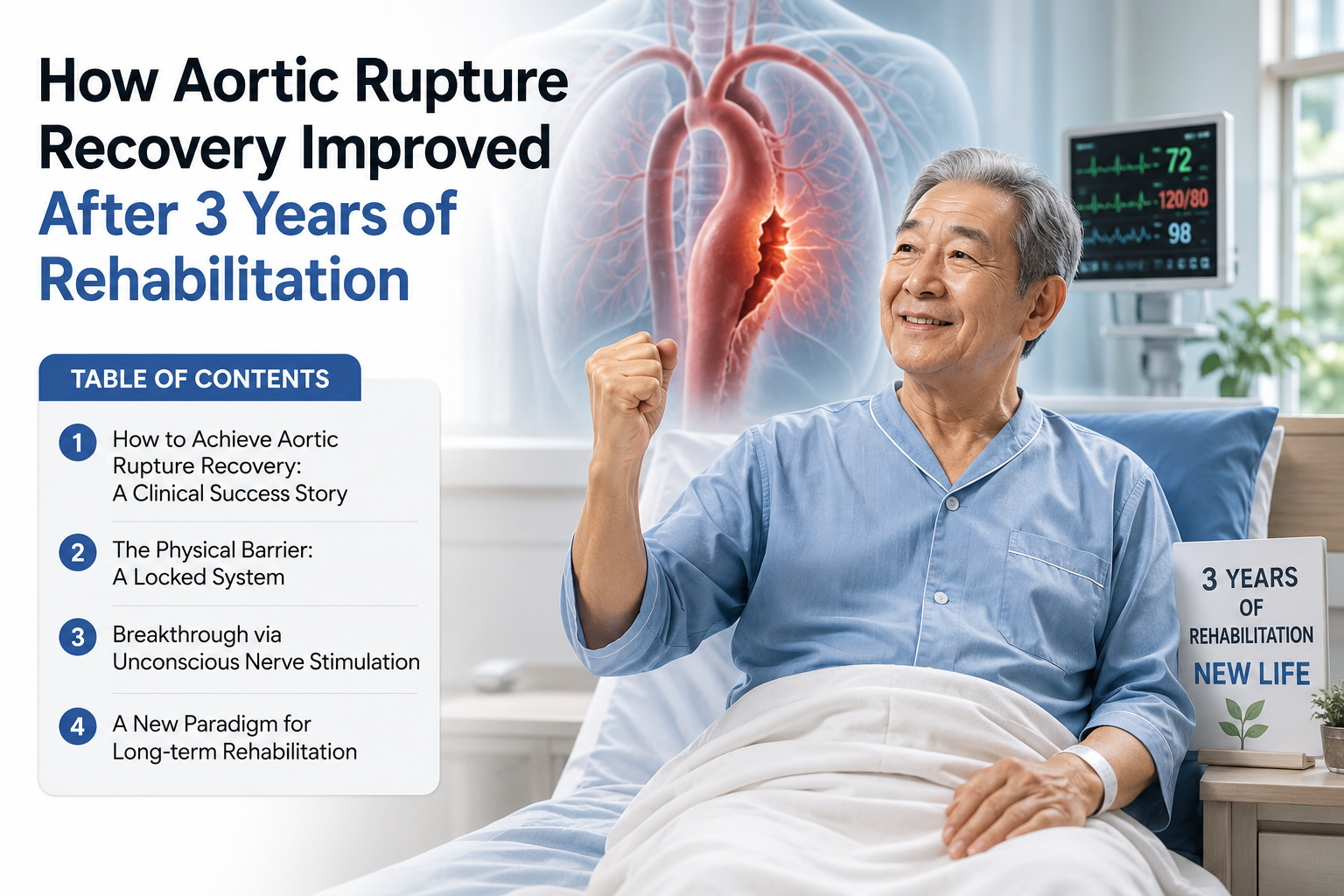
  • How Aortic Rupture Recovery Improved After 3 Years of Rehabilitation

    How Aortic Rupture Recovery Improved After 3 Years of Rehabilitation

    How to Achieve Aortic Rupture Recovery: A Clinical Success Story

    Recovering after an aortic rupture can be a long rehabilitation journey. This report explores how supportive nerve stimulation and circulation-focused care were used alongside long-term rehabilitation to improve mobility and daily function.

    ​Survival after an aortic rupture is a medical phenomenon. This Aortic Rupture Recovery case study highlights a patient who survived the critical “Golden Hour” six years ago but was left with severe physical impairments. After two years of intensive hospital care and four years of continuous rehabilitation, the medical team concluded that no further progress could be made. The client was left dependent on two canes, struggling with a lower body that felt “disconnected” from the brain.

    ​The Physical Barrier: A Locked System

    Rehabilitation care session
    Aortic Rupture Recovery

    Long-term walking rehabilitation.
    Walking rehabilitation

    ​When the client first arrived at the Haim Body Balance Center, the physical state was more than just “weakness.” Walking was impossible without the heavy support of two canes. A striking symptom was the inability to lift the legs while sitting. It wasn’t just muscle atrophy; the neurological pathway to the femoral nerve was effectively “locked.” Even if the legs were lifted manually, they would drop instantly, lacking any neurological “hold.” Furthermore, a massive, involuntary contraction around the abdomen acted like a heavy girdle, creating constant downward pressure on the lower body.

    ​Breakthrough via Unconscious Nerve Stimulation

    ​Our approach to successful Aortic Rupture Recovery focused on “Unconscious Nerve Stimulation” through specific reflex zones in the feet. For a patient with low autonomic nervous system (ANS) efficiency, the initial response is unique.

    ​By applying targeted pressure to specific reflex points for just three seconds, we triggered a “sizzling” (jingle-jingle) sensation. This is a vital clinical sign in Aortic Rupture Recovery. It indicates that the stagnant neurological pathways are being reactivated. Much like releasing a parking brake on a car, this stimulation sent a sudden signal to the brain, overriding the “lock” on the femoral nerves.

    ​Removing Physical Blockages: The Ankle Congestion

    ​Beyond the nerves, a major physical barrier was identified around the ankles. Years of poor circulation led to:

    • Chronic Inflammatory Deposits: The area around the ankle joints was congested with hardened, fatty masses.
    • Circulatory Stagnation: These deposits were so dense that they physically choked the blood flow, exacerbating the numbness.

    ​We initiated an intensive plan to manually break down and release these hardened inflammatory deposits. By physically clearing these “clogs,” we restored the structural freedom the ankle needed to move, which in turn improved the overall circulation, a crucial step in the Aortic Rupture Recovery process.

    ​A New Paradigm for Long-term Rehabilitation

    ​Rehabilitation is not a sprint; it is a marathon. Over three years of consistent management, the transformation has been remarkable. The “lock” on the thigh nerves has loosened, allowing for conscious leg movement. The dependence on the two canes has shifted from a desperate necessity to a supportive aid.

    This Aortic Rupture Recovery case suggests that long-term rehabilitation and supportive neurological care may help improve mobility and daily function after severe physical limitations. By addressing unconscious nerve responses, circulation issues, and overall body balance, gradual physical improvement may continue over time.

    ​Today, the patient still faces challenges, but the “powerless” legs of years ago are gone. There is now strength, coordination, and, most importantly, hope. For those suffering from the after-effects of major surgery, remember: when one door closes, another pathway through neurological stimulation may open.

    More information about aortic conditions and rehabilitation can be found through Mayo Clinic resources.

    Relaxing healing music may also help support emotional comfort during long-term rehabilitation.

    For more information about body balance care and rehabilitation support, visit Haim Body Balance Center.https://soletobody.com

  • 7 Hidden Reasons Why Your BPPV Keeps Coming Back

    7 Hidden Reasons Why Your BPPV Keeps Coming Back

    For many struggling with BPPV (Benign Paroxysmal Positional Vertigo), the world often feels like an unstable place. You might have tried the Epley maneuver or vestibular suppressants, only to find the spinning sensation returning weeks or months later. This recurrence is not just bad luck; it is often a sign of a deeper systemic imbalance.

    ​As a director with 12 years of clinical experience in Body Alignment and Unconscious Nerve Management, I have found that chronic vertigo is rarely just an isolated “inner ear problem.” It is a manifestation of a “hardware” misalignment and a “software” error in your nervous system.

    1. The Hardware: Why Your Neck Controls **BPPV** Balance

    ​7 Reasons Why Your BPPV Keeps Coming Back & How to Fix It
    Precision realignment of the upper cervical spine (C1-C2) to stabilize the vestibular system.

    ​Your vestibular system doesn’t work in a vacuum. It relies on Cervical Alignment, specifically the C1 and C2 vertebrae.

    When your posture is misaligned—due to “Tech Neck” or accumulated stress—it creates tension in the deep neck muscles. This tension restricts micro-circulation to the inner ear and sends conflicting signals to the brain. If the physical “hardware” of your neck is tilted, the balance sensors in your ear will eventually fail.

    ​[The Anatomy of Equilibrium]

    ​The human vestibular system is housed within the temporal bone of the skull. This delicate architecture relies on precise pressure levels and fluid dynamics. When your cervical spine is misaligned, it creates abnormal tension in the surrounding soft tissues, potentially interfering with the neurological signals sent to the brain. By focusing on Body Alignment, we address the root mechanical cause of BPPV, rather than just treating the temporary symptoms of dizziness.

    2. The Software: Stabilizing **BPPV** through the Nerve System

    ​The Autonomic (Unconscious) Nervous System is the software that keeps you upright without conscious effort.

    Anatomy of the inner ear and vestibular nerve distribution for BPPV recovery
    Anatomy of the inner ear and vestibular nerve distribution for BPPV recovery

    Chronic physical misalignment keeps your nervous system in a state of “High Alert” (Sympathetic dominance). In this state, your brain loses its ability to filter out minor balance errors. This is why many patients feel “heavy-headed” or “spaced out” even after the ear crystals are back in place.

    3. Essential **BPPV** Prevention: Daily Habits for Vertigo

    • Hydration: The fluid in your inner ear is sensitive to hydration levels. Ensure consistent water intake.
    • Anti-Inflammatory Sleep Posture: Avoid sleeping on your stomach, which twists the upper neck. Use a supportive pillow that maintains the natural curve of your neck.
    • Digital Detox: Overusing smartphones fatigues the visual system, forcing the vestibular system to work twice as hard.

    ​Home Rehabilitation: 3 Steps to Reclaim Your Balance

    1. The Ocular-Cervical Reset: Keep your head still. Move only your eyes to the far right for 30 seconds, then to the far left for 30 seconds. This resets the nerves connected to your balance centers.
    2. VOR Training: Focus on your thumbnail while slowly shaking your head “No.” This retrains your brain to maintain stability during motion.
    3. Proprioceptive Grounding: Stand barefoot and focus on the weight distribution on your feet. Grounding tells your brain the foundation is safe, allowing neck muscles to relax.

    ​True recovery isn’t just about fixing the ear; it’s about realigning the body and calming the unconscious nerves. When your structural balance is restored, your nervous system can finally return to equilibrium.

    ​[Frequently Asked Questions About BPPV]

    Q: https://en.wikipedia.org/wiki/Benign_paroxysmal_positional_vertigoCan stress trigger BPPV?

    A: Stress keeps your Unconscious Nerve System on high alert, lowering your threshold for dizziness.

    Q: Why does Tech Neck make it worse?

    A: Cervical misalignment from smartphones restricts blood flow to your vestibular system, making BPPV recurrence more likely.

    Q: How long does recovery take?

    A: Most patients see significant improvement in 4 to 6 weeks through consistent Body Alignment and neural stabilization.

    ​[Closing Thoughts]

    ​True recovery is a System Restoration. By realigning your hardware and calming your software, you can finally step off the merry-go-round of BPPV. At Haim Body Balance Center, we are here to help you find your center again.

    [Healing Music for Nerve Stabilization] https://youtu.be/Qb5hAzuCOB4?si=yNbJdOM6tNkUmkBKClick here to listen

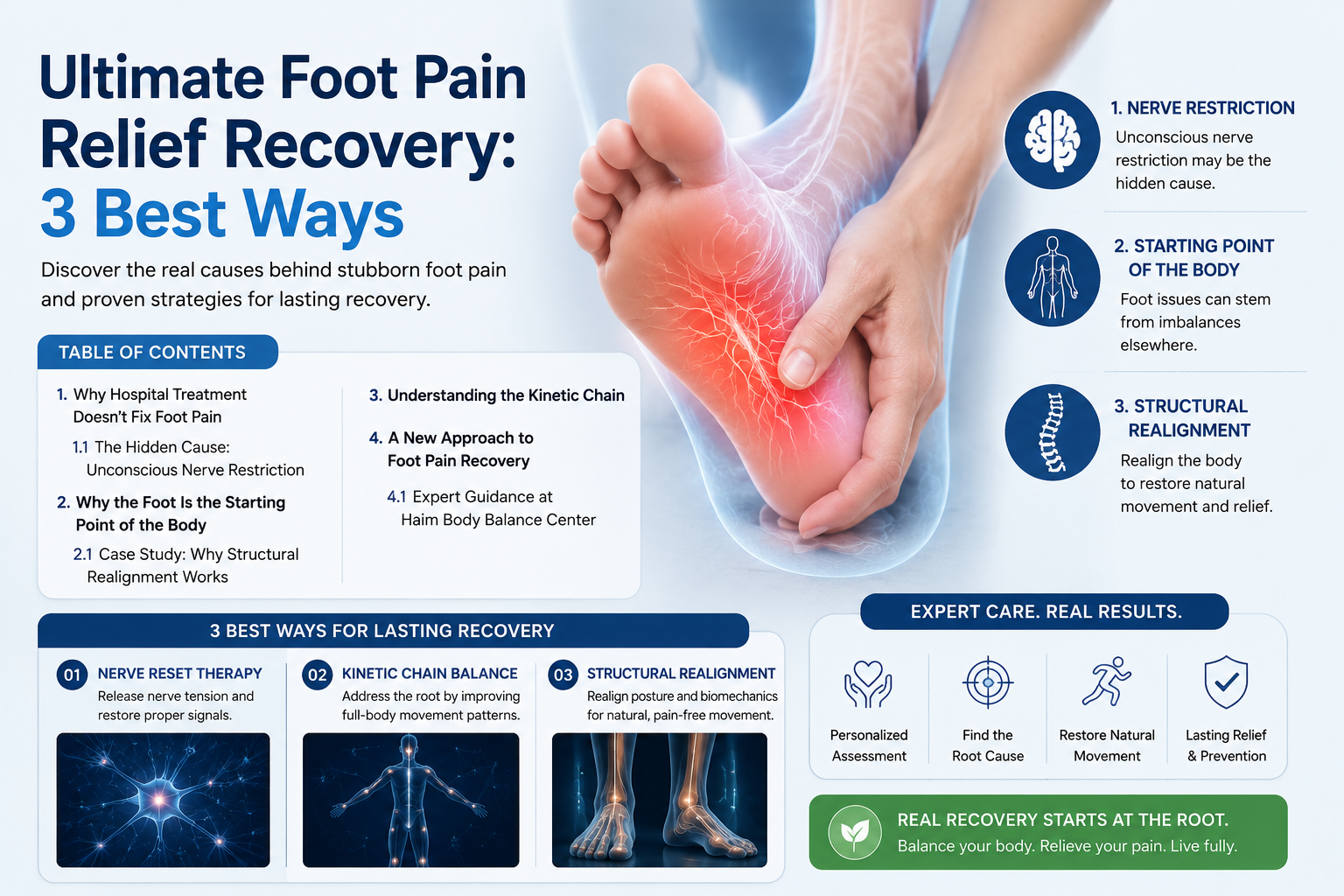
  • Amazing Ultimate Foot Pain Relief Recovery: 3 Best Ways

    Amazing Ultimate Foot Pain Relief Recovery: 3 Best Ways

    • Ultimate Foot Pain Relief Recovery: 3 Reasons It Returns

    Foot pain is a common struggle for many. Often, even after treatment, the pain returns because the symptoms were addressed rather than the root cause. Real recovery requires a deeper look at your body’s foundation and how it communicates through the nervous system.

    Why Hospital Treatment Doesn’t Fix Foot Pain

    Foot Pain Treatment and Unconscious Nerve Management
    Professional alignment care at Haim Body Balance Center focuses on restoring unconscious nerve flow.”

    Most hospital treatments focus on reducing pain symptoms.
    Medication, injections, or physical therapy may help temporarily,
    but they do not solve the root cause of foot pain.

    That is why many patients experience repeated foot pain
    even after months or years of treatment.

    The Hidden Cause: Unconscious Nerve Restriction

    Foot pain is often connected to imbalance in the body.
    Left and right body alignment becomes uneven,
    and unconscious nerve flow becomes restricted.

    ​Most treatments offer only temporary relief because they ignore the unconscious nervous system. Our bodies maintain balance through a network of nerves that function without our conscious effort. When structural imbalance occurs, these nerves become restricted or “trapped.”

    When this happens, circulation is blocked,
    and pressure builds up in specific areas of the foot,
    causing pain.

    Why the Foot Is the Starting Point of the Body

    Foot pain relief and unconscious nerve management at Haim Body Balance Center
    A healthy foot arch is the foundation of full-body alignment. Correcting the skeletal structure starts from here.

    Case Study: Why Structural Realignment Works

    ​Many clients visit Haim Body Balance Center after trying various treatments for years. One common case involved a runner who suffered from chronic heel pain for over two years. Traditional physical therapy only provided temporary relief.

    ​Upon analysis, we discovered that the issue wasn’t the heel itself, but a collapsed medial arch causing a twist in the ankle alignment. This physical shift was compressing the unconscious nerves, preventing natural recovery. By focusing on structural realignment and nerve flow management, the client was able to return to running without pain within a few weeks. This is the power of addressing the root cause.

    Understanding the Kinetic Chain

    ​In corrective management, we talk about the ‘Kinetic Chain.’ Your body is a series of interconnected segments. The feet are the first link. If the first link is weak, the force of every step travels incorrectly through your joints. Proper body alignment ensures that the mechanical stress of movement is distributed evenly, protecting your spine and nervous system for the long term.

    Professional Guidance for Health Care

    ​Finding effective foot pain relief often involves understanding the common causes related to your lifestyle. While standard physical therapy can help, it is crucial to receive personalized analysis for long-term recovery. Please note that this information is for educational purposes and should not be taken as direct medical advice. If you are seeking a sustainable solution, professional corrective management is the key to your overall health care and structural well-being.

    A New Approach to Foot Pain Recovery

    ​Instead of focusing only on temporary pain relief, it is crucial to check the overall body balance. At Haim Body Balance Center, we identify hidden imbalances starting from the feet. Our goal is to improve circulation, restore natural movement, and support a more comfortable daily life through expert alignment care.

    How to Support Your Body Alignment at Home:

    1. Check Your Shoes: Worn-out soles can worsen body imbalance. Replace shoes that show uneven wear on one side.
    2. Barefoot Walking: Whenever possible, walk barefoot on natural surfaces to stimulate the sensory nerves in your soles.
    3. Arch Stretching: Gently stretch your toes and arches every morning to improve circulation and wake up your nervous system.

    ​While these tips help, persistent pain requires professional analysis to identify the hidden structural cause.

    Expert Guidance at Haim Body Balance Center

    ​At Haim Body Balance Center, we look beyond the pain to find hidden imbalances starting from your feet. With over 12 years of clinical expertise in Yangsan, I focus on the connection between your skeletal structure and the nervous system. True wellness is about restoring harmony to your entire body.

    ​For more information, please check the Autonomic Nervous System and visit the Haim Body Balance Center for expert care.

  • Sudden Leg Weakness: 7 Secrets to Fix Your Nervous System

    • Why Sudden Leg Weakness Happens: 5 Steps to Reset Your Nerves

    ​Have you ever felt your leg suddenly give out while walking, or found yourself leaning to one side without realizing it? If you have been pushing through with more squats and leg presses only to find the problem persisting, the true cause might be hidden deep within your nervous system—not just your muscles.

    The Frustration of an Unresponsive Body: A Case Study

    ​A male client in his late 60s recently visited our center struggling with two debilitating concerns that seemed unrelated:

    • Gait Instability: A noticeable lean while walking and a sudden “giving out” of the right leg.
    • Severe Insomnia: Months of sleepless nights leading to extreme chronic fatigue.

    ​Most distressingly, his right leg would occasionally react like “a fish flopping on the ground”—unstable, uncontrolled, and weak. Despite medical exams showing no specific muscle disease, he was losing both his mobility and his peace of mind.

    Why Muscle Strength Isn’t Always the Answer: The “Nervous System Brake”

    ​Many assume that leg weakness is simply a sign of muscle loss (Sarcopenia) and try to “force” their way through it with exercise. However, this often fails because the problem is neurological.

    ​Our body operates on a survival mechanism called the “Unconscious Nerve Brake.” When your brain detects that your foundation—your feet—is unstable, it concludes that moving forward is dangerous. To prevent a fall or a bone fracture, the nervous system intentionally shuts off power to the muscles.

    • Loss of Grounding: If your feet aren’t making proper sensory contact with the floor, the brain triggers an alarm.
    • Chain Reaction: This instability travels from the feet to the pelvis and spine, keeping the nervous system in a constant “fight or flight” mode.
    • The Sleep Connection: This persistent internal tension makes it impossible for the brain to transition into a deep sleep state, leading to chronic insomnia.

    If you are suffering from Sudden Leg Weakness, checking your body balance is the first step.

    Restoring the System: The Path to Stable Movement

    Sudden Leg Weakness*
    Add an image with your Focus Keyword as alt text
    Sudden Leg Weakness
    Detailed clinical analysis of how foot sensory alignment impacts the nervous system flow for clients experiencing Sudden Leg Weakness.

    ​At the Haim Body Balance Center, we don’t just “strengthen” muscles; we restore the connection. Recovery for this client focused on

    1. Reawakening Foot Sensory Input: Training the feet to tell the brain, “The ground is safe and stable.”
    2. Correcting Structural Alignment: Rebalancing the left-right lower body to release the nervous system’s emergency brake.
    3. Normalizing Neural Flow: Releasing blocked tension to allow the body to move without “braking” itself.
    4. If you are suffering from Sudden Leg Weakness, checking your body balance is the first step.

    Nutritional Support for Nerve Relaxation: Magnesium Malate

    ​To complement physical realignment, we recommended Magnesium Malate as part of a daily routine. Unlike other forms of magnesium, the “Malate” version is excellent for:

    • Releasing Muscle Tension: Helping the body physically let go of accumulated stress.
    • Boosting Energy Production: Reducing the fatigue caused by inefficient movement.
    • Improving Sleep Quality: Calming the nervous system to allow for a natural transition into rest.

    Is Your Body Sending These Warning Signals?

    ​If you identify with any of the following, your body balance might be the root cause:

    • ​You experience sudden leg weakness despite regular exercise.
    • ​You feel like your body is constantly leaning or “drifting” to one side.
    • ​You suffer from physical tension that prevents you from falling asleep.
    • ​The soles of your shoes wear down significantly faster on one side.

    Reclaim Your Balance and Your Rest

    If you are suffering from Sudden Leg Weakness, checking your body balance is the first step.

    ​Sudden instability and insomnia are not just “part of getting older.” They are SOS signals from your body. By looking at the body as a connected system—starting from the feet and addressing the unconscious nervous system—you can regain your stability and your sleep.

    Don’t wait for a fall to take action. At Haim Body Balance Yangsan Center, we specialize in identifying these hidden imbalances to help you return to a comfortable, active life.

    Haim Body Balance Center: Sudden Leg Weakness Solution*

    ​Learn more about Haim Body Balance Center