Have you ever sat in a doctor’s office, holding a stack of “perfectly normal” test results, while still dealing with a throbbing skull? If you are reading this, you might know the frustration of unexplained headaches all too well:
A tight, invisible band wrapped around your forehead.
A heavy, dull pressure anchoring on one side of your head.
One ear that constantly feels like it’s underwater.
A strange, floating dizziness that intensifies when you are tired or stressed. You’ve probably had the MRIs. You’ve seen the ENT specialists. They look at the scans, smile, and tell you, “Everything is fine. There is nothing wrong.” But you don’t feel fine. You feel it every single day. Here is the story of a client who walked into our center with these exact symptoms—and how unlocking one core muscle can finally relieve unexplained headaches.
The Gap Between “Normal Scans” and Living Without Unexplained Headaches
When medical tests come back clear, most people feel a brief moment of relief, followed by deep confusion. If there is nothing wrong, why do I keep getting these unexplained headaches? The answer is simple: Scans show structure, not function. An MRI can detect tumors or neurological diseases, but it cannot see:
Chronic muscle guarding
Functional tension patterns
An overworked, hyper-vigilant nervous system These are not structural diseases; they are states of imbalance. Yet, they can cause very real, persistent, and distressing physical symptoms. To find real relief from unexplained headaches, we must look beyond the skull and investigate how the rest of our body functions as a whole. According to clinical research on unexplained headaches, muscle tightness and dysfunction in the neck and shoulder region are major contributors to persistent head pressure. But what causes this muscle tightness in the first place?
The Core Muscle You Need to Unlock: The Diaphragm
During our initial assessment of this client, we didn’t start with his head. We looked at his whole body as an interconnected system. While his standing posture looked fine at a glance, we noticed something unexpected during the physical assessment: the tissue just below his left ribcage was incredibly rigid. The area around his diaphragm—the primary core muscle of respiration—was hard, almost locked in place. When we gently pressed it, he winced.
“I didn’t even know that was tight,” he said.
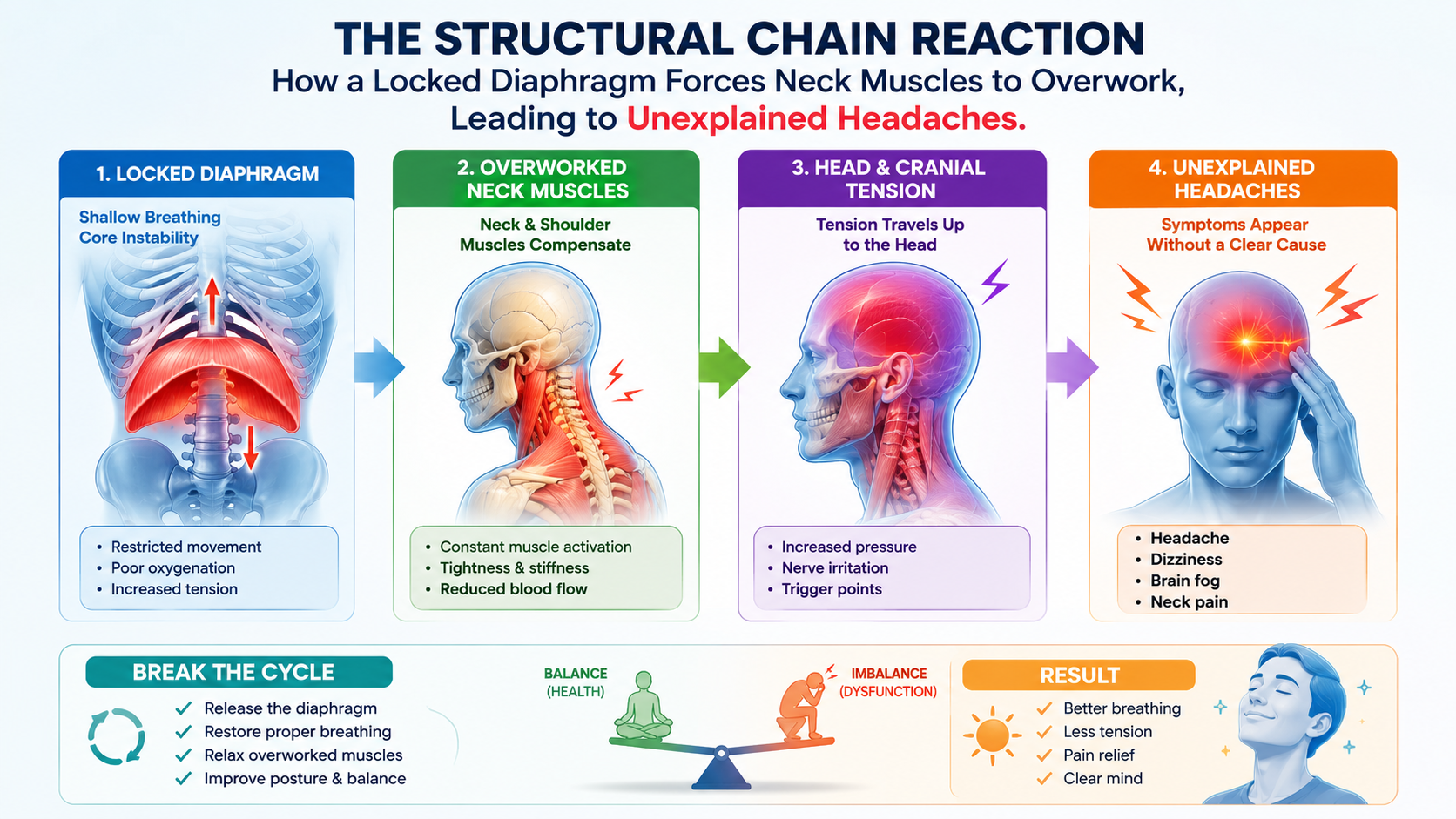
How a locked diaphragm triggers muscular imbalance, leading to neck tension and unexplained headaches.
   [ Locked Diaphragm ]  -->  Limits deep diaphragmatic breathing
            │
            ▼
   [ Overworked Neck Muscles ]  -->  Step in to lift the ribcage (Scalenes, Suboccipitals)
            │
            ▼
   [ Head & Cranial Tension ]  -->  Triggers unexplained headaches, forehead heaviness & dizziness
How a Tight Diaphragm Triggers Unexplained Headaches
When your diaphragm stops doing its job, your body doesn’t stop breathing. Instead, it adapts. It recruits “helper” muscles in your neck and shoulders—specifically the scalenes and suboccipitals—to manually pull your ribcage up with every single breath. These small neck muscles were never designed for 24/7 labor. Over time, they become exhausted, shorten, harden, and pull relentlessly on the base of your skull. This structural chain reaction is the hidden root cause of your chronic and unexplained headaches:
Temple Tension: Caused by overworked neck and jaw muscles pulling on the facial fascia.
Forehead Heaviness: Triggered by restricted blood flow and tight cranial tissue.
Ear Fullness: Caused by tension radiating near the jaw, compressing the eustachian tubes.
Dizziness: Triggered when tight muscles at the base of the skull send confused, hyper-tense signals to your brain’s balance centers. Often misdiagnosed as standard migraines, these unexplained headaches are actually biomechanical alarms telling you that your breathing mechanics are completely out of order.
The structural chain reaction: How a locked diaphragm forces neck muscles to overwork, leading to unexplained headaches.
Letting the Body Breathe Again
Our sessions are slow, quiet, and gentle. We don’t crack joints or force the tissue with heavy pressure. Instead, we focus on helping the diaphragm soften, guiding the nervous system out of “fight-or-flight” and into safety. As that deep, core tension began to melt, we worked our way up the ribcage, eased the overworked muscles of the neck, and finally addressed the forehead. About twenty minutes into the session, the client took a long, deep, audible sigh. His shoulders visibly dropped, and his history of chronic, unexplained headaches began to make perfect sense to him.
“Something just let go,” he whispered.
When he stood up at the end of the session, his face looked entirely different. The heavy, exhausted cloud had lifted from his eyes. “How did you know exactly where it hurt?” he asked. “I never even told you my forehead was tight.” “Your body told us,” was the honest answer.
Self-Check: Are Unexplained Headaches Stemming from Your Respiration?
If you are experiencing unexplained headaches, try this simple, two-step check at home to see if your breathing pattern might be contributing to your symptoms.
1. The Hand-on-Chest Test
Place one hand on your chest and one hand on your belly. Take a deep breath.
Does the hand on your chest rise first and highest? * Do your shoulders shrug upward toward your ears?
If yes, your neck muscles are working overtime to pull air in, bypassing your diaphragm.
2. The Rib Release Breath (A Daily Practice)
To help invite your diaphragm back into the conversation and find relief from unexplained headaches, try this gentle reset:
Sit comfortably and wrap your hands gently around the sides of your lower ribcage.
Inhale slowly through your nose, focusing on pushing your ribs outward into your hands (like an umbrella opening), rather than lifting your chest upward.
Exhale slowly through your mouth, letting your ribs sink back inward.
Practice this for 2 to 3 minutes when you feel head pressure rising.
Listen to the Whispers of Your Body
Watch this self-care guide to release deep physical tension and find natural relief from unexplained headaches.
Your body rarely starts by shouting. It whispers first. It whispers with a slight neck stiffness in the morning, a mild ear fullness that comes and goes, or unexplained headaches at the end of a long workday. These are not imaginary complaints, and they are not “all in your head.” They are physical signals that your breathing, posture, and nervous system have drifted out of balance. If your symptoms are new, sudden, or worsening, always consult a medical doctor first. Ruling out underlying medical conditions is an essential step. But if you have done that, and you are still searching for answers, it might be time to stop looking at the scans and start listening to your body. Treating unexplained headaches requires an integrated approach that addresses the root muscular imbalances, not just the symptoms. If you are ready to stop managing symptoms and start restoring your posture, explore our Sole to Body balancing services to find the root cause of your tension and reclaim your daily comfort.
Most parents assume that severe teenager muscle stiffness, postural tension, and chronic circulation problems are adult concerns — the inevitable toll of decades spent at a desk.
Chronic muscle stiffness in teenagers is no longer rare — it now appears at the same intensity once seen only in adult office workers.
But what happens when a fifteen-year-old walks through your door carrying the same physical burden as a forty-five-year-old office worker? This is exactly what we encountered recently in our assessment, revealing a deeply concerning trend in teenager muscle stiffness.
”His Shoulders Feel Like Stone”
A high school freshman recently came in with his mother. She was calm, but clearly worried.
”His shoulders feel like stone. Even when he lies down, his body posture looks uncomfortable.”
At first glance, he appeared to be simply another tired student — the kind whose exhaustion reads as ordinary in environments where academic pressure begins before sunrise and ends well after midnight.
But as we began a careful postural and muscular assessment, the picture became far more complex. This wasn’t just temporary fatigue; it was a severe case of developmental teenager muscle stiffness.
His daily routine told the real story:
Heavy Backpack: A heavy bag carried every day across both shoulders.
Prolonged Sitting: Six to eight hours of seated study, often with the head pushed forward.
Gaming Habits: Evening gaming sessions lasting two to three hours, body hunched toward the screen.
This is not an unusual schedule for high school students today. In fact, it is almost universal. What was unusual was how completely his body had adapted to it — and how it accelerated his physical degradation.
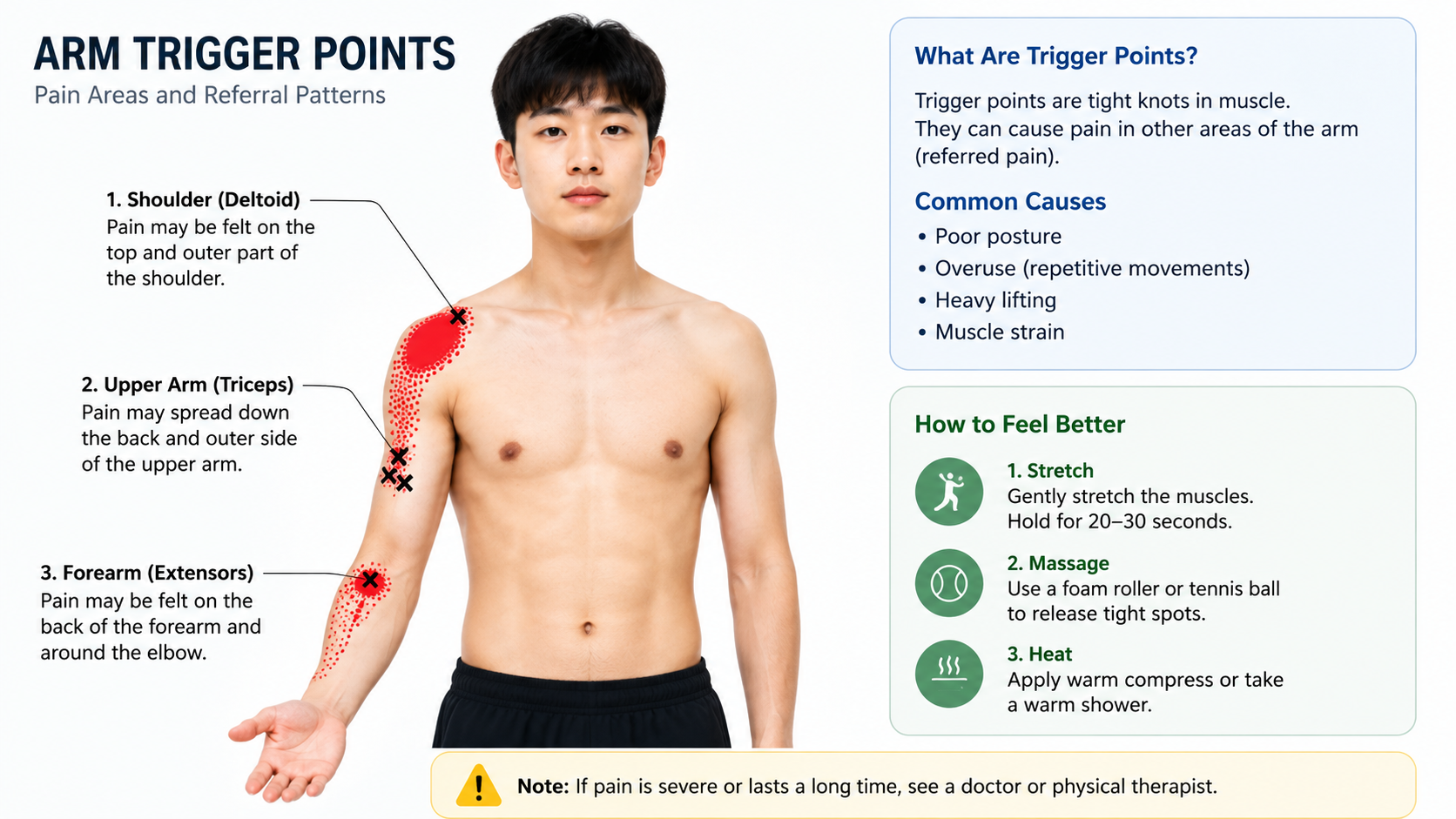
Key muscle trigger points commonly activated in teenagers with chronic muscle stiffness — including the pectoralis major, deltoid, biceps brachii, and infraspinatus.
When we observed his posture lying flat on the treatment bed, several indicators of advanced teenager muscle stiffness immediately stood out.
The arms and shoulders were in a state of chronic contraction. Not simply “tight” in the way a muscle feels after exercise — but hardened, with individual muscle groups compressed together and resistant to movement. The right forearm, in particular, felt dense and immobile around the biceps and triceps region. The tissue had lost its natural pliability.
This is a condition sometimes described in clinical body work as myofascial densification — where layers of muscle and connective tissue lose their ability to slide and glide freely against each other, creating a sensation of thickness and restriction that goes beyond ordinary soreness.
The lower body told a parallel story of compensation. His left foot had fallen outward passively, with the outer ankle bone resting against the bed without any muscular control holding it in neutral alignment. This kind of passive external rotation suggests that the stabilizing muscles of the hip, lower leg, and foot were no longer maintaining their baseline tone — a common compensatory pattern when the upper body is chronically overloaded with heavy tension.
In body balance assessment, we rarely look at one region in isolation. The human body communicates systemically, especially when dealing with chronic teenager muscle stiffness.
Why the Body Responds to Teenager Muscle Stiffness
According to Mayo Clinic, chronic muscle tension that persists beyond normal fatigue requires professional assessment. The human muscular system is designed around a fundamental principle: tension and release.
The human muscular system is designed around a fundamental principle: tension and release.
Muscles contract to create movement and maintain posture, then release to allow recovery and circulation. When this cycle is disrupted — by prolonged static postures, chronic psychological stress, or insufficient movement — the system defaults to a state of sustained contraction.
For teenagers, the compounding factors are significant. The table below breaks down how modern daily habits lead to systemic physical lockdown:
Heavy backpack load: Forward head posture, upper trapezius compression
Prolonged desk sitting: Hip flexor shortening, thoracic rounding
Low movement volume: Reduced fascial hydration, circulation stagnation
None of these factors alone would cause serious dysfunction. Together, sustained over months and years during a period of active skeletal and muscular development, they create the perfect storm for chronic teenager muscle stiffness.
1. Tension Release Through Traditional Cupping Therapy
Traditional cupping therapy was applied to the forearm, shoulder, and clavicle region. This approach uses localized suction to decompress compressed tissue layers, encourage circulatory movement, and interrupt sustained muscular contraction patterns.
After the session, darker reaction marks appeared across the treatment area — a common response in cases of long-term muscle tension and reduced local circulation, well-recognized in traditional East Asian body care traditions.
The student’s immediate feedback was telling:
“My arms feel lighter now. My shoulders move more easily.”
This is not simply a subjective impression of relaxation. When compressed tissue is decompressed and circulation is encouraged to flow through areas that have been chronically restricted by teenager muscle stiffness, the perceived weight and resistance in the limbs decreases noticeably within the same session.
2. Foot Reflex and Neurological Movement Management
Foot reflex techniques and non-conscious neurological balance management were also applied to the lower extremities.
This component of clinical posture care is essential but often overlooked. The feet are not simply the foundation of standing posture — they are a continuous feedback system sending postural signals upward through the kinetic chain at all times.
When the feet lose their stability and grounding, the body compensates by increasing muscular tension throughout the lower leg, thigh, hip, and eventually the lumbar and thoracic spine. This compensation travels upward, contributing to shoulder and neck tension that appears, on the surface, to be entirely unrelated to the feet.
Addressing the lower body was not secondary. It was essential to solving his upper body stiffness. For a deeper look at how foot health affects whole-body posture, see our guide on ingrown toenails and postural imbalance.
The Upward Chain: Why Foot Instability Reaches the Shoulders
One of the most important concepts in body care is understanding how tension travels through connected systems. When the feet are unstable, the body recruits muscular compensation from progressively higher regions, amplifying the overall teenager muscle stiffness:
[Shoulders & Neck] — Severe stiffness, tension, and persistent pain (Final visible stress point)
By the time a patient notices shoulder stiffness, the pattern may have originated much further down the body — sometimes months or years earlier.
This is why treating only the area of complaint rarely produces lasting results. Comprehensive body balance management works across the full kinetic chain to eradicate teenager muscle stiffness at its source.
Teenager Muscle Stiffness: A Rapidly Growing Modern Pattern
The case described above is not exceptional. Over recent years, posture clinics have seen a consistent, alarming increase in teenagers presenting with physical tension patterns that were previously associated almost exclusively with working-age adults.
The modern lifestyle factors driving this shift are structural and hard to avoid:
Screen time — smartphones, tablets, and computers now occupy several hours of most students’ evenings.
Postural monotony — hours in the same seated position without adequate movement breaks.
Load imbalance — heavy school bags carried asymmetrically over developing spines.
Sleep disruption — late-night studying and blue light screen use reducing restorative rest.
Movement poverty — physical education reduced in favor of intense academic preparation.
Many students normalize their discomfort because it has been present for so long. They say: “I’m just tired from studying,” or “My shoulders are naturally stiff.” These rationalizations are understandable — but they delay the recognition that the body is desperately asking for professional attention.
432Hz healing music for deep relaxation and muscle tension relief.
Why Early Intervention for Teenager Muscle Stiffness Matters
Adolescence is a period of rapid musculoskeletal development. The patterns established during these years — postural habits, muscular tension tendencies, and movement preferences — tend to persist and deepen into adulthood.
This is both a major challenge and a powerful opportunity.
When chronic tension patterns are identified and addressed early, during a period when the body retains high adaptive capacity, the potential for meaningful improvement is significant. Correction becomes exponentially more difficult with each year that compensatory patterns are allowed to consolidate into adult bone and muscle structures.
Early body balance care for teenager muscle stiffness is not a luxury. It is proactive maintenance of a physical system that is still in the process of forming itself.
Appropriate interventions may include:
Postural awareness education — learning what neutral alignment feels like and how to return to it.
Targeted stretching and mobility work — particularly for the hip flexors, thoracic spine, and upper trapezius.
Load management — reassessing backpack weight and carry method.
Movement integration — regular breaks to interrupt prolonged static postures.
Professional body balance assessment — when tension has already become chronic.
A Final Thought on Whole-Body Balance
At the end of the session, the student sat up and rotated his shoulders slowly. The heavy stiffness that had settled into his upper body so gradually that he had stopped noticing it — was, for the moment, completely gone.
His mother watched quietly, then asked: “Why didn’t we seek help sooner?”
It is a question worth sitting with — not just for this family, but for anyone caring for a young person today. The body keeps a strict record of everything it carries. It is worth paying attention before the record becomes a permanent burden.
For those suffering from chronic muscle tension, the frustration of unexplained physical discomfort can be overwhelming. Many people living with this silent struggle of chronic muscle tension hear this disappointing sentence: “Doctor, the pain is still there… but all my test results say I’m completely fine.”
Medical Disclaimer: The information provided in this article is for educational and informational purposes only and is not intended as medical advice. Always consult with a qualified healthcare professional or physician regarding any medical condition, diagnosis, or treatment plan.
A close friend of mine recently shared this frustrating, anxiety-inducing story with me. For nearly six months, he lived with a persistent, nagging discomfort on the right side of his waist and rib area. It wasn’t the kind of sharp, agonizing pain that would send you rushing to the emergency room. Instead, it was a dull, constant tightness—uncomfortable enough to disrupt his focus every single day. Sitting at his desk for more than an hour felt strangely exhausting. Twisting his upper body felt tight and restricted.
To find answers, he visited a major hospital and underwent a series of comprehensive medical examinations. He had an abdominal ultrasound, an MRI of his lumbar spine, and routine blood work. Yet, every single time, the medical reports returned with the same puzzling verdict: “No structural abnormalities found.”
At first glance, hearing this news should have brought a massive wave of relief. But strangely, it had the opposite effect. He asked himself, “If there is absolutely nothing wrong with my body, why do I still feel this discomfort every single second?” What my friend didn’t realize is that his body was experiencing the profound physical effects of chronic muscle tension. When medical scans find nothing, the culprit is almost always rooted in the nervous system and muscular system.
Prolonged sitting with poor posture is a silent trigger for chronic muscle tension.
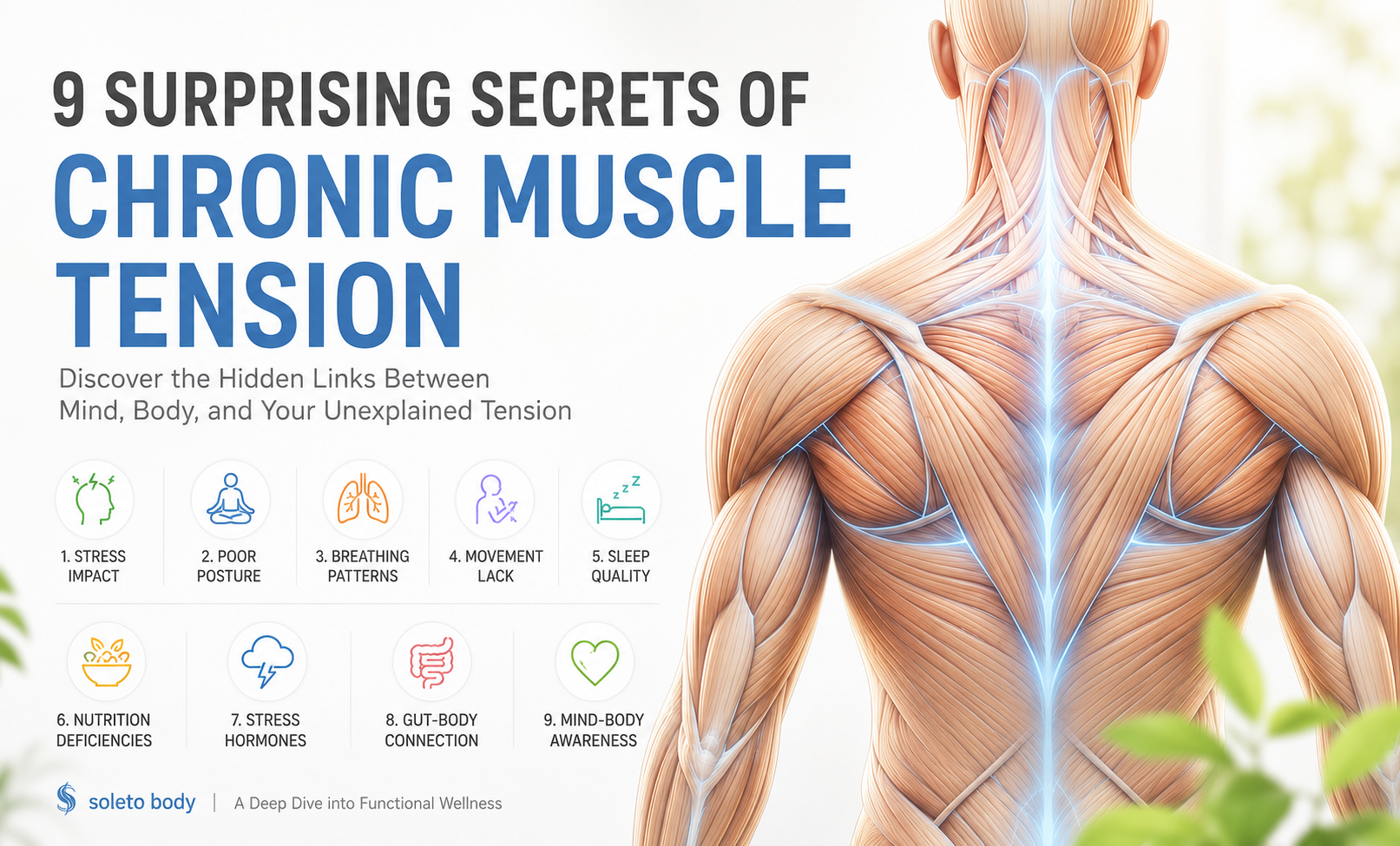
Here are the 9 surprising secrets of chronic muscle tension that you are likely ignoring, and how they completely dictate your physical well-being.
Watch how the revolutionary KSNS (Sbonsdo) method restores deep muscular and nerve balance to relieve long-standing back pain that standard MRI scans often miss.
Modern medical imaging technology is incredibly advanced. An MRI, CT scan, or ultrasound can detect structural crises with microscopic precision. They are designed to spot tumors, herniated discs, fractures, acute inflammation, and advanced organ diseases.
However, these advanced machines have a massive blind spot: they cannot measure the invisible pain of chronic muscle tension or soft-tissue ischemia. Muscles, tendons, and fascia do not show “pain” on an MRI unless they are physically torn or ruptured. A muscle can be severely locked up, starved of oxygen, and firing continuous pain signals to your brain, yet it will look completely normal on a high-tech scan. If your tests are clear but you are still hurting, your pain is not imaginary—it is simply structural-free. To understand how chronic muscle tension behaves, we must look deeper into our daily stress responses.
2. Your Brain Subconsciously “Guards” Areas of Stress
When you experience psychological stress, financial anxiety, or physical fatigue, your brain instinctively perceives a threat. It triggers a primitive survival mechanism known as muscle guarding.
Without you ever realizing it, your brain sends a continuous, low-grade electrical signal to your muscles to “brace for impact.” Your shoulders shrug toward your ears, your jaw clenches, and your core muscles tighten. If the stress never truly stops, the muscles never get the signal to relax. This subconscious reaction directly triggers chronic muscle tension, keeping your body in an ongoing state of physical alarm and deep postural restriction.
3. The Deep Diaphragm is the Epicenter of Unexplained Side Pain
When we are stressed or sitting hunched over a laptop for eight hours a day, our breathing patterns instinctively change. We stop breathing deeply into our abdomen and begin taking shallow, rapid chest breaths.
This is often the primary root of upper torso chronic muscle tension. This bad breathing habit causes the deep diaphragm—the primary muscle of respiration sitting right up under your ribs—to tighten and seize up. Because the diaphragm shares profound myofascial connections with the lower back, ribs, and waist, a locked diaphragm projects a constant, vague sense of pressure or aching right around the lower rib cage, which can worsen overall chronic muscle tension over time.
4. The Quadratus Lumborum (QL) Mimics Internal Organ Pain
The Quadratus Lumborum (QL) is a deep lower back muscle that connects your lowest rib to your pelvis. It is a notorious culprit for unexplained side-waist pain and structural chronic muscle tension.
When you sit with poor posture—such as leaning heavily to one side, crossing your legs, or slouching—the QL muscle on one side is forced to stay in a constantly stretched or locked position. Over time, it develops hyper-irritable knots called trigger points. These trigger points are famous for radiating deep, sickening discomfort to the front of the abdomen, hips, and lower waist. This chronic muscle guarding leads to localized chronic muscle tension, making people believe they have a kidney or bowel issue when it is simply a suffocating muscle.
5. Chronic Tension Starves Your Muscles of Crucial Oxygen
When a muscle remains in a state of constant, uninterrupted contraction, it physically squeezes the microscopic blood vessels running through it. This localized restriction of blood flow is known as micro-chemia.
Because the blood flow is restricted, the muscle tissue is starved of fresh oxygen and vital nutrients. At the same time, metabolic waste products like lactic acid cannot be efficiently flushed out. This toxic, low-oxygen environment directly causes chronic muscle tension, creating a constant, burning, or dull ache that resting alone will not fix. To help alleviate chronic muscle tension, restoring normal blood flow and oxygenation to the affected tissues is an absolute priority.
6. The Nervous System Becomes “Hyper-Sensitized” Over Time
If a muscle stays tight for months on end, the relationship between that muscle and your central nervous system completely changes. This neurological phenomenon is called central sensitization, which acts as an amplifier for chronic muscle tension.
Your spinal cord and brain become hyper-reactive to the constant stream of distress signals. Essentially, the volume knob on your pain receptors gets turned all the way up. Once this neurological link to chronic muscle tension is established, even normal, gentle movements—like twisting your torso, bending over, or sitting down—are misinterpreted by your brain as dangerous threats, triggering an intensified sensation of pain.
7. Youth and Regular Exercise Do Not Make You Immune
Many young adults in their 20s and 30s believe that severe muscle stiffness is an old-age issue. This is a dangerous misconception. Today, young office workers, software developers, dedicated gamers, and even regular gym-goers are highly vulnerable to chronic muscle tension due to prolonged static postures.
In fact, people who lift weights regularly often overlay heavy physical stress on top of an already exhausted, poorly aligned posture. The human body adapts to daily stress silently, accumulating micro-tensions until one day, a seemingly simple movement causes the entire system to lock up under the weight of accumulated chronic muscle tension.
8. Postural Adaptation Creates a Domino Effect in the Body
The human body is bound together by a continuous, interconnected web of connective tissue called fascia. No muscle operates in isolation, meaning that the physical manifestation of chronic muscle tension in one area will quickly travel to another.
If you have a tight right waist or QL muscle, your body will instinctively tilt or shift your weight to the opposite side to avoid discomfort. This subtle, subconscious shift forces your opposite hip, your mid-back, and even your neck muscles to overwork to keep your eyes level. What started as a small, localized tension in your lower ribs can slowly morph into a full-body structural imbalance, worsening your systemic chronic muscle tension, altering your gait and sleep quality.
9. True Relaxation is Not a Luxury—It is Essential Maintenance
When my friend asked me, “If the medical tests are normal but I’m still hurting, what am I supposed to do?” my answer was simple: Your body does not need aggressive medical intervention. To treat chronic muscle tension, it needs systematic, neurological safety.
When your muscles are locked in a chronic guarding state, pushing through the pain or attempting aggressive, heavy workouts will only make your nervous system tighten up further. True relaxation is not about being lazy or pampering yourself; it is a vital physiological requirement to signal back to your brain that the danger has passed, allowing you to resolve long-standing chronic muscle tension.
Consistent, gentle somatic stretching is essential to signal safety to your nervous system and release deep tissue tightness.
Calming your mind with natural soundscapes is a powerful way to reduce somatic guarding and ease chronic muscle tension.
Calming your mind with natural soundscapes is a powerful way to reduce somatic guarding and ease chronic muscle tension.
🛠️ The 4-Step Recovery Action Plan
1. Diaphragmatic Breathing (The 4-7-8 Reset): Inhale deeply through your nose for 4 seconds, allowing your belly to expand. Hold for 7 seconds, and exhale slowly through your mouth for 8 seconds. Do this for 5 minutes daily to immediately down-regulate your fight-or-flight response and release a locked diaphragm, easing chronic muscle tension.
2. Gentle, Passive Mobility Work: Avoid intense stretching that causes your muscles to fight back. Instead, perform gentle movements like the Cat-Cow stretch, passive supine spinal twists, and gentle side bends. Focus on breathing smoothly through the movement to reduce chronic muscle tension.
3. Progressive Muscle Relaxation (PMR): Before sleep, deliberately tense a specific muscle group (like your shoulders or lower back) for 5 seconds, then completely let go for 10 seconds. This contrast trains your brain to recognize and release subconscious muscle guarding.
4. Implement Movement Snacking: Never sit continuously for hours. Set an alarm to stand up, shake out your limbs, and walk around for 2 minutes every single hour to prevent micro-ischemia from setting into your lower back and waist.
(Note: For more professional guidance on physical health and alignment, check out high-quality health resources like Mayo Clinic’s guide on myofascial pain to learn more about somatic recovery.)
Conclusion: Listen to the Whisper Before Your Body Screams
Your body is an incredibly intelligent, communicative system. It rarely begins with an unbearable medical crisis. Instead, it starts with a subtle whisper—a slight tightness in your side, a faint restriction when you twist, or an unexplainable dull ache after a stressful day.
When a doctor tells you that your scans are clear but it looks like muscular tension, it is not a dismissive diagnosis. It is a profound invitation to re-evaluate how you live, breathe, and handle daily stress. By understanding chronic muscle tension and actively giving your body the restorative care, hydration, and neurological safety it deserves, you can finally break free from invisible pain and guide your physical health back into perfect, vibrant balance.
(If you found this guide helpful, be sure to read our Sole to Body somatic health blog for daily somatic wellness and posture management.)
Picture this: You wake up at 7:00 AM, ready to crush your day.
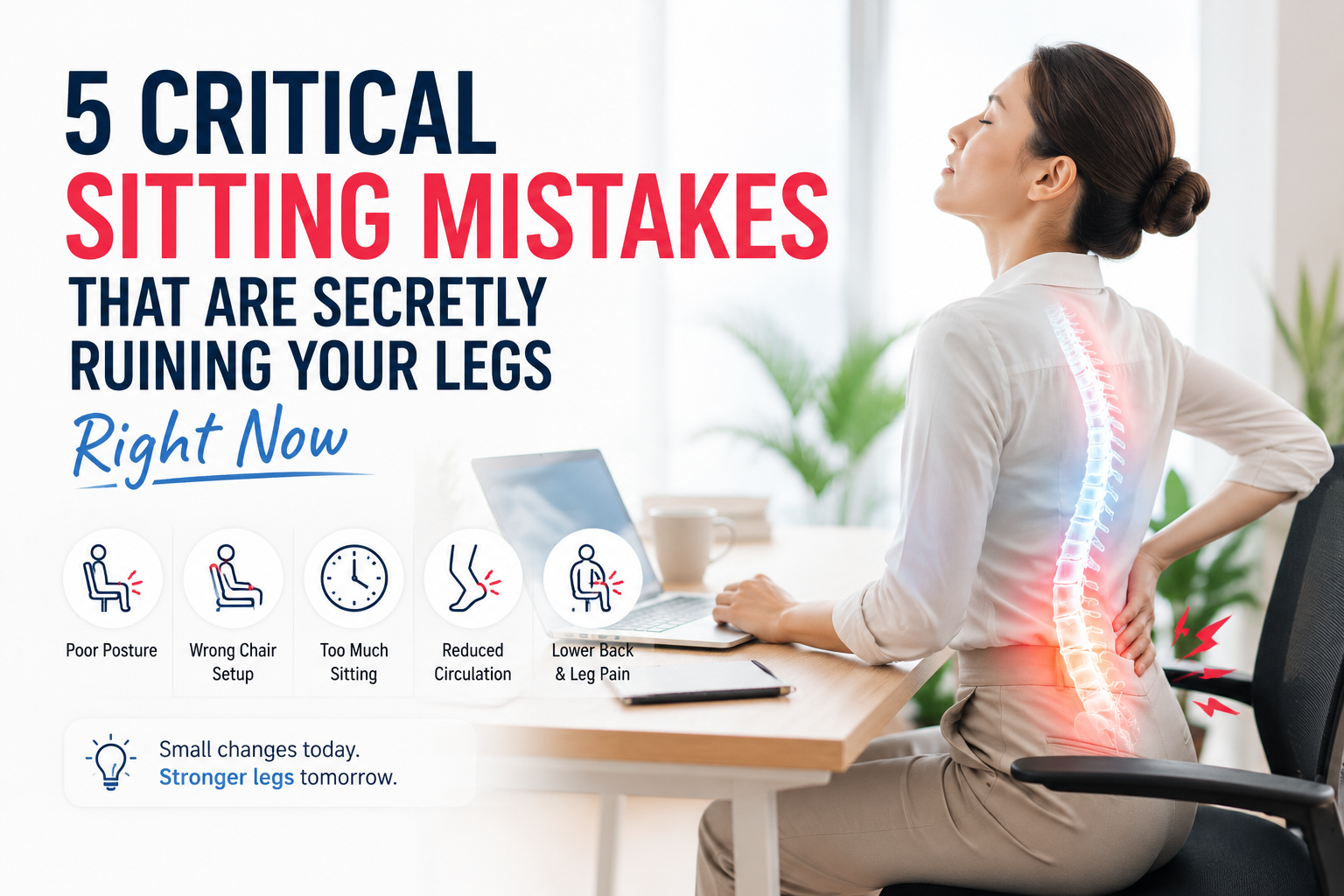
Unconsciously, you might be making critical sitting mistakes that silently damage your body.
Long hours of sitting at a desk can quietly increase tension in the legs, hips, and lower back.
You swing your legs out of bed, but the moment your feet hit the floor, a blinding, white-hot agony rips through your right calf.
It feels like your muscle is violently wringing itself out like a wet towel. You gasp, clutching your leg, waiting for the “charlie horse” to pass.
But here’s the kicker—the cramp fades, but the nightmare doesn’t.
When you try to stand, your right calf feels completely fossilized. It’s rock-hard, heavy, and throbbing, as if someone overnight snuck into your room and replaced your muscle with a 10-pound sandbag. Walking feels like dragging an anchor.
You immediately open TikTok or Google. “Is it a magnesium deficiency?” “Should I eat a banana?” Hold that thought.
If you’ve recently transitioned into a lifestyle where you’re glued to a desk for 5 to 6 hours a day, that rock-hard leg isn’t just an annoying cramp.
Whether you’re a 20-something college student cramming for finals, a hardcore gamer climbing the ranks, a remote software developer, or a seasoned professional adapting to long hours of deep digital work—these physical issues are often triggered by daily sitting mistakes related to your chair.
Are your daily sitting habits secretly straining your lower-body muscles?
The Anatomy of the Leg Anchor: Sitting Mistakes Explained
To understand exactly what is happening inside your body, let’s dissect this sudden, terrifying symptom using a strategic framework: PASONA (Problem, Agitation, Solution, Opportunity, Narrow Down, Action).
1. Problem: The Sudden “Sandbag” Calf
The immediate crisis is two-fold: a sudden, excruciating nighttime or early-morning muscle spasm (cramping) followed by a persistent, heavy, tight, and rock-hard sensation in just one leg.
Unlike normal fatigue that affects both limbs equally after a long run, this structural imbalance targets one specific side, refusing to relax even hours after the initial cramp has subsided.
2. Agitation: The Hidden Danger of the Seat
Here is where it gets dangerous. When you experience a symptom this intense, your first instinct might be to grab a foam roller and violently massage the knot, or pop three magnesium supplements and wait it out.
Stop right there. If this stiffness is caused by an underlying vascular or neurological issue, aggressive massaging can turn a silent condition into a life-threatening emergency.
When you sit continuously for 5 to 6 hours a day, the edge of your chair acts like a physical dam, pinching the deep veins and nerves running behind your knees and through your glutes. Over a period of 3 months, these daily sitting mistakes and mechanical stresses silently accumulate.
If a blood clot (Deep Vein Thrombosis, or DVT) has formed in that stagnant environment, aggressively massaging the calf can break that clot loose. From there, it travels straight to your lungs, causing a pulmonary embolism—a sudden medical emergency.
Alternatively, that “sandbag” feeling could mean a lumbar nerve is being severely pinched by a compressed spinal disc or a suffocated piriformis muscle in your hip, throwing your lower-body nervous system into a chronic state of emergency. Dismissing these posture-induced sitting mistakes as a simple “lack of vitamins” wastes critical diagnostic time.
3. Solution: Medical Evaluation Over Self-Diagnosis
The absolute, non-negotiable solution is professional clinical verification. You must look past the surface symptom (the cramp) and investigate the structural and vascular plumbing of your leg.
Vascular Ultrasound: To check the deep veins for any signs of blood pooling or clotting.
Neurological and Orthopedic Assessment: To verify if a hidden lumbar disc compression or pelvic misalignment is sending distorted, continuous electrical signals to your calf muscle, forcing it to lock up.
4. Opportunity: Transforming Your Workspace into a High-Performance Lab
The silver lining? This terrifying wake-up call is your body’s ultimate warning system, forcing you to redesign how you live, work, and move before permanent structural damage occurs.
By identifying the exact root cause, you can stop these harmful sitting mistakes and optimize your workspace. You will shift from a sedentary, stagnant posture to an active, dynamic flow that boosts both vascular health and cognitive focus.
5. Narrow Down: Who is Most at Risk?
This condition specifically targets individuals who have undergone a sudden, drastic shift in their daily habits within the last 90 days.
If you went from an active lifestyle to sitting continuously for over 5 hours without breaking, or if you are over 60 managing unconscious nerve pathways, your vascular and nervous systems are highly vulnerable to sudden posture-induced shocks.
6. Action: Your Immediate 3-Step Survival Guide
Don’t wait for tomorrow. Take these three immediate steps right now to protect your leg and correct those daily sitting mistakes:
Elevate and Rest: Lie down and prop your right leg up on a few pillows so it rests slightly above the level of your heart. This uses gravity to naturally drain stagnant fluid and ease structural pressure. Do not massage it forcefully.
Schedule a Clinical Scan: Book an appointment with an orthopedic, neurological, or vascular specialist. Explicitly tell them: “I recently shifted to sitting 5-6 hours a day for the past 3 months, and now my right calf is chronically hard and heavy like a sandbag.”
Implement the 50-5 Rule: For every 50 minutes of desk work, set a hard alarm to stand up for 5 minutes. Pump your ankles up and down actively to force your calf muscles to act as a natural pump, sending blood straight back to your heart.
.
Why Magnesium Isn’t the Magic Bullet Here
It is incredibly common to blame muscle cramps on a lack of magnesium or hydration. While electrolytes are vital for nerve signaling, a nutritional deficiency is systemic—meaning it affects your entire body. If your body lacked magnesium, both of your calves, your eyelids, and your hands would be twitching or cramping randomly.
When the crisis is strictly localized to your right calf, and when it leaves behind a heavy, compressed, stone-like tightness, the cause is mechanical, not nutritional. It is a physical structural blockage born from the exact angle, pressure, and duration of your seated posture.
Listen to your body’s alarm system. Step away from the desk, elevate that leg, and get it checked by a professional. Your health, your mobility, and your longevity depend entirely on correcting the minor sitting mistakes you maintain today.
To explore more professional insights on maintaining your body alignment and preventing posture-induced Sitting Mistakes, visit our main resource hub at https://soletobody.com and start your journey toward a balanced, pain-free life today.
”At first, I thought my lower back was the only problem. But then, my chest began to tighten, and taking a full breath felt nearly impossible. I was terrified that something was fatally wrong with my heart or lungs.”
This is the real-life story of Sarah, a hardworking office manager in her early fifties. For years, she lived with chronic, nagging lower back pain. Like many people who spend their days looking after others, she constantly brushed it off with a familiar excuse:
“I’m just getting older. Everyone lives with some aches and pains anyway.”
So, she kept pushing through. She dragged her aching body out of bed, sat for hours at her office desk, and managed her daily household duties. She completely ignored the quiet alarm bells her body was ringing.
But our bodies have a finite capacity to tolerate stress. One day, her pain turned into something completely unexpected—and terrifying.
If you want to know how to instantly relieve pain and reclaim your natural breath, you must understand how your body is connected from head to toe.
1. When Back Pain Turns into Anxiety and Breathlessness
It started one ordinary morning. Sarah woke up and felt her neck and shoulders completely locked up. They were as stiff as concrete. No matter how much she slept, she woke up utterly exhausted.
Then came the scariest part: a heavy, crushing tightness in her chest.
Her heart would race for no reason. Breathing—something she never had to think about in her entire life—suddenly felt like climbing a mountain.
Terrified, she visited three major hospitals, including a large university medical center. She took spinal MRI scans, comprehensive blood tests, and heart checks. The doctors all said the same thing: “Everything is normal.”
They gave her muscle relaxants, pain relievers, and anti-anxiety pills. She tried deep tissue massage, physical therapy, and various alternative treatments. But the relief lasted only a few hours. The suffocating tightness always came back, often moving to different parts of her body.
Eventually, the explanations she received fell into a discouraging pattern:
“It’s just stress. You must learn to live with it.”
Those words hurt more than the physical pain. She felt abandoned, wondering how to instantly relieve pain permanently. But here, we must ask a different, more comprehensive question:
“What is your body trying to protect by holding itself so tightly?”
The human kinetic chain: How structural misalignment leads to severe back pain and breathing restrictions.
2. Unlocking the Kinetic Chain to Instantly Relieve Pain
Our bodies are not made of separate parts like a Lego set. Instead, we are wrapped in a giant, continuous web of elastic tissue called fascia. Think of it like a tight, one-piece superhero bodysuit under your skin.
In structural medicine, we call this the kinetic chain (muscle chain).
Where you feel pain is rarely where the problem started. The painful spot is just the “victim” that screams for help. The real “culprit” is usually hiding somewhere else, far away from the symptom.
In Sarah’s case, her breathing trouble was the final step of an anatomical domino effect that started at the very bottom of her body: her feet.
Here is exactly how the chain of tension climbs up your body:
1. Stiff & Contracted Soles of the Feet ⬇️ (Unabsorbed ground shock travels upward)
2. Super Tight Calves & Achilles Tendons ⬇️ (Pulls the joints out of alignment)
3. Tilted & Twisted Pelvis (Hips) ⬇️ (Deprives the spine of a stable foundation)
4. Locked Lower Back (Lumbar Spine) ⬇️ (Seizes up to force the body upright)
5. Stiff Mid-Back (Thoracic Spine) Acting Like Armor ⬇️ (Locks the chest area to protect the lower spine)
7. Frozen Diaphragm & Shallow Breathing ⬇️ (Brain interprets oxygen shortage as an emergency)
🚨 Result: Racing Heart, Sudden Panic, and Tight Chest!
Your feet are the foundation of your entire body. When the soles of your feet become stiff and hard, they cannot absorb shock when you walk.
To compensate, your calves tighten up like steel cables. This pulls your knees back and twists your pelvis out of line. A crooked pelvis deprives your lower back of a stable base, forcing your back muscles to seize up to keep you upright.
Understanding this connected system is the true secret to learn how to instantly relieve pain from the ground up.
The real disaster happens at your mid-back (thoracic spine) and ribcage.
To protect your hyper-stressed lower back, your nervous system automatically stiffens your mid-back. Your ribcage, which should expand and contract flexibly like an accordion, becomes locked like a metal cage.
Therefore, treating the lungs alone won’t work; you must unlock the spine to instantly relieve pain and restore natural breathing.
When your ribs cannot move, your main breathing muscle (the diaphragm) cannot drop down to let air in. Your breathing becomes shallow and fast. When you breathe this way, your brain thinks: “Emergency! We are running out of oxygen!” This triggers your sympathetic nervous system (“fight-or-flight” mode), making your heart race and filling your mind with sudden, unexplained anxiety.
Sarah’s breathing difficulty was not a lung disease. It was a physical straightjacket created by her own body.
3. Why Does Pain Move Around Like a Game of Tag?
Many people with chronic pain complain about “migrating pain”:
“First my back hurt, then it stopped but my shoulder flared up. Now my neck is killing me!”
This is not bad luck. It is the natural result of treating symptoms instead of the root cause. When you are looking for ways to instantly relieve pain, you must look at the whole system rather than just the localized symptom.
Think of a leak in your roof. If water drips onto your living room floor, you can mop it up. But if you do not fix the hole in the roof, the water will simply find another path. Soon, it will ruin your kitchen floor or bedroom wall.
Your body is a master of sharing the workload. When one joint gets stiff, your neighboring muscles work twice as hard to help you move. Eventually, those overworked muscles get tired and start to hurt. If you only treat that new sore spot, the strain simply shifts to the next vulnerable link. This is why local treatments often fail—they are chasing the “stains” while ignoring the “leak.”
4. Inside the Clinic: Simple Steps to Reclaim Your Balance
When Sarah first stepped into our postural alignment clinic, we did not start by massaging her sore back or her tight neck. Instead, we looked at how she stood, how she walked, and how her feet touched the ground.
We found that her feet were incredibly rigid. Her toes were clawing at the floor, desperately trying to grip the earth to keep her balanced on an unstable foundation.
Our recovery program was designed to instantly relieve pain by resetting her muscle chain from the bottom up:
Step 1: Release the Foundation We started by releasing the tight, frozen tissue under her feet. The moment her feet could flex and feel the ground properly, the tension in her calves and hips began to melt. After this first session, she took a huge breath and gasped, “I haven’t felt air go that deep in my chest in years.”
Step 2: Unlock the Spine Next, we straightened her pelvis and gently mobilized the locked joints in her mid-back. By releasing the tiny muscles between her ribs, we gave her lungs the physical space they needed to expand.
Step 3: Calm the Nervous System Finally, we released the tension at the base of her skull. This turned off the “emergency danger switch” in her brain, allowing her body to go from survival mode to deep, peaceful relaxation.
Her body was never broken. It was just exhausted from holding itself together. Once the foundation was stable, the tight armor fell off. Her heart rate went down, the chest tightness disappeared, and her long-term anxiety melted away.
5. Is Your Body Bracing? How to Instantly Relieve Pain Naturally
Chronic structural issues build up slowly, sending small warning signs. Check if you have these indicators to learn how to instantly relieve pain naturally:
[ ] First-Step Pain: You feel a sharp, tight pain in your heels or soles during your first steps in the morning.
[ ] Heavy Legs: Your calves and thighs feel heavy and tired after standing for just 10 minutes.
[ ] The 3-Day Reset: You get a massage or treatment, but the pain returns to the exact same spot within 2 to 3 days.
[ ] The Permanent Shrug: Your shoulders always feel raised toward your ears, and it is hard to just let them drop.
[ ] Tired Mornings: You sleep for 8 hours but wake up feeling stiff, heavy, and unrefreshed.
[ ] Air Hunger: You constantly feel the need to take a sudden, deep sigh or a big yawn because you feel like you aren’t getting enough air.
Listen to this deep healing music designed to calm your nervous system, relax your body’s kinetic chain, and help you breathe better instantly.Reclaiming natural structural balance is the key to deep breathing and a pain-free life.
When people are trapped in chronic pain, they often ask: “What is wrong with my body?”
Perhaps a much better and kinder question to ask is:
“What is my body trying so hard to protect, and what does it need to finally feel safe enough to let go?”
Pain and stiffness are not punishments. They are highly intelligent, protective signals from your nervous system to prevent you from getting hurt when your alignment is off.
By correcting your posture from the feet up, unlocking your ribs for deep breathing, and showing your nervous system that it is safe, you can break the cycle of tension. Our advanced structural approach helps to instantly relieve pain and brings deep comfort back to your everyday life. True, lasting health begins when you stop fighting the symptoms and start restoring the natural, beautiful balance your body was designed to keep.
Watch this clinical case demonstrating how restoring the foot’s structural balance and natural alignment completely cures 40 years of chronic asthma and severe breathing restrictions.
Disclaimer: This article is for informational and educational purposes only. It represents clinical observations of myofascial and structural alignment patterns. It is not intended as medical diagnosis, treatment, or direct medical advice. Please always consult with a qualified healthcare professional regarding any specific medical conditions.
Quick Summary: How to Instantly Relieve Pain Naturally
If you want to instantly relieve pain from chronic back tension, you must look at your feet. Many people wonder if they can instantly relieve pain without taking strong medications. The answer lies in your body’s alignment; when you release the stiff fascia under your soles, you can instantly relieve pain and tension throughout your entire kinetic chain.
Furthermore, to instantly relieve pain in your chest and recover your natural breathing, you must unlock your tight ribs and thoracic spine. Do not just treat the local symptoms; focusing on the root cause is the only way to instantly relieve pain permanently. We hope this ultimate guide helps you instantly relieve pain and find deep comfort. To learn more about how to instantly relieve pain and live a healthier life, explore our recommended posture correction guides.
If you are one of the millions of women who spend more than 6 hours a day sitting at an office desk, struggling with debilitating menstrual cramps, or living with a diagnosis of uterine fibroids or endometriosis, you know how exhausting chronic severe pelvic pain can be.
You might have tried heating pads, pain relievers, or countless hours of rest, only to find the deep, heavy, aching pressure in your lower abdomen returning month after month.
But what if the key to unlocking this agonizing pelvic tension wasn’t actually in your abdomen? What if it was hiding in your inner thighs?
Today, we are going to share a remarkable clinical case study of a female client in her early 40s who experienced immediate, life-changing relief from severe pelvic pain. More importantly, we will reveal the 1 simple trick—backed by myofascial anatomy and neurology—that you can use to start releasing this tension today.
The Client’s Story: Locked in a Cycle of Pain
Our client, an office administrator in her early 40s, came to our clinic carrying a heavy burden of physical exhaustion. Her daily routine involved sitting at a computer for at least 6 to 8 hours. She had been diagnosed with both uterine fibroids (myomas) and endometriosis, and her periods had become a monthly nightmare of severe cramping, lower back pain, and a constant, dragging heaviness in her pelvis.
During her physical assessment, we noticed something striking when she lay on the treatment table: her left leg was rotated outward, and the muscles of her inner thigh—specifically the adductor muscle group—were visibly tight, resembling a thick, taut cable under the skin.
When we applied even the gentlest pressure to her left inner thigh, she winced in sharp, intense pain.
“Why does it hurt so much there?” she asked, surprised. “My pain is in my uterus and lower stomach, not my legs.”
This is a question almost every woman asks when they first experience this therapy. To understand why her inner thighs were practically screaming in pain, we have to look at how our internal organs and external muscles communicate.
The Hidden Anatomy of Severe Pelvic Pain: Why Inner Thighs Lock Up
The human body is not a collection of isolated parts; it is an interconnected web of tissues, nerves, and fluids. There are three primary reasons why pelvic pathologies trigger severe pelvic pain and cause your inner thighs to become rock-hard and painful.
1. The Myofascial Link to the Pelvic Floor
The adductor muscles of your inner thigh insert directly into the pubic bone. Underneath the surface, these muscles share a continuous structural and fascial pathway with the pelvic floor muscles. The pelvic floor acts as a hammock that cradles your pelvic organs, including your uterus.
When your uterus is inflamed, cramping, or carrying heavy fibroids, the pelvic floor muscles instinctively contract to “guard” and protect the vulnerable organs. Because the fascia (connective tissue) of the pelvic floor is intimately woven into the fascia of the adductors, this chronic tension transfers directly down into your inner thighs. They lock up together in a joint defensive posture.
2. The Neurogenic “Viscerosomatic” Reflex
Your nervous system has a built-in cross-talk mechanism. The sensory nerves that monitor the health of your uterus and pelvic organs travel to the spinal cord at the exact same segments—specifically from L1 to S4—that control the motor nerves of your inner thighs and hip flexors.
When the uterus sends constant distress signals to the spinal cord due to menstrual inflammation or fibroid pressure, the spinal cord becomes overloaded. In a phenomenon called a viscerosomatic reflex, the brain misinterprets this internal organ distress as an external threat and fires back commands to tighten the surrounding skeletal muscles. The result? Your inner thighs are forced into a state of chronic, involuntary spasm.
3. The “Stagnant Swamp” of Pelvic Congestion
Sitting on an office chair for over 6 hours a day acts like a physical clamp on your groin. This area, known anatomically as the femoral triangle, is the primary gateway for major blood vessels and lymphatic pathways moving to and from your legs.
Detailed anatomy of the Femoral Triangle (Scarpa’s Triangle), showing how prolonged sitting compresses the major femoral artery, vein, nerve, and lymph nodes that govern lower-body circulation
When you combine the mechanical compression of sitting with the internal swelling and congestion caused by uterine fibroids or endometriosis, the return of blood and lymph from your lower half is severely restricted. Fluid pools, oxygen levels drop, and cellular waste products (like lactic acid) accumulate in the tight muscle fibers of your inner thigh. This stagnant fluid turns the muscle tissue highly acidic and hypersensitive, making even a light touch feel incredibly painful. This internal stagnation is a major hidden driver of chronic severe pelvic pain.
The “1 Simple Trick” to Instantly Stop Severe Pelvic Pain
During our session with the client, we explained that forcing our way through this tight muscle with heavy, aggressive massage would only trigger more panic in her nervous system, causing the muscle to clamp down even harder.
Instead, we utilized a gentle, highly effective technique to stop severe pelvic pain that you can replicate at home. We call this the Nervous System First (NSF) Adductor Release.
Here is the exact 1 simple trick to release this tight gateway and drain the pelvic congestion:
Step-by-Step: The Supported Adductor Melting Technique
To do this at home, you will need a standard foam roller or a rolled-up bath towel.
The Setup: Lie face down on a comfortable mat or your bed.
The Positioning: Bring your painful side’s leg up and out to the side, bending your knee at a 90-degree angle (similar to a half-frog pose). Place your foam roller or rolled-up towel underneath your inner thigh, parallel to your body.
The Simple Trick (The Melting Phase): Do not roll aggressively. Instead, gently rest the weight of your inner leg onto the roller, starting just above the knee.
The Breath: Close your eyes and take 5 slow, deep diaphragmatic breaths (inhale into your belly for 4 seconds, exhale slowly for 6 seconds). With every exhale, consciously imagine your inner thigh “melting” into the roller.
Progressive Micro-Shifts: After 1 to 2 minutes of static resting and deep breathing, slowly slide your body slightly sideways so the roller moves an inch closer to your groin. Repeat the deep breathing.
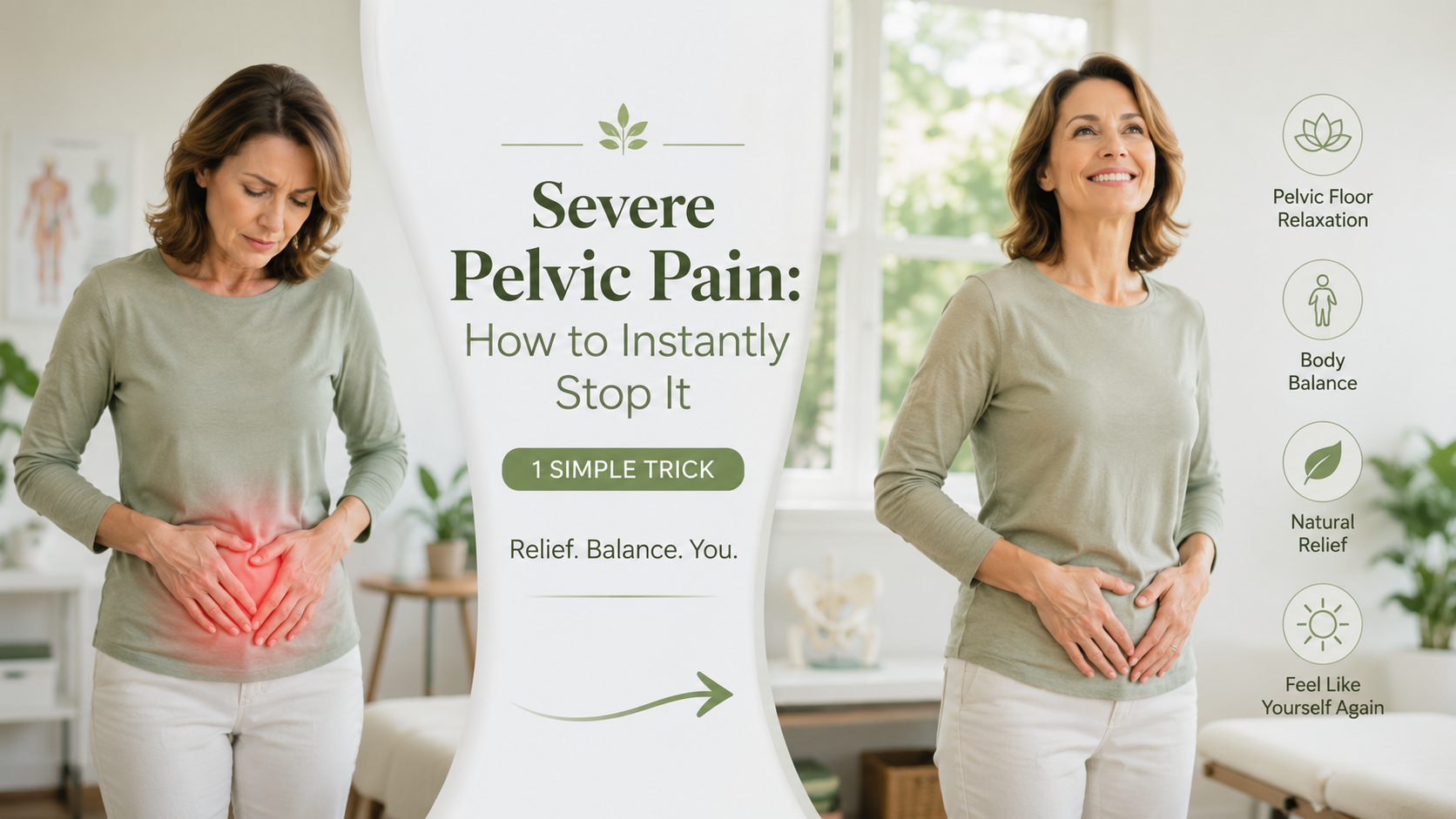
Figure 1: Releasing chronic severe pelvic pain by gently targeting and melting the deep tension in the adductor (inner thigh) muscles on a therapy table.
The Immediate Result: Restoring Flow and Lightness
As we performed this precise, gentle release on our client’s left inner thigh, we could feel the hard, fibrous knots beneath our hands gradually softening, transforming from the texture of a tight rope to that of soft, pliable muscle.
The physical response to this severe pelvic pain release was immediate. The coldness in her left foot faded as warm, oxygenated blood rushed down her leg.
When she opened her eyes, she gasped in relief:
“I can’t believe it. My left leg feels like it suddenly woke up—it’s so incredibly light and warm. And that tight, heavy pulling pressure inside my lower belly? It’s completely gone.”
By releasing the mechanical block in her left adductor, we had unlocked the pelvic floor. The stagnant blood and lymphatic fluid trapped in her pelvis were finally able to drain, relieving the suffocating pressure around her uterus and providing instant, profound comfort.
Taking Control of Your Pelvic Health
If you are a woman living with severe pelvic pain caused by uterine fibroids, endometriosis, or debilitating menstrual pain, your body is not your enemy. The severe discomfort you feel in your pelvis and inner thighs is a map of your body trying to protect itself.
By understanding the connection between your thighs and your pelvic floor, and by practicing the 1 simple inner thigh release trick regularly, you can break the cycle of chronic tension and reclaim a life of comfort and lightness.
Don’t let a desk job dictate your pelvic health. Give your inner thighs the gentle release they deserve, open up your body’s natural pathways, and let yourself heal from the inside out.
Discover More Healing Content If you want to surround yourself with deep relaxation and support your pelvic recovery journey through therapeutic sounds, explore our dedicated healing music channel. Watch and Listen on YouTube:LumiGenesis @LumiGenesis
Are you struggling with chronic pelvic heaviness, severe cramps, or lower-body numbness? Contact our clinic today to schedule a personalized, gentle somatic therapy session designed to restore your natural flow.
For more medical information on uterine conditions, you can visit the Wikipedia Uterine Fibroid Page (https://en.wikipedia.org/wiki/Uterine_fibroid). To learn more about our body alignment program, please return to our home page https://soletobody.com
Have you ever walked out of a doctor’s office feeling like a diagnostic report had just rewritten your entire future?
Several years ago, a woman in her mid-60s came to our movement and rehabilitation center. She was clutching a thick folder of radiological scans, looking for a way to address her severe knee pain without surgery. She had just left a prestigious orthopedic clinic, and the specialist’s words were still echoing in her mind:
”The joint spaces in both of your knees are severely compromised. The cartilage is almost entirely gone—it is a classic case of ‘bone-on-bone’ wear. The inflammation is highly advanced. At this stage, you should seriously consider scheduling total knee arthroplasty.”
For many people, hearing the phrase “bone-on-bone” feels like a physical point of no return. It sounds like an irreversible sentence of structural decay. It brings not only intense physical discomfort but also a heavier, psychological burden. When chronic knee pain strikes, you begin to fear losing your personal independence. You worry about watching yourself walk slower each year, gradually withdrawing from the activities you love. A silent, discouraging belief settles in—that your body has permanently lost its capacity to heal itself.
When this woman arrived at our center, she was struggling with the most basic movements of daily life. Standing up from a dining chair required a calculated, painful push. Going down stairs was even worse; she had to descend sideways, taking one slow, agonizing step at a time. Her joints felt constantly hot, swollen, unstable, and deeply fatigued.
Yet, before signing the surgical consent forms—before agreeing to a major, irreversible procedure that would permanently alter her skeletal structure—she paused and asked one simple, crucial question:
”Is there anything else my body can still try to manage this knee pain without surgery?”
That single question changed her path. It shifted her from a passive recipient of a surgical recommendation to an active participant in understanding her body’s movement ecology. It is the very same question we must ask ourselves when facing chronic knee pain.
Chronic knee pain can significantly limit daily movements and independence.
Part 1: The Trap of Joint-Centric Vision
In modern orthopedic care, there is an incredibly common diagnostic bias: the tendency to treat the site of pain as the exclusive source of the problem. When an X-ray or MRI reveals worn cartilage, bone spurs, or joint space narrowing, it is easy for clinicians to point to the screen and say, “There is the culprit.”
These structural findings are real. They represent actual physical wear, and they deserve precise medical attention. However, looking only at the joint space is like examining a single link in a broken chain while completely ignoring the anchor and the weight. To truly resolve knee pain without surgery, we must look beyond the joint itself.
The human body does not move as an assembly of isolated, bolted-together parts; it functions as an integrated, fluid kinetic chain. The upper body and core transmit downward forces into the pelvis. The pelvis and hip joints dictate the rotation of the thigh bone and provide lateral stability. At the very bottom, the ankle and foot complex act as the primary sensory and mechanical interface with the earth.
The knee joint sits directly in the middle of this chain. It is a simple hinge joint designed to bend and straighten. It does not possess the capacity to rotate or drift side to side without sustaining damage.
When we assessed our patient’s movement patterns, several systemic imbalances stood out immediately—none of which were visible on her knee X-rays:
First, her pelvis tilted and dropped laterally during her walking cycle, meaning her hip stabilizers were functionally quiet. Second, her feet were rigidly locked, failing to act as dynamic shock absorbers. Third, her nervous system was trapped in a state of chronic, protective tension.
By focusing entirely on the knee, traditional treatments often try to fix the “consequence” of a movement problem while leaving the true cause of knee pain completely untouched. To heal the knee, we must look up and down the entire kinetic chain.
Part 2: The Architecture of Balance — The Stone Arch Analogy
To understand why knees wear out, we must look at the body through the lens of structural engineering. Consider the timeless architecture of an ancient European stone arch bridge.
For a stone arch bridge to stand secure for centuries under immense loads, three components must work in perfect harmony:
The Foundation (Feet and Ankles): This is the fundamental base that directly contacts the ground. It must be adaptable enough to absorb the initial impact of the earth and stable enough to push off against.
The Keystone (Pelvis and Hip Joints): This is the crucial wedge-shaped stone at the very top of the arch. It receives the massive weight of the upper body and distributes it evenly down through both sides of the pelvis.
The Joining Stones (The Knee): These are the intermediate blocks that connect the top to the bottom, transferring forces smoothly along the curve.
If the foundation stones collapse inward, or if the keystone tilts to one side, the symmetry of the entire arch is compromised. The forces traveling through the bridge no longer disperse evenly. Instead, they concentrate with destructive intensity right at the joining stones—the knees.
Stone arch bridge analogy for knee pain biomechanics and dynamic valgus
In human biomechanics, this is exactly how joint degeneration occurs. When your foot arches collapse and flatten, or when your hip muscles fail to stabilize your thigh bone, your leg is forced to twist inward with every single step you take. This structural collapse can silently trigger severe knee pain.
With every step, the knee joint absorbs rotational wear and tear that was never its job to carry. The cartilage does not wear out simply because of “age.” It wears out because it is being ground down by an unbalanced structural arch. No amount of localized knee treatment can succeed in relieving knee pain if the arch itself remains collapsed.
Part 3: Neurological Guarding — The Invisible Emergency Brake
When joint space narrows and structural wear occurs, the physical damage is only half the problem. The other half is how your nervous system reacts to that damage, which often intensifies the knee pain.
Your brain’s absolute highest priority is survival and protection. When the brain detects that a joint is unstable, misaligned, or under excessive shear stress, it perceives a threat of catastrophic structural failure. To prevent further damage, the central nervous system initiates an automatic protective reflex called “neurological guarding” or “protective braking.”
This is the physiological equivalent of driving your car with the emergency brake fully engaged.
In an effort to keep the knee joint from moving into painful or unstable angles, the brain floods the surrounding musculature with constant tension. The quadriceps, hamstrings, and calf muscles contract simultaneously to lock the joint in place.
While this guarding mechanism is highly effective in the acute phase of an injury, chronic guarding is incredibly destructive to the joint and acts as a hidden driver of persistent knee pain.
First, it increases joint compression. The constant, tight contraction of the large leg muscles pulls the femur and tibia closer together, physically narrowing the joint space even further. This turns a mild case of wear into a severe, high-pressure grind.
Second, it chokes off local circulation. Muscles that are constantly tense restrict arterial blood flow and impair lymphatic drainage. This is why chronically painful knees feel hot, look puffy, and remain filled with stagnant, inflammatory fluid that cannot drain.
When this happens, the knee pain is no longer just a mechanical issue of worn cartilage. It has become a neurological and behavioral habit—a chronic state of alarm locked within your motor control system.
Part 4: The Footwear Paradox — Blindfolding Your Brain
To truly understand how we lose our balance and develop chronic knee pain, we have to look down at what we put on our feet.
Modern society has embraced highly cushioned, thick-soled, and narrow-toed athletic shoes. We are told that these shoes are designed to absorb shock and protect our joints. However, from a neurological perspective, over-cushioned footwear often does the exact opposite.
Your foot is not just a structural support; it is a highly sophisticated sensory organ. The sole of your foot contains thousands of specialized nerve endings called proprioceptors. These receptors act as the “eyes” of your lower body, reading the micro-texture, density, and slope of the ground in real-time.
This sensory data is sent instantly to your brain, allowing your nervous system to calculate exactly how hard to contract your leg, hip, and core muscles to stabilize your joints before your foot even fully hits the ground.
When you place your foot inside a thick, soft, insulated shoe, you are effectively sensorially blindfolding your brain.
Imagine trying to play a grand piano while wearing thick, insulated winter gloves. Because your fingers cannot feel the delicate resistance of the keys, you lose your fine motor control and end up slamming your hands down with brute, clumsy force.
When your brain cannot feel the ground through a thick, mushy sole, it cannot anticipate impact forces. As a result, you land much harder with every step, and your brain orders your leg muscles to stiffen up in fear of the unknown surface. Instead of absorbing shock, the shoe causes your body to lose its natural shock-absorbing reflexes, sending harsh, unbuffered impact waves straight up into your legs and exacerbating knee pain.
Part 5: The “1 Simple Shift” — Whole-Body Sensory-Motor Integration
If the knee is simply the victim of a chaotic structural arch and a blindfolded nervous system, then trying to cure knee pain by focusing solely on the knee is a biological dead end.
The “1 Simple Shift” is not a secret stretch, a magic pill, or a localized exercise. It is a fundamental paradigm shift in how you organize your movement: moving from localized knee symptom-management to whole-body sensory-motor integration.
This shift requires you to stop trying to “fix” the knee joint in isolation and instead change the entire physical environment surrounding it. When you restore sensory feedback to the feet and teach the hips to stabilize the pelvis, you unlock the real secret to overcoming knee pain without surgery. The knee is instantly relieved of its duties as a surrogate stabilizer.
Here is how you execute this shift through three practical, daily steps:
Step 1: Unshackle the Foundation (Restore Foot Sensory Input)
To heal your knees and stop chronic knee pain, you must first allow your brain to see the ground again.
Begin transitioning away from stiff, narrow shoes with elevated heels. Look for footwear that features a wide toe box, allowing your toes to splay naturally and stabilize your arch. Choose a flexible sole that allows the foot to articulate, and a zero-drop profile that is completely flat from heel to toe.
Spend time walking barefoot on safe, natural surfaces like grass, sand, or home carpets. This sensory-rich feedback rewires the connection between your feet and your brain, allowing your natural shock-absorbing mechanisms to wake up and protect you from ongoing knee pain.
Step 2: Reactivate the Keystone (Engage Your Lateral Hip Stabilizers)
When you walk, squat, or climb stairs, your kneecap must track in perfect alignment with your foot to avoid structural knee pain.
To achieve this, you must wake up your lateral hip muscles, specifically the gluteus medius. These muscles act as the reins of your thigh bone, preventing your femur from collapsing and twisting inward.
Try this simple daily drill: Stand on one leg. Softly bend your standing knee. Focus on keeping your hips perfectly level and ensuring your standing kneecap points directly over your second and third toes. Do not let it cave inward. This simple alignment shift redistributes weight away from the sensitive inner compartment of your knee and spreads it evenly across the entire lower body, offering a proven way to alleviate knee pain without surgery.
Step 3: De-escalate the Threat Response (Lower Neurological Guarding)
Practicing correct tracking of the kneecap over the toes helps alleviate joint stress.
To release the chronic, tight muscular grip around your joints, you must convince your brain that your body is safe, which directly minimizes knee pain.
Practice diaphragmatic breathing. When you are in chronic distress, your breathing becomes shallow and chest-dominant, which keeps your sympathetic nervous system highly active. Spend 5 minutes daily lying on your back with your knees bent, placing one hand on your belly. Breathe deeply through your nose, making your belly rise and fall. This slows down your heart rate, lowers systemic stress hormones, and tells your nervous system it is safe to release the defensive muscular tension causing your knee pain.
Engage in gentle, non-threatening movement. Avoid pushing through sharp, stabbing pain. Instead, practice slow, pain-free mobility exercises. Moving a joint through a comfortable, non-threatening range of motion signals safety to the brain, which naturally reduces the guarding reflex and allows trapped inflammatory fluids to drain, speeding up knee pain relief.
Part 6: What 4 Months of Consistency Looks Like
Our patient in her mid-60s did not experience a miraculous, overnight recovery. True biological healing does not work that way. It requires a patient, persistent negotiation with your cells, tissues, and neural pathways to fully conquer knee pain without surgery.
For approximately four months, she dedicated herself to a daily process of active rehabilitation:
During the first month, she focused on sensory awakening to address her knee pain. She transitioned to wide, flexible, flat footwear and practiced barefoot sensory exercises. She dedicated time to deep diaphragmatic breathing to lower her nervous system’s threat response.
By the second month, she began alignment integration. She introduced light, non-threatening mobility drills and trained her glutes to stabilize her pelvis. She focused intently on keeping her knees tracking outward during all her daily movements to eliminate the friction causing her knee pain.
In the third month, she transitioned to dynamic realignment. She re-patterned her walking cycle through gait training and developed the strength to ascend and descend stairs with stable hips and feet. As a result, she experienced a significant reduction in resting joint compression and a massive drop in daily knee pain.
By the fourth month, her body reached a state of autonomic safety. The chronic swelling resolved as natural circulation and lymphatic drainage returned. The muscular guarding melted away, removing the chronic grinding. She was finally able to walk smoothly and confidently, completely free from the chronic knee pain that had limited her life.
The transformation was quiet and incremental. First, the constant, dull ache that haunted her sleep began to fade, showing that the muscular emergency brakes were releasing. Next, the chronic swelling and heat resolved. Finally, she was walking up and down stairs with a fluid, natural gait. She successfully managed her knee pain without surgery.
Part 7: Finding Balance Between Surgery and Conservation
We must discuss this with absolute scientific integrity.
This story is not an argument that orthopedic surgery is obsolete, or that total knee replacements are a mistake. To the contrary, modern joint arthroplasty is one of the most successful, life-changing innovations in medical history. For patients who have suffered severe structural trauma, advanced joint destruction, or whose physical capacity is so limited that they cannot engage in movement-based therapies, surgery can restore mobility and relieve agonizing knee pain.
How to heal knee pain without surgery is an inquiry focused on expanding your options, not dismissing modern medicine. Surgical intervention should be treated as the ultimate destination at the end of a thoroughly explored path—not the automatic starting line.
Too many people are pointed toward major surgery without ever being introduced to the fundamental mechanics of their movement system. They are shown an X-ray of their knee and are led to believe that their body is a collection of worn-out, replaceable parts.
Numerous clinical studies have shown a fascinating and counter-intuitive reality: structural damage does not always equal knee pain. When researchers perform MRI scans on middle-aged and older adults who experience absolutely no discomfort, they consistently find that a remarkably high percentage of them show moderate to severe osteoarthritis, meniscus tears, and cartilage wear.
Why do these people have worn joints but feel no knee pain?
They feel no pain because their nervous systems are regulated and do not perceive the wear as a threat. Their kinetic chains are balanced, allowing forces to distribute evenly across their bodies. Their feet can feel the ground, and their hips can stabilize their movement. The wear is there, but their body has the structural capacity and neurological safety to compensate for it effortlessly, keeping them free from knee pain.
Explore our soothing melodies and cinematic healing soundscapes. Each piece is designed to help you release nervous system tension, ground your physical energy, and restore your body’s natural inner harmony.
Conclusion: The Question Worth Asking
To see these bio-mechanical principles and neurological restoration in actual clinical practice, watch this demonstration of the advanced structural care and knee alignment technique:
If you or someone you care about is currently living with chronic knee pain, managing daily activities with medication, and wondering if surgery is your only eventual option, we invite you to pause.
Before you make a decision to replace the parts, consider the wisdom of the whole system to conquer knee pain without surgery.
Stop asking only: “How damaged is my knee joint?”
And begin asking: “Why did my body start collapsing into this pattern in the first place, and what has it been waiting for me to notice?”
Your body is not a machine designed to wear out like a car tire. It is a highly intelligent, self-adapting, and sensory-rich ecosystem. When you give your foundation the freedom to feel, your hips the strength to stabilize, and your mind the safety to relax, you might be amazed at how much healing capacity your body has been holding onto, just waiting for you to unlock and banish knee pain forever.
To discover more about our natural recovery methods and full-body alignment philosophy, please visit our official website at
For more scientifically validated medical data on the relationship between joint degeneration and pain perception, you can review authoritative research on Harvard Health Publishing or the Mayo Clinic.
Are you struggling with ingrown toenails (clinically known as onychocryptosis) that keep coming back no matter how many times you visit the doctor?
For many, chronic foot pain becomes a frustrating cycle of temporary relief and agonizing relapse. Most people perceive an ingrown toenail as a localized, minor issue—just a sharp piece of nail hitting the sensitive nail fold. However, after 20 years of clinical experience in podiatric health and advanced biomechanics, we have discovered that ingrown toenails are actually the “ending” of a much deeper story involving your entire musculoskeletal system and postural alignment. If the pain still returns after multiple procedures, it is time to stop treating the symptom and start addressing the structural root cause: your body balance.
In this definitive guide, we reveal 7 professional secrets to breaking the cycle of recurring ingrown toenails and restoring your body’s natural structural integrity.
Why Traditional Surgery Often Fails for Ingrown Toenails
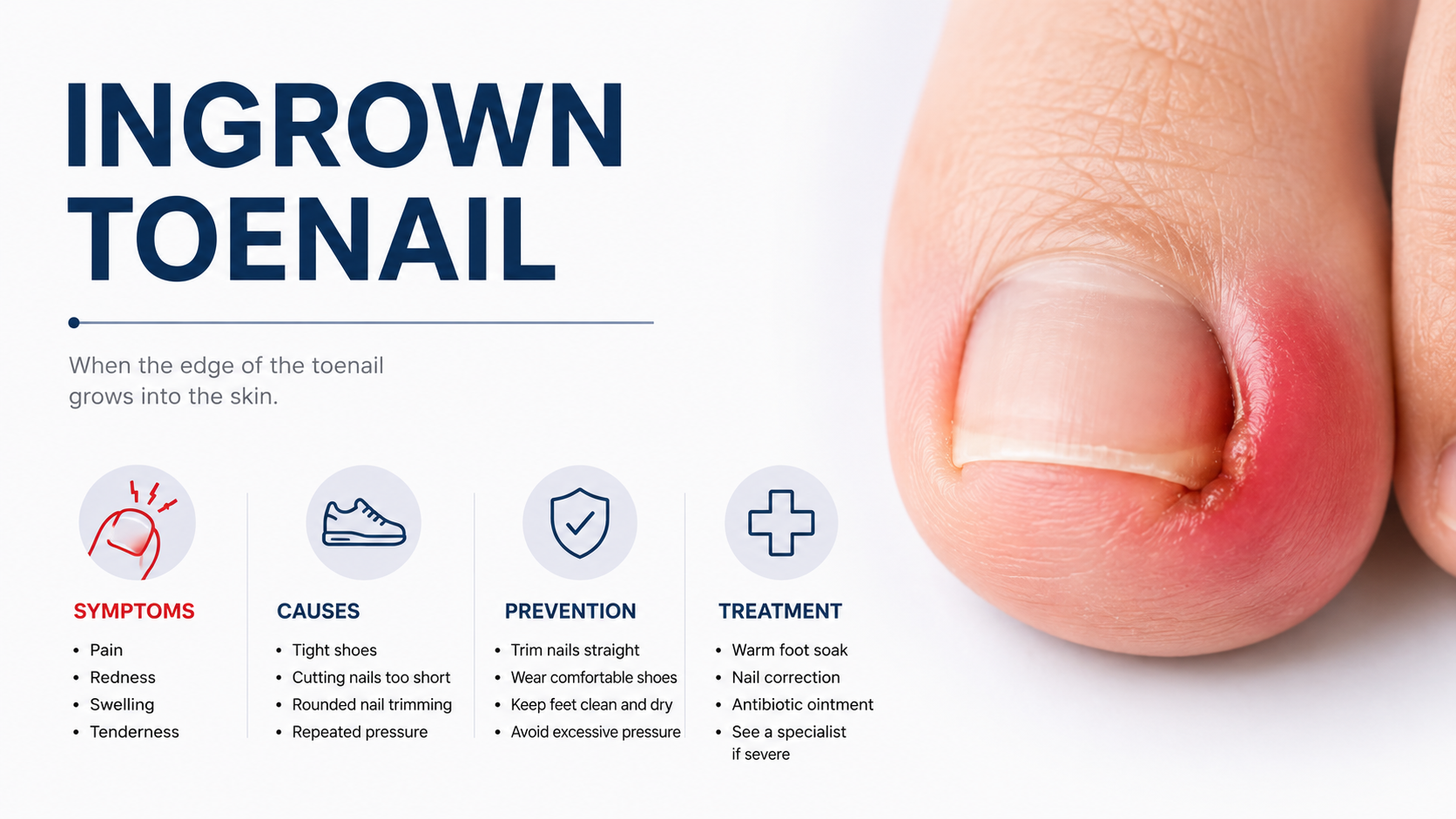
Real transformation of a client’s ingrown toenail through Haim Body Balance Center’s advanced structural integration and neurological body balancing approach.
Before diving into the secrets, we must understand why even surgical interventions like a matrixectomy (partial or total nail removal) sometimes fail to provide permanent relief. Surgery addresses the anatomy of the nail plate, but it does not address the pathological mechanical load placed on the toe.
If your natural walking pattern forces your big toe into the ground at an unnatural angle, the surrounding soft tissue will remain inflamed even if the nail is narrowed. The nail is simply a passenger on a ship that is tilting. This is why a holistic, whole-body approach is mandatory for those who suffer from chronic ingrown toenails.
1. Decoding the “Kinetic Chain” and Biomechanical Forces
The Kinetic Chain illustrates how a tilted pelvis leads to collapsed arches and recurring foot issues.
The first secret is recognizing that your feet are the final link in your body’s Kinetic Chain. In biomechanics, every joint from your cervical spine down to your metatarsals is interconnected through complex fascia and muscle groups.
!
Caption: The Kinetic Chain illustrates how a tilted pelvis leads to collapsed arches and recurring foot issues.
When you have a postural imbalance, such as an anterior pelvic tilt, it forces your femur (thigh bone) and tibia (shin bone) to rotate internally. This internal rotation creates a downward pressure that leads to overpronation—the collapse of the foot arch. When the arch collapses, the hallux (big toe) is forced to absorb excessive “shear force” with every step. This force literally mashes the skin against the nail edge, creating the perfect environment for ingrown toenails. To fix the issue permanently, you must address the functional alignment of the hip and pelvis.
2. Releasing the “Unconscious Nerve Brake” (KSNS Theory)
Your central nervous system is hardwired for survival and protection. When you experience chronic stress or poor ergonomic habits, your brain locks certain muscles in a state of hyper-tension as a protective measure. This creates a high risk for developing ingrown toenails because your body loses its ability to absorb shock naturally.
This subconscious tension, which we call the Unconscious Nerve Brake, alters your center of gravity and creates a dysfunctional gait cycle. This concept aligns with the KSNS (Kim Ses-yeon New Structure) theory, which emphasizes the recovery of unconscious neurological sensing in the feet.
Watch how restoring the neurological ‘nerve brake’ through KSNS and Sbonsdo can naturally resolve chronic foot pain and prevent recurring ingrown toenails.
[Video: How KSNS Techniques and Sbonsdo Restore Foot Sensation and Balance – Healing YouTube. ALT: KSNS Therapy for Ingrown Toenails]
Caption: Watch how restoring the neurological ‘nerve brake’ through KSNS can naturally resolve chronic foot pain.
Releasing this “muscle memory” through specialized neurological body balancing is a prerequisite for long-term relief from ingrown toenails. Without calming the nervous system and restoring natural reflexes, physical therapy often provides only temporary results.
3. Detecting Postural Compensation Patterns
Chronic ingrown toenails are rarely isolated events; they are often the loudest warning signal of a larger compensation pattern within your skeleton. Your body is a master at hiding pain by shifting mechanical stress to other joints.
Perform this quick self-assessment to see if your body is compensating:
Do you experience chronic lumbar stiffness or lower back fatigue by the afternoon?
Does one knee ache more than the other after a long walk?
Are the heels of your shoes worn down asymmetrically?
If you answered yes, your body is likely compensating for a structural imbalance. This shift in your vertical axis acts as a silent, constant force driving your toe into your soft tissue 10,000 times a day, triggering the recurrence of ingrown toenails.
4. The Stability Secret: Beyond “Wide-Toe-Box” Shoes
While narrow, pointed footwear is a primary enemy of podiatric health, simply buying “wider shoes” isn’t always the solution for ingrown toenails. The real secret lies in torsional stability.
A shoe that is too flexible or lacks a proper shank can exacerbate the pressure on your feet. If the midfoot collapses inward, it increases lateral pressure on the nail bed. You need footwear that respects your anatomy while providing enough stability to prevent excessive pronation and further ingrown toenails. Look for a firm heel counter and anatomical arch support. Avoid “minimalist” or “zero-drop” shoes if your foundation is already unstable, as they may increase the load on your forefoot.
5. Master the Gait Cycle: Correcting Your Walking Pattern
The way you strike the ground dictates the health of your nail folds and prevents ingrown toenails. A healthy gait cycle consists of three phases: heel strike, mid-stance, and terminal stance (toe-off).
Many chronic sufferers have a malfunctioning “toe-off” phase. Instead of weight being distributed across all five metatarsals, they “push off” exclusively from the inner edge of the big toe. Relearning a balanced gait through proprioceptive awareness can eliminate the friction that triggers ingrown toenails, paronychia (nail fold infection), and nail plate deformities. Focusing on a “straight-ahead” foot position during the stride can significantly reduce medial pressure.
6. Restoring Ankle Mobility and Dorsiflexion
The human foot is an engineering marvel with 26 bones and 33 joints, all designed for efficient movement to prevent chronic ingrown toenails. If your ankle joint is stiff, your big toe is forced to work twice as hard to clear the ground during the “swing phase” of walking.
!
Caption: Proper ankle dorsiflexion is critical for redistributing weight away from the big toe.
Stiffness in the ankle, specifically limited dorsiflexion, is a major contributor to persistent foot pain. When the ankle doesn’t bend enough, the foot is forced to turn outward (abduct), placing the big toe in a high-pressure “valgus” position. Improving the flexibility of the talocrural joint ensures the nail bed is no longer the primary impact zone for your body weight, helping you avoid ingrown toenails for good.
7. Professional Body Balancing and Structural Integration
The final secret is seeking professional intervention that focuses on whole-body integration to resolve ingrown toenails. Standard medical treatments are necessary for acute infections, but they rarely address the biomechanical root cause.
At Haim Body Balance Center, we specialize in identifying these hidden structural links. Our holistic approach involves:
Comprehensive Postural Mapping: Analyzing the tilt in your structural foundation.
Neurological Release: Deactivating the “nerve brakes” in your muscular system.
Alignment Integration: Ensuring your pelvis, knees, and feet work as a synchronized unit.
Therapeutic Exercises for Foot Alignment
To support your recovery and prevent ingrown toenails, try these three simple daily exercises:
Short Foot Exercise: Try to pull the ball of your foot toward your heel without curling your toes. This strengthens the intrinsic muscles of the arch.
Ankle Circles: Perform 20 slow circles in each direction every morning to improve joint lubrication and mobility.
Toe Spreading: Sit with your feet flat and try to spread your toes as wide as possible. This helps reverse the compression caused by modern footwear.
5 Common Myths About Ingrown Toenails
Myth: Cutting a “V” in the middle of the nail helps. (Fact: This does nothing to change how the edges grow and can lead to bacterial traps.)
Myth: It’s purely genetic. (Fact: While nail shape is genetic, the pressure that makes it ingrow is usually mechanical or postural.)
Myth: Antibiotics will cure it. (Fact: They treat the infection, but not the physical trauma of the nail hitting the skin.)
Myth: Tight socks don’t matter. (Fact: Any external compression can worsen ingrown toenails if your foot is already overpronating.)
Myth: Once you have surgery, it’s gone forever. (Fact: Recurrence rates are surprisingly high if underlying biomechanical issues are ignored.)
How to Properly Trim Nails to Prevent Issues
To minimize the risk of ingrown toenails, follow these expert trimming steps:
Always cut straight across; never round the corners into a “C” shape.
Leave the nail long enough so that the corners sit comfortably beyond the skin fold.
Use a proper straight-edge toenail clipper, not curved fingernail clippers.
File away sharp edges gently with an emery board to prevent snagging on socks.
FAQ: Solving the Mystery of Recurring Foot Pain
Q: I have had surgery twice. Why do my ingrown toenails return?
A: Surgery removes the nail, but not the pathological pressure pattern. If your biomechanical alignment still forces the toe into the ground at an angle, the surrounding skin will remain irritated even without the nail.
Q: Can emotional stress really cause physical foot pain?
A: Indirectly, yes. Stress increases systemic muscle memory tension, particularly in the calves and pelvis, which “tightens” your gait and increases localized mechanical stress on your toes, eventually leading to ingrown toenails.
Q: Is there a simple home check for imbalance?
A: Stand in front of a mirror with feet hip-width apart. If your kneecaps point inward toward each other (“squinting patellae”), your hips are internally rotated, placing excessive pressure on your toes and potentially causing ingrown toenails.
Conclusion: Start Listening to the Signal
Pain is a sophisticated language. A recurring ingrown toenail is a persistent distress signal that your foundation is struggling to support your structure. Stop chasing the symptom with temporary, painful fixes. By understanding the Kinetic Chain and addressing your body balance, you can finally achieve lasting relief. Your journey to a pain-free, balanced life begins with a single, aligned step.
Conclusion: Start Listening to the Signal Pain is a sophisticated language. A recurring ingrown toenail is a persistent distress signal that your foundation is struggling to support your structure. Stop chasing the symptom with temporary, painful fixes. By understanding the Kinetic Chain and addressing your body balance, you can finally achieve lasting relief. Your journey to a pain-free, balanced life begins with a single, aligned step.
### Summary: The Ultimate Path to Foot Health
Achieving permanent relief from persistent foot discomfort requires shifting your focus from the symptoms to the entire skeletal framework. True physical balance cannot be achieved overnight, nor can it be resolved by treating an isolated area. It demands a systematic and holistic approach that targets the nervous system, core alignment, and joint mobility altogether.
For those who wish to study these structural connections further, conducting regular postural self-assessments and analyzing your daily walking habits is highly recommended. True recovery begins when you listen to your body’s subtle warnings and take a synchronized approach to body stabilization.
Caption: Experience deep relaxation and structural release with our original 432Hz Arirang healing meditation music, designed to calm the nervous system and restore body balance.
The hidden link between foot tension, nervous system “protection mode,” and recovery that never quite feels complete.
There is a moment many people reach after long rehabilitation — when the doctors say the hard part is over, when the charts show improvement, and when you are officially “recovered.”
And yet, something still doesn’t feel right.
Your legs tire too quickly. Your balance never feels quite trustworthy. Standing for too long feels like a negotiation. You reach for the wall, a cane, or a chair — not because you have to, but because your body quietly insists.
This is not a failure. This is not a weakness of character or a lack of effort.
This is what happens when the nervous system never fully received the message that the danger is gone.
A Client I Won’t Forget
Professional rehabilitation and body alignment clinical case at Haim Center.A client recovering balance and stability at Haim Body Balance Center after long-term rehabilitation.
Several months ago, a client came to our center with a story that stayed with me.
Years earlier, he had survived a thoracic aortic rupture — one of the most serious cardiovascular emergencies a person can endure. After emergency surgery and intensive care, he spent years in structured rehabilitation at a major university hospital.
By any objective measure, he had achieved something remarkable: he could walk again.
But he walked with two canes. His lower body fatigued within minutes. His balance never felt stable. Beneath the surface, his calves, ankles, and the soles of his feet held a kind of chronic tension — dense, accumulated, and guarded — that no amount of strengthening exercise had been able to reach.
1. When the Body Stays in “Protection Mode”
What struck me was not how far he still had to go, but how much his body was still working — holding itself together through sheer effort rather than natural ease.
After major trauma, surgery, or prolonged physical stress, the nervous system does something intelligent: it enters Protection Mode.
It braces. It guards. It keeps the muscles slightly activated and the posture stiffened. This is survival. This is the nervous system doing exactly what it was designed to do.
The problem is that the nervous system doesn’t always receive the signal to stop.
Even after formal rehabilitation ends, the body can continue running on that same protective setting. Not because something is wrong with the person, but because the nervous system is still waiting for confirmation that the threat has passed.
This shows up in ways that are often misread:
Chronic Calf Stiffness: Regardless of how much you stretch.
Ankle Restriction: Joints that feel slow or “locked.”
Effortful Movement: Walking feels like a conscious task rather than a reflex.
Low Balance Confidence: Especially on uneven surfaces.
Disconnection: A general sense of heaviness or “numbness” in the lower body.
Most people assume this is purely muscular — that they just need more strength. While strength matters, it cannot switch off a nervous system that is quietly convinced the body is still in danger.
The Missing Piece of Recovery: The Soles of Your Feet
Here is something that often surprises people: The soles of your feet are among your body’s most vital sensory organs.
Every time you stand or walk, your feet send a continuous stream of data upward to your brain. This information tells your nervous system whether the ground is trustworthy, whether the body is balanced, and — most importantly — whether movement is safe.
When feet and ankles become chronically tense due to injury or compensation, this sensory signal becomes distorted. The brain receives feedback that says: Unstable. Uncertain. Not safe yet.
The missing piece of rehabilitation: Restoring the sensory data from the soles of the feet through KSNS principles.
In response, the nervous system does what it always does when it perceives instability: it protects. It tightens the calves, stiffens the hips, and increases guarding throughout the body.
The result is a cycle that can persist for years:
Foot Tension → Distorted Sensory Signal → Nervous System Guarding → Fatigue & Instability → More Foot Tension.
Beyond Strength: Restoring the Sense of Safety
Rehabilitation programs are extraordinarily effective at restoring movement and rebuilding strength. But there is a dimension of recovery that often goes unaddressed: the body’s sense of safety.
True physical ease — where movement feels natural and balance feels trustworthy — depends on the nervous system feeling settled, not just the muscles feeling strong.
At our center, we focus on this transition: from a body that is “managing” to a body that feels “safe.”
Our approach involves:
Releasing deep-seated tension in the calves, ankles, and soles.
Restoring sensory clarity so the feet can send accurate signals to the brain.
Supporting circulation to aid tissue recovery and neurological health.
Calming the nervous system to shift it out of chronic protective patterns.
The goal is never to force the body. The goal is to help it feel grounded enough to move naturally again.
”My Body Notices Immediately”
One thing my client said has stayed with me. After several months of consistent care, he told me: “Now my body notices immediately when I skip a session.”
He didn’t say it with fear, but with awareness. It is the kind of awareness that comes when the body finally remembers what it feels like to move without guarding.
That quality of awareness is the true marker of deeper recovery. It means the body is no longer simply enduring; it is participating.
Signs Your Body is Still “On Alert”
You may recognize this in your own experience — not necessarily after major trauma, but after any period of physical stress or illness:
You feel like you have to “think” about your balance.
Your legs feel heavy or disconnected.
You tire easily during simple standing or walking.
Stretching provides only temporary relief from stiffness.
True recovery and physical balance require specialized focus even after your formal **rehabilitation** is complete.
Sometimes the most useful question isn’t “What is still weak?” but rather, “What is my body still trying to protect?”
Haim Body Balance Center — Yangsan, Korea
“Haim Body Balance Center offers a new perspective on rehabilitation.”
Foot-centered balance support and nervous system relaxation care.
Specializing in chronic tension, post-rehab recovery, and long-term body alignment.
Our goal is to provide a **rehabilitation** experience that focuses on both physical alignment and nervous system stability.
Haim Body Balance Center is your partner in successful **rehabilitation**
Our goal is to provide a **rehabilitation** experience that focuses on both physical alignment and nervous system stability.
How to Stop Bone Loss: 9 Shocking Secrets for 12,000-Step Walkers
How to Stop Bone Loss is a critical question we often face in our journey toward lifelong vitality. In my 12 years of clinical experience, I have often seen that the real secret of how to stop bone loss lies in understanding our body’s internal balance. Recently, a long-time member of our wellness center walked into my office with a look of utter disbelief. Let’s call her Sarah.
For years, Sarah had been the “model student” of health. She exercised consistently, maintained a healthy weight, and was proud of her daily habit: walking nearly 12,000 steps every single day. She felt active, vibrant, and confident that her body was as strong as her resolve.
Then came the phone call from her doctor.
Her recent bone density test revealed a shock: her T-score had plummeted to nearly -3.0, a level indicative of severe osteoporosis.
With tears in her eyes, she asked the question that many of us would ask:
“How can this happen? I’ve done everything right. I move more than almost anyone I know. Why aren’t my bones listening?”
Understanding the structure of our skeleton: A key step in learning How to Stop Bone Loss.
If you’ve been relying solely on your step count to protect your skeleton, Sarah’s story is a vital wake-up call. It’s time to talk about How to Stop Bone Loss effectively, because quantity of movement does not always equal quality of bone health.
How to Stop Bone Loss: The Walking Paradox
Beyond walking: Understanding the complex ‘ecosystem’ of our bones and nervous system to effectively prevent bone density depletion.
Many people believe that walking alone is enough, but effectively learning how to stop bone loss requires a deeper look at our internal circulation and the unconscious tension in our bodies.
Walking is spectacular for your heart, your mood, and your metabolic health. But bone is a living, breathing tissue that requires a complex “ecosystem” to thrive. When we focus only on the number of steps, we often overlook the biological environment those bones live in.
Bone health isn’t just a mechanical “loading” issue; it’s a systemic one. Even if you are putting in the miles, several factors can prevent your body from actually building or maintaining bone density:
Nervous System “Noise”: If your body is in a state of chronic “fight or flight,” your cortisol levels remain high. High cortisol is a known enemy of bone-building cells (osteoblasts).
The Circulation Bottleneck: You can eat all the calcium in the world, but if your circulation is poor due to chronic muscle tension, those nutrients never reach the deep architecture of your bones.
Postural Misalignment: If you walk 12,000 steps with poor alignment, you aren’t loading your bones correctly. You might be stressing your joints while leaving your bone density untouched.
The Recovery Gap: Bone is built during rest, not during the walk itself. If your sleep quality is poor or your body is too tense to truly relax, the “remodeling” process never completes.
A Tale of Two Outcomes: The Power of Balance
While Sarah’s story is a cautionary tale, we recently saw the opposite result with another client. This individual had been diagnosed with osteopenia (the precursor to osteoporosis) and was deeply worried.
Instead of just “walking more,” she shifted her focus. She engaged in regular wellness care focused on body balance, nervous system regulation, and circulation. A year later, her hospital results left her doctor speechless. Not only had her bone loss stopped, but her density had actually improved. She moved from the “danger zone” back into a much safer range.
The Difference? She didn’t just move her body; she fixed the environment in which her body moved. She reduced chronic muscle tension, improved her posture, and ensured her blood flow was efficient enough to deliver life-giving nutrients to her skeletal system.
The “Calcium Traffic Controllers”: Vitamin D3 and K2 MK7
In the wellness world, we often say that “Calcium is the bricks, but you need a crane and a foreman to build the house.”
This is where the combination of Vitamin D3 and Vitamin K2 (MK7) comes in. This duo has become the gold standard in nutritional bone support:
Vitamin D3 (The Gatekeeper): It ensures that calcium is absorbed from your diet into your bloodstream. Without it, most of your calcium simply passes through you.
Vitamin K2 MK7 (The Traffic Controller): This is the missing link. K2 activates proteins that move calcium out of your arteries and soft tissues and into your bones and teeth.
Walking 12,000 steps without Vitamin K2 is like having a delivery truck full of supplies but no driver to take them to the construction site.
The Body as a Connected System
At our wellness center, we’ve observed a consistent pattern. People with declining bone health often suffer from a “cascade” of other issues:
Chronic foot or ankle instability.
Persistent shoulder tightness.
Lower back discomfort that never quite goes away.
Higher sensitivity to stress and fatigue.
This isn’t a coincidence. Your bones, muscles, and nerves are one single, integrated system. When your posture is balanced and your circulation is fluid, every step you take actually works for your bones. When you are tight and misaligned, every step is just “wear and tear.”
Final Thoughts: Move Better, Not Just More
If you are walking 12,000 steps a day—don’t stop. It is a wonderful habit. But don’t let the pedometer give you a false sense of security.
True bone protection requires a holistic strategy:
Prioritize Circulation: Use massage, stretching, or wellness care to keep tissues soft and blood flowing.
Focus on Posture: Ensure your walking form is balanced and your weight is distributed correctly.
Support Nutritionally: Look into the D3 + K2 MK7 combination to ensure your calcium is going where it belongs.
Embrace Recovery: Remember that “rest” is an active part of bone building.
Bone health isn’t just about the quantity of your activity; it’s about the quality of your internal environment. Is your body a place where bones can grow?
Let’s move beyond the step count and start building health from the inside out.
Final Thoughts
Ultimately, discovering how to stop bone loss is about more than just bone health; it is about reclaiming your overall physical vitality through 12 years of clinical insights and proper balance.
Conclusion
Ultimately, discovering how to stop bone loss is about more than just bone health; it is about reclaiming your overall physical vitality through 12 years of clinical insights and proper body balance. Understanding the connection between your movement and your nervous system is the real secret to lifelong strength
Check out our previous post on [Body Balance Tips] for more health insights.