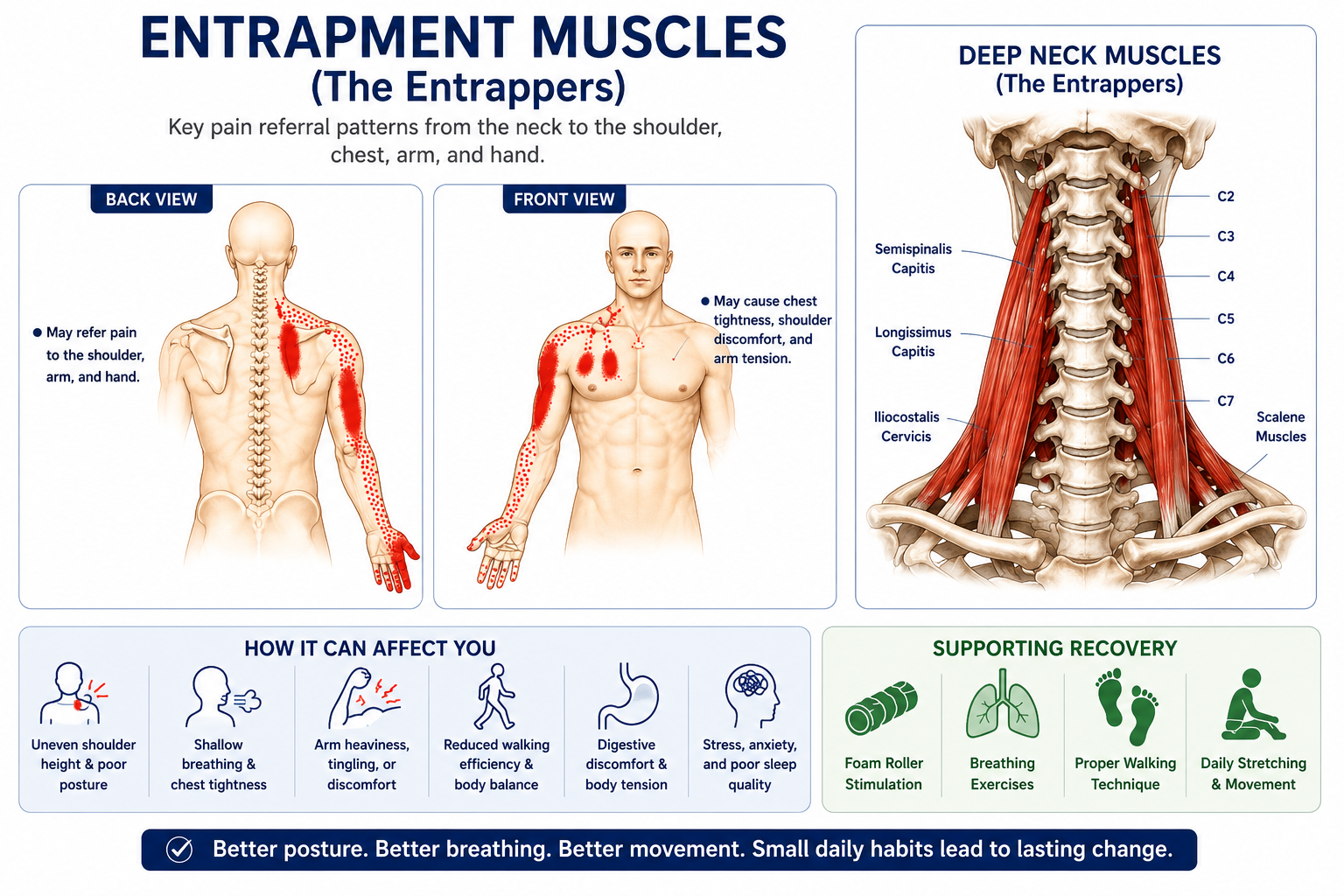
Many people struggle with an uneven shoulders body, often overlooking that this can be a sign of deeper structural imbalance.
If you are struggling with uneven shoulders body balance after surgery, you are not alone. It is a common pattern seen in clinical practice — and it is more connected to breathing, digestion, and daily movement than most people realize.
Imagine this: the surgery goes well. The doctor is pleased. Your family is relieved. But a few weeks later, something still feels wrong. Your body feels tight. Breathing is shallow. You get tired just walking to the kitchen. And your right shoulder sits noticeably higher than your left.
This is exactly what one client experienced — and it is far more common than most people expect.
Why Uneven Shoulders Body Balance Affects More Than Your Posture

Most people treat shoulder imbalance as a local problem — something to stretch or massage. But the body works as a system, not in isolated parts.
When one shoulder stays elevated for a long time, the surrounding muscles adapt. They shorten on one side and overstretch on the other. This tension then pulls on the chest wall, restricts the ribcage, and makes deep breathing difficult.
Here is where it gets important: when breathing becomes shallow, the nervous system interprets this as a low-level threat. The body shifts into a protective state — muscles tighten, digestion slows, and energy drops. The body is essentially bracing, even when you are just sitting on the couch.
Signs your body may be stuck in this pattern:
- Visible difference in shoulder height
- Shallow breathing that never feels satisfying
- Persistent digestive discomfort or bloating
- General body stiffness that does not improve with stretching
- Difficulty walking with a smooth, balanced gait
- Low energy even after rest
A Real Recovery Story: Uneven Shoulders, Poor Breathing, and Knee Surgery
shoulders body requires more than just stretching; it requires a holistic approach to body alignment
This client had already undergone surgery on both knees but continued to experience discomfort. During movement assessment, several patterns appeared together: elevated right shoulder, tight chest and hip muscles, restricted breathing, stiff walking, and ongoing digestive discomfort.
Rather than isolating the knees as the only problem, attention shifted to the whole body — how different regions were influencing each other, and what daily habits were keeping the body stuck in tension.
This whole-body approach to uneven shoulders body balance — looking at how different regions influence each other — is often what makes the difference between temporary relief and lasting recovery.
How to Improve Uneven Shoulders Body Balance at Home
When you ignore an uneven shoulders body, it can eventually lead to chronic neck and back pain. For more detailed information on posture correction, please check out my other post on

Recovery does not require complex equipment or intense effort. Three simple daily practices made a real difference for this client.
1. Gentle Foam Roller Stimulation
The goal is not to force tight muscles to release. Instead, gentle foam roller work helps the nervous system receive more accurate feedback from the body. When the brain gets clearer signals about where the body is in space, muscles can soften on their own — a more sustainable approach than aggressive stretching.
2. Breathing Practice for Nervous System Reset
Take a slow, relaxed inhalation. Pause briefly at the top. Then exhale slowly and completely. Do not force it.
This simple practice signals safety to the nervous system. Over time, it helps shift the body out of its chronic protective state. Many clients also notice improved digestion — not a coincidence. The vagus nerve, which runs from the brainstem through the chest into the abdomen, is directly linked to breathing rhythm.
3. Balanced Walking Habits
Walking is one of the most underrated rehabilitation tools available. Small daily adjustments build new movement patterns over time:
- Keep your gaze forward, not down — this naturally lifts the chest
- Consciously relax your shoulders away from your ears
- Pay equal attention to both feet with every step
- Focus on consistency rather than speed or distance
What Changed After Several Weeks of Consistent Practice
Recovery rarely arrives in one dramatic moment. It comes quietly — in small improvements that are easy to miss until you look back.
After several weeks of these daily practices, this client reported more level shoulders, easier breathing, improved walking comfort, reduced digestive discomfort, and less background tension throughout the day.
None of it required anything dramatic. It came from small efforts, done consistently, with a clear understanding of why they mattered.
Addressing uneven shoulders body balance through daily movement awareness — not just targeting the area that hurts — is often what makes the difference between temporary relief and lasting recovery.
Final Thoughts
https://www.healthline.com/health/posture
Your body gives small signals long before larger problems appear. Tightness, shallow breathing, uneven posture, and post-surgical stiffness are not random. They are messages worth listening to.
If these patterns feel familiar, consider looking not just at the area that hurts — but at the whole picture. Simple, consistent daily care is often more powerful than occasional intensive treatment.
If you recognize these patterns in your own body, consider consulting a body balance or rehabilitation specialist who looks beyond the area that hurts — and at the whole picture.
https://soletobody.com/postural-compensation-back-pain-relief/If you are ready to correct your uneven shoulders body, start by incorporating these simple daily routines into your life. You can find more tips on body balance and breathing techniques in my guide
Leave a Reply